
Introduction
Aircraft maintenance is essential for ensuring safety, reliability, and operational efficiency. One of the most important aspects of maintenance is having the right replacement parts available when they are needed. Whether you operate a single aircraft, manage a fleet, or run an aircraft maintenance organization, proper inventory planning can significantly reduce downtime, improve maintenance efficiency, and control operating costs.
Poor inventory management may lead to delayed repairs, grounded aircraft, increased expenses, and operational disruptions. On the other hand, a well-organized replacement parts inventory helps maintenance teams respond quickly, supports regulatory compliance, and extends the service life of critical aircraft systems.
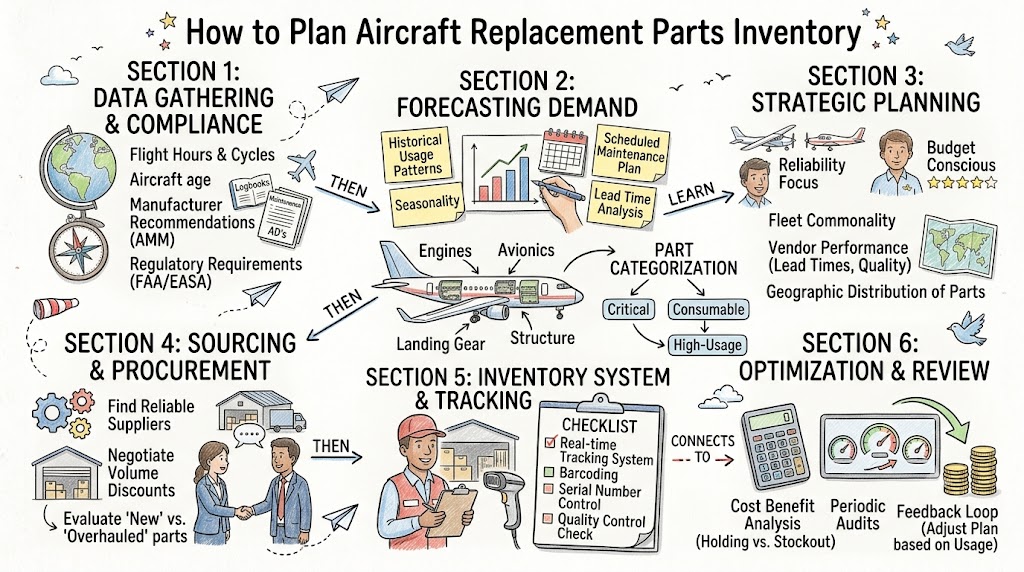
This guide explains how to plan aircraft replacement parts inventory effectively, identify critical spare parts, maintain accurate records, and build an inventory system that supports safe and efficient aircraft operations.
Why Aircraft Replacement Parts Inventory Matters
Every aircraft depends on thousands of individual components working together safely. Over time, normal wear and scheduled maintenance require parts to be repaired or replaced.
A well-planned inventory helps:
- Improve aircraft availability
- Reduce maintenance delays
- Increase operational efficiency
- Lower emergency purchasing costs
- Improve maintenance planning
- Support aviation safety
- Maintain regulatory compliance
- Extend aircraft service life
Planning ahead ensures that maintenance teams can complete scheduled and unscheduled repairs without unnecessary delays.
Understand Your Aircraft or Fleet Requirements
Before purchasing replacement parts, understand the specific needs of your aircraft.
Important factors include:
- Aircraft model
- Engine type
- Manufacturer maintenance recommendations
- Flight hours
- Operating environment
- Maintenance schedule
- Aircraft age
- Fleet size
Different aircraft require different inventory strategies.
Identify Critical Replacement Parts
Not every component requires the same inventory priority.
Critical replacement parts typically include:
Engine Components
Examples include:
- Spark plugs
- Filters
- Belts
- Hoses
- Gaskets
- Sensors
These parts directly affect aircraft operation and should receive high priority.
Propeller Components
Monitor replacement needs for:
- Fasteners
- Spinner assemblies
- Bearings
- Mounting hardware
Regular inspections help determine replacement schedules.
Landing Gear Components
Landing gear experiences significant stress during every flight.
Common replacement items include:
- Tires
- Brake pads
- Hydraulic seals
- Shock absorbers
- Bearings
Keeping these parts readily available reduces maintenance delays.
Electrical Components
Essential inventory may include:
- Batteries
- Circuit breakers
- Switches
- Connectors
- Wiring
- Relays
Electrical reliability supports safe aircraft operation.
Hydraulic Components
Maintain stock of:
- Hydraulic hoses
- Pumps
- Filters
- Seals
- Valves
These systems often require routine maintenance.
Avionics Components
Depending on the aircraft, inventory may include:
- Display units
- Radios
- GPS equipment
- Antennas
- Wiring connectors
Replacement planning minimizes downtime when avionics require servicing.
Classify Inventory by Priority
Organizing parts according to importance simplifies inventory management.
Critical Parts
Components required to maintain safe aircraft operation.
Examples:
- Engine parts
- Flight control components
- Braking systems
Frequently Used Parts
Items regularly replaced during scheduled maintenance.
Examples:
- Oil filters
- Air filters
- Spark plugs
- Tires
Long Lead-Time Parts
Components requiring extended delivery periods.
Maintaining limited stock helps prevent long maintenance delays.
Emergency Replacement Parts
Certain components should be immediately available for unexpected maintenance events.
Maintain Accurate Inventory Records
Good record keeping is the foundation of effective inventory management.
Track information such as:
- Part number
- Serial number
- Description
- Quantity
- Storage location
- Supplier
- Purchase date
- Shelf life
- Inspection status
Accurate records simplify inventory audits and future planning.
Monitor Inventory Levels
Inventory should never remain unmanaged.
Helpful practices include:
- Establish minimum stock levels
- Set maximum stock limits
- Review inventory regularly
- Monitor consumption trends
- Schedule routine audits
Regular monitoring prevents both shortages and excessive inventory.
Forecast Future Replacement Needs
Maintenance history provides valuable planning information.
Review:
- Component replacement frequency
- Aircraft utilization
- Flight hours
- Seasonal operations
- Manufacturer maintenance schedules
Forecasting helps predict future inventory requirements more accurately.
Choose Reliable Suppliers
Reliable suppliers contribute directly to maintenance efficiency.
Consider suppliers that provide:
- Quality components
- Consistent availability
- Technical support
- Competitive pricing
- Reliable delivery
- Clear product documentation
Strong supplier relationships improve long-term inventory planning.
Store Aircraft Parts Properly
Proper storage protects component quality.
Storage recommendations include:
- Clean environment
- Temperature control
- Humidity management
- Organized shelving
- Protective packaging
- Clearly labeled inventory
Incorrect storage may shorten component life.
Monitor Shelf Life
Some aircraft parts have limited storage life.
Examples include:
- Rubber seals
- Adhesives
- Batteries
- Chemicals
- Lubricants
Regular inspection helps identify items approaching expiration.
Use Inventory Management Software
Digital inventory systems improve efficiency.
Useful features include:
- Barcode tracking
- Inventory alerts
- Purchase history
- Supplier database
- Stock reports
- Maintenance integration
- Automatic reorder notifications
Technology reduces manual record keeping and improves inventory accuracy.
Coordinate Inventory with Maintenance Schedules
Maintenance planning and inventory management should work together.
Coordinate replacement parts with:
- Scheduled inspections
- Annual maintenance
- Engine overhauls
- Component life limits
- Manufacturer service recommendations
Planning ahead reduces maintenance downtime.
Train Staff on Inventory Procedures
Everyone involved in maintenance should understand inventory procedures.
Training topics include:
- Receiving parts
- Recording inventory
- Proper storage
- Issuing components
- Documentation
- Inspection procedures
Consistent procedures improve inventory accuracy.
Perform Regular Inventory Audits
Routine audits help verify inventory accuracy.
During audits:
- Count physical inventory
- Compare records
- Identify missing parts
- Remove obsolete inventory
- Verify shelf life
- Review storage conditions
Audits improve long-term inventory control.
Common Inventory Planning Mistakes
Many inventory problems result from avoidable mistakes.
Examples include:
- Overstocking rarely used parts
- Running out of critical components
- Poor documentation
- Delayed reordering
- Ignoring shelf-life limits
- Purchasing incompatible parts
- Using unreliable suppliers
- Poor storage practices
Recognizing these issues helps improve inventory performance.
Benefits of Effective Aircraft Replacement Parts Inventory Planning
Good inventory management provides many advantages.
Improved Aircraft Availability
Having required parts available reduces aircraft downtime.
Faster Maintenance
Maintenance technicians spend less time waiting for replacement components.
Lower Operating Costs
Planned purchasing often reduces emergency procurement expenses.
Better Safety
Quality replacement parts help maintain reliable aircraft performance.
Improved Regulatory Compliance
Accurate documentation supports maintenance records and inspections.
Greater Operational Efficiency
Organized inventory helps maintenance teams work more effectively.
Aircraft Replacement Parts Inventory Checklist
Planning:
- Review aircraft maintenance schedule
- Identify critical parts
- Forecast future demand
- Evaluate suppliers
Inventory Records:
- Part numbers
- Serial numbers
- Quantities
- Purchase dates
- Storage locations
- Shelf life
Storage:
- Temperature control
- Clean environment
- Secure shelving
- Proper labeling
- Regular inspections
Monitoring:
- Inventory audits
- Usage tracking
- Reorder alerts
- Shelf-life reviews
Frequently Asked Questions
1. Why is aircraft parts inventory important?
Proper inventory planning ensures replacement parts are available when needed, reducing maintenance delays, improving aircraft availability, and supporting safe operations.
2. Which aircraft parts should always be stocked?
Frequently replaced maintenance items such as filters, spark plugs, brake components, tires, batteries, and selected engine components are commonly maintained in inventory based on operational requirements.
3. How often should inventory be reviewed?
Inventory should be reviewed regularly, particularly before scheduled maintenance events and during periodic inventory audits.
4. How can inventory costs be reduced?
Forecasting demand, maintaining accurate records, purchasing strategically, avoiding unnecessary overstocking, and working with reliable suppliers help control costs.
5. Is inventory management software helpful?
Yes. Digital inventory systems improve tracking, reduce manual errors, simplify reporting, and provide automatic stock alerts.
6. How should aircraft replacement parts be stored?
Store components in clean, organized, temperature-controlled environments with appropriate labeling and protective packaging according to manufacturer recommendations.
7. Why is supplier quality important?
Reliable suppliers provide quality parts, dependable delivery, technical support, and documentation that contribute to safe maintenance operations.
8. How do I identify critical inventory items?
Review maintenance history, manufacturer recommendations, component replacement frequency, and operational importance to determine inventory priorities.
9. How does inventory planning reduce aircraft downtime?
Maintaining commonly required replacement parts allows maintenance teams to complete repairs quickly without waiting for emergency shipments.
10. What inventory records should be maintained?
Maintain records including part numbers, serial numbers, quantities, suppliers, purchase dates, storage locations, shelf-life information, and inspection history.
Conclusion
Planning aircraft replacement parts inventory is an essential part of effective aircraft maintenance and operational reliability. A well-organized inventory system ensures that critical components are available when needed, helping maintenance teams complete repairs efficiently while minimizing aircraft downtime and controlling costs. By understanding aircraft requirements, prioritizing essential replacement parts, maintaining accurate records, selecting reliable suppliers, and regularly reviewing inventory levels, aircraft owners and maintenance organizations can create an inventory strategy that supports both safety and long-term operational success.
Whether managing a single aircraft or an entire fleet, investing time in thoughtful inventory planning helps improve maintenance efficiency, protects valuable assets, and ensures aircraft remain ready for safe and dependable operation.

