
Introduction
Aircraft are built to operate in demanding environments where safety, reliability, and performance are critical. Every flight exposes aircraft components to vibration, temperature changes, aerodynamic forces, pressure variations, and environmental conditions. Over time, even the highest-quality parts experience wear and deterioration.
Recognizing when aircraft parts need replacement is one of the most important aspects of aircraft ownership and maintenance. Replacing components before they become a safety concern can help prevent unexpected failures, reduce downtime, improve operational reliability, and support regulatory compliance.
Aircraft owners, pilots, operators, and maintenance professionals all play a role in identifying potential problems. Understanding the common warning signs of component deterioration helps ensure that maintenance decisions are based on safety and sound planning rather than reacting to emergencies.
This guide explains how to recognize when aircraft parts may require replacement and why proactive maintenance is essential for safe aviation operations.
Why Aircraft Parts Eventually Need Replacement
No aircraft component lasts forever. Even parts that appear to be functioning normally can gradually degrade over time.
Common causes of deterioration include:
- Normal wear and tear
- Mechanical fatigue
- Corrosion
- Heat exposure
- Repeated vibration
- Environmental contamination
- Moisture exposure
- Operational stress
- Aging materials
- Improper storage conditions
Aircraft components are designed with expected service lives, inspection requirements, and maintenance schedules. As components age, the likelihood of performance degradation increases.
Regular inspections help identify these issues before they become serious safety concerns.
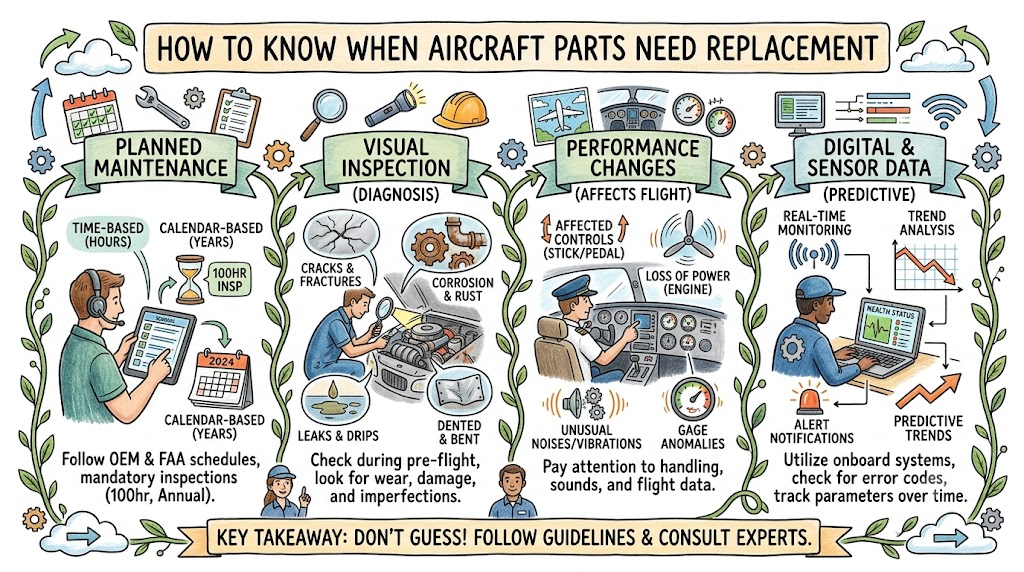
Understanding Aircraft Component Life Limits
Aircraft maintenance programs often use different methods to determine when parts should be inspected, overhauled, or replaced.
Calendar Limits
Some components have replacement requirements based on age.
Examples may include:
- Rubber seals
- Flexible hoses
- Certain batteries
- Safety equipment
Even if these parts are rarely used, aging can affect their condition.
Flight Hour Limits
Many components are monitored according to operating hours.
Examples include:
- Engine parts
- Propeller components
- Pumps
- Bearings
As operating hours increase, wear accumulates and replacement becomes necessary.
Cycle Limits
Some parts are monitored according to operational cycles.
A cycle generally includes:
- Takeoff
- Flight
- Landing
Landing gear components and structural parts are often affected by cycle counts.
Condition-Based Maintenance
Some replacement decisions are based on actual component condition.
Maintenance personnel evaluate:
- Wear
- Corrosion
- Performance
- Inspection findings
- Operational history
This approach allows replacement decisions to be based on observed condition rather than fixed schedules alone.
Common Signs That Aircraft Parts May Need Replacement
Excessive Wear
Wear is one of the most common indicators that a component is approaching the end of its useful life.
Signs may include:
- Surface deterioration
- Material loss
- Excessive movement
- Loose fit
- Abnormal friction
- Reduced performance
Wear often develops gradually and becomes more noticeable during inspections.
Corrosion
Corrosion remains one of the most significant threats to aircraft longevity.
Common forms include:
- Surface corrosion
- Pitting corrosion
- Galvanic corrosion
- Hidden internal corrosion
Corrosion can weaken structural integrity and affect the reliability of mechanical and electrical systems.
Even minor corrosion findings should be evaluated by qualified maintenance personnel.
Cracks and Structural Damage
Cracks may indicate fatigue or excessive stress.
Warning signs include:
- Visible cracking
- Distorted structures
- Unusual deformation
- Stress fractures
- Surface separation
Structural damage should always receive immediate professional attention.
Unusual Vibrations
Aircraft are designed to operate smoothly within normal limits.
New or increasing vibration levels may indicate:
- Bearing wear
- Component imbalance
- Mount deterioration
- Propeller issues
- Rotating component problems
Changes in vibration characteristics should never be ignored.
Fluid Leaks
Leaks often signal deterioration within critical aircraft systems.
Examples include:
- Oil leaks
- Hydraulic leaks
- Fuel leaks
- Coolant leaks where applicable
Recurring leaks often indicate that seals, hoses, fittings, or related components may require replacement.
Electrical Problems
Electrical system deterioration can develop gradually.
Common warning signs include:
- Intermittent operation
- Electrical failures
- Corroded connectors
- Damaged wiring
- Unusual circuit behavior
Electrical issues can affect both safety and operational reliability.
Performance Changes
Changes in component performance often indicate underlying wear.
Examples include:
- Reduced efficiency
- Increased resistance
- Delayed response
- Inconsistent operation
- Difficulty maintaining performance
Performance changes should always be investigated.
Unusual Noises
New sounds frequently provide early warnings of component problems.
Examples include:
- Grinding
- Clicking
- Knocking
- Squealing
- Rattling
Abnormal sounds may indicate wear, looseness, misalignment, or mechanical damage.
Aircraft Parts Most Commonly Replaced
Engine Components
Aircraft engines contain numerous components that experience regular wear.
Commonly replaced items include:
- Filters
- Spark plugs
- Belts
- Hoses
- Sensors
- Ignition components
Regular monitoring helps maintain engine reliability.
Landing Gear Components
Landing gear experiences significant operational loads.
Common replacements include:
- Tires
- Brakes
- Bearings
- Hydraulic seals
- Shock absorption components
Frequent inspections are critical because landing gear directly affects safe ground operations.
Flight Control Components
Control systems require precise operation.
Examples include:
- Cables
- Rod ends
- Pulleys
- Bearings
- Linkages
Wear within these systems can affect aircraft handling characteristics.
Electrical Components
Electrical systems contain many parts with finite service lives.
Examples include:
- Batteries
- Switches
- Relays
- Connectors
- Wiring assemblies
Environmental exposure often accelerates deterioration.
Fuel System Components
Fuel system reliability is essential for safe flight operations.
Frequently replaced components include:
- Fuel filters
- Fuel lines
- Pumps
- Seals
- Fittings
Inspection programs help identify deterioration before operational problems occur.
Hydraulic Components
Hydraulic systems depend on leak-free operation.
Common replacement items include:
- Hoses
- Seals
- Actuators
- Fittings
- Hydraulic valves
Hydraulic system integrity is essential for reliable aircraft operation.
Avionics Components
Modern aircraft rely heavily on electronic systems.
Components may include:
- Displays
- Sensors
- Navigation equipment
- Communication equipment
- Electronic control units
Technology upgrades and aging electronics often influence replacement decisions.
Scheduled Replacement vs Condition-Based Replacement
| Approach | Description | Advantages | Considerations |
|---|---|---|---|
| Scheduled Replacement | Based on manufacturer intervals | Predictable maintenance planning | May replace parts that still appear serviceable |
| Condition-Based Maintenance | Based on inspection findings | Potentially extends component utilization | Requires effective monitoring and inspections |
Many maintenance programs use a combination of both approaches.
Environmental Factors That Accelerate Part Deterioration
Coastal Operations
Salt exposure significantly increases corrosion risk.
Aircraft operating near oceans often require more frequent inspections.
High Humidity
Moisture promotes corrosion and can affect electrical systems.
Humidity can accelerate material degradation.
Extreme Temperatures
Heat and cold create expansion and contraction cycles.
Repeated temperature changes can accelerate wear.
Frequent Flight Operations
Aircraft used regularly accumulate wear more quickly than lightly used aircraft.
Higher utilization generally increases maintenance demands.
Long-Term Storage
Aircraft that remain inactive for extended periods can experience:
- Seal deterioration
- Corrosion
- Moisture accumulation
- Contamination
Proper storage procedures help reduce these risks.
Dust and Contaminants
Dust and debris can affect:
- Filters
- Bearings
- Electrical systems
- Moving components
Contamination often accelerates wear.
The Role of Aircraft Inspections
Aircraft inspections provide opportunities to identify replacement needs before failures occur.
Common inspection types include:
Pre-Flight Inspections
Pilots perform visual checks before flight.
These inspections help identify obvious abnormalities.
Scheduled Inspections
Scheduled inspections evaluate aircraft condition according to maintenance requirements.
Component-Specific Inspections
Certain parts require dedicated inspection procedures.
Special Inspections
Unusual events may trigger additional inspections.
Examples include:
- Hard landings
- Severe turbulence
- Lightning strikes
Inspection findings often determine whether replacement is necessary.
How Maintenance Records Help Predict Replacements
Accurate maintenance records provide valuable insight into aircraft condition.
Useful information includes:
- Inspection history
- Service history
- Replacement history
- Recurring discrepancies
- Trend analysis
- Component age
- Operating hours
- Cycle counts
Well-maintained records help maintenance professionals make informed replacement decisions.
Warning Signs Pilots Should Never Ignore
Pilots should promptly report:
- New vibrations
- Fluid leaks
- Burning odors
- Electrical failures
- Unusual noises
- Performance changes
- Instrument abnormalities
- Control stiffness
- Brake concerns
- Tire damage
- Corrosion findings
Early reporting often prevents minor issues from becoming major maintenance problems.
The Cost of Delaying Replacement
Postponing necessary replacement decisions can create additional problems.
Potential consequences include:
- Increased repair costs
- Secondary component damage
- Aircraft downtime
- Reduced reliability
- Operational disruptions
- Safety concerns
- Regulatory complications
Addressing problems early is usually more cost-effective than waiting for a failure.
How to Build a Proactive Replacement Strategy
Successful aircraft owners take a proactive approach to maintenance.
Recommended practices include:
Follow Maintenance Schedules
Adhere to manufacturer recommendations and approved maintenance programs.
Monitor Component Condition
Pay attention to inspection findings and operational changes.
Maintain Accurate Records
Good documentation supports better maintenance planning.
Work With Qualified Professionals
Experienced maintenance personnel can identify developing issues.
Track Recurring Problems
Repeated discrepancies often indicate deeper issues.
Plan Future Replacements
Budgeting and planning help reduce unexpected maintenance costs.
Review Service Information
Stay informed about manufacturer recommendations and maintenance updates.
Questions to Ask Your Maintenance Provider
When discussing component replacement, consider asking:
- Has the component reached its service limit?
- Are signs of abnormal wear present?
- Is replacement recommended or required?
- What inspection findings support the recommendation?
- Are there recurring issues?
- How urgent is replacement?
- Are related components affected?
- What monitoring is recommended?
- What replacement options are available?
- Are applicable service documents involved?
These discussions help owners better understand maintenance decisions.
Common Mistakes Aircraft Owners Make
Avoid these common errors:
- Ignoring minor symptoms
- Delaying inspections
- Focusing only on cost
- Using undocumented components
- Poor maintenance recordkeeping
- Ignoring environmental exposure
- Failing to monitor recurring discrepancies
- Skipping recommended maintenance
Small issues often become larger problems when neglected.
Aircraft Parts Replacement Checklist
Use this checklist when reviewing aircraft maintenance needs:
- Review maintenance records
- Verify component age
- Check operating hours
- Review cycle counts
- Examine inspection findings
- Monitor recurring issues
- Review manufacturer guidance
- Consult maintenance professionals
- Plan future replacements
- Document maintenance actions
A structured approach helps improve maintenance planning and aircraft reliability.
Frequently Asked Questions
1. How do I know if an aircraft part needs replacement?
Inspection findings, wear, corrosion, abnormal performance, unusual noises, or maintenance requirements often indicate replacement may be necessary.
2. Can aircraft parts fail without warning?
Some failures can occur suddenly, which is why routine inspections and preventive maintenance are important.
3. What is a life-limited component?
A life-limited component has a defined service life established by the manufacturer or applicable authority.
4. How often should aircraft inspections occur?
Inspection requirements vary depending on aircraft type, operation, and regulatory requirements.
5. What causes aircraft component wear?
Wear results from operational loads, vibration, friction, environmental exposure, and aging.
6. Is corrosion always serious?
Corrosion should always be evaluated because even minor corrosion can progress if left untreated.
7. Can age alone require replacement?
Yes. Some components are replaced based on calendar age regardless of usage.
8. What is condition-based maintenance?
Condition-based maintenance uses inspection findings and component condition to determine maintenance actions.
9. What parts wear out most frequently?
Filters, seals, tires, brakes, hoses, batteries, and certain engine components commonly require periodic replacement.
10. Should unusual vibrations be reported immediately?
Yes. New vibrations can indicate developing mechanical problems and should be investigated promptly.
11. Can maintenance records predict failures?
Maintenance records help identify trends and recurring issues that may indicate future replacement needs.
12. Why are service limits important?
Service limits help ensure components are maintained within safe operating conditions.
13. How does climate affect aircraft parts?
Humidity, salt exposure, temperature extremes, and contaminants can accelerate deterioration.
14. Can delaying replacement increase costs?
Yes. Delayed replacement can lead to additional damage, increased repair costs, and longer downtime.
15. Who determines whether a part must be replaced?
Qualified maintenance professionals evaluate inspection findings, manufacturer guidance, and regulatory requirements when making replacement decisions.
Conclusion
Aircraft parts replacement is an essential part of maintaining safety, reliability, and operational performance. Every aircraft component experiences wear over time, and recognizing early warning signs allows operators to address issues before they become serious problems. Successful aircraft maintenance depends on routine inspections, accurate maintenance records, attention to changing aircraft behavior, and collaboration with qualified maintenance professionals. By understanding common indicators such as wear, corrosion, leaks, vibrations, and performance changes, owners and operators can make informed decisions about component replacement.

