
Introduction
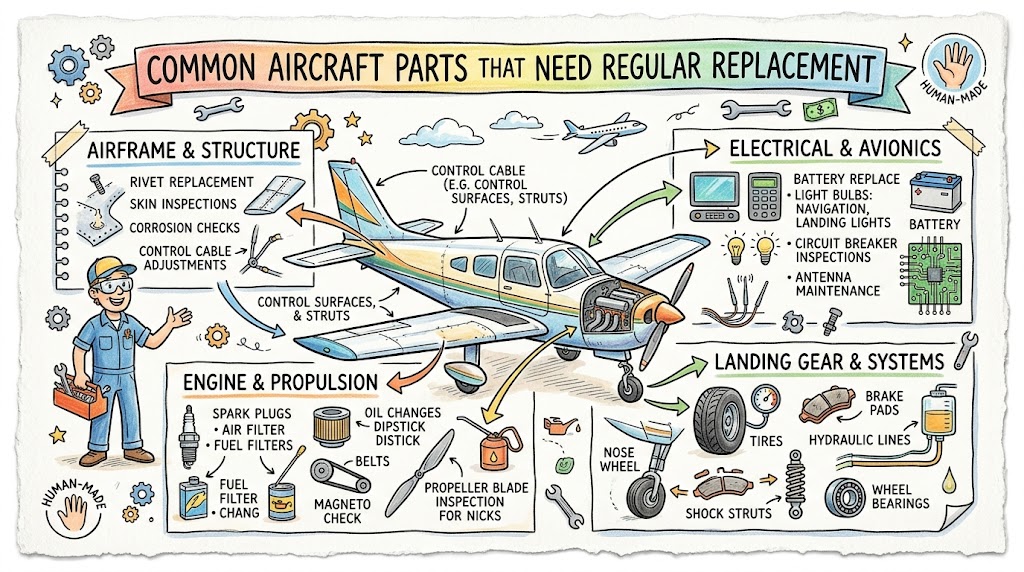
Aircraft are built for safety, precision, and long-term reliability, but no aircraft component lasts forever. Constant exposure to pressure, vibration, heat, friction, and environmental conditions naturally leads to wear and tear. That is why regular replacement of aircraft parts is a critical part of aviation maintenance.
Replacing worn components on time ensures that an aircraft continues to operate safely and efficiently. Delaying replacements can lead to performance issues, unexpected failures, or even serious safety risks during flight. Whether it is an engine filter, brake system, or control cable, every part has a lifecycle that must be respected.
This guide explains the most common aircraft parts that require regular replacement and why they are essential for maintaining airworthiness and safety.
Real-world Use Cases
A private aircraft owner replacing brake pads before an annual inspection ensures safe landing performance and regulatory compliance.
A maintenance technician changing engine oil filters during scheduled service helps maintain engine efficiency and reduces internal wear.
A fleet operator managing periodic replacement schedules ensures all aircraft in the fleet remain airworthy and reduce unexpected downtime.
A pilot noticing unusual vibration caused by worn components reports the issue early, preventing further mechanical damage.
A flying club maintaining shared aircraft replaces critical parts regularly to ensure consistent safety standards for all members.
An MRO technician detecting early seal degradation replaces components before leaks or system failures occur.
A general aviation aircraft preparing for inspection undergoes full parts verification to meet certification requirements.
Evaluation Criteria for Aircraft Parts Replacement Planning
Before replacing aircraft parts, maintenance teams should evaluate:
- Component wear level and condition
- Manufacturer replacement intervals
- Safety-critical importance of the part
- OEM vs aftermarket quality
- Aircraft operating environment
- Flight hours and usage intensity
- Inspection and maintenance records
- Regulatory compliance requirements
- Availability of certified replacement parts
- Cost vs safety considerations
- Performance impact of the component
- Maintenance scheduling efficiency
These criteria ensure safe and timely replacement decisions.
Engine Components (Spark Plugs, Filters, Seals)
Engine parts operate under extreme heat and pressure, making them high-wear components.
For example, worn spark plugs can reduce engine efficiency and cause rough performance during flight.
Oil and Lubrication System Parts
Oil filters and seals degrade over time due to heat and contamination.
For example, a clogged oil filter can restrict lubrication and increase engine wear.
Fuel System Filters and Lines
Fuel system components must remain clean and leak-free for safe engine operation.
For example, a blocked fuel filter can reduce fuel flow and cause engine hesitation.
Hydraulic System Hoses and Seals
Hydraulic systems control landing gear and flight surfaces.
For example, a leaking hydraulic hose may lead to reduced braking or flap operation failure.
Landing Gear Tires and Brake Components
Landing gear parts experience heavy mechanical stress during every landing.
For example, worn brake pads increase stopping distance and reduce landing safety.
Battery and Electrical System Components
Batteries and electrical components degrade over time due to charging cycles.
For example, a weak aircraft battery may fail to power essential avionics during startup.
Avionics Cooling Fans and Sensors
Electronic systems require proper cooling and accurate sensor readings.
For example, a faulty cooling fan may lead to overheating of critical avionics systems.
Air Filters and Cabin Filters
Filters ensure clean airflow for both engine and cabin systems.
For example, a dirty air filter reduces engine efficiency and increases fuel consumption.
Control Cables and Linkages
Control systems wear out due to repeated movement and tension.
For example, worn control cables may cause delayed response in aircraft handling.
Fasteners, Bolts, and Safety Wire
Even small hardware components play a critical role in structural integrity.
For example, loose bolts can lead to vibration and structural instability.
Propeller Components (Blades, Hubs, Seals)
Propeller systems face continuous aerodynamic stress.
For example, a damaged propeller blade can create imbalance and vibration during flight.
Turbine or Compressor Wear Components
Jet engine parts degrade under high temperature and pressure cycles.
For example, worn turbine blades can reduce engine thrust and efficiency.
Windshield Wipers and Visibility Components
Visibility systems are essential for safe operation in poor weather.
For example, worn wiper blades reduce visibility during rain conditions.
Seat Belts and Cabin Safety Equipment
Cabin safety components must remain fully functional at all times.
For example, damaged seat belts can compromise passenger safety during turbulence.
Corrosion-Prone Structural Fittings
Metal components exposed to moisture and air can corrode over time.
For example, untreated fittings may weaken structural integrity in humid environments.
Rubber Seals, Gaskets, and O-Rings
Rubber components degrade due to heat, pressure, and aging.
For example, a worn gasket may cause fuel or oil leaks in engine systems.
Worn vs New Aircraft Components
| Factor | Worn Components | New Components |
|---|---|---|
| Safety | Reduced | High |
| Performance | Degraded | Optimal |
| Reliability | Low | High |
| Risk Level | Higher | Minimal |
OEM vs Aftermarket Replacement Parts
| Factor | OEM Parts | Aftermarket Parts |
| Quality | Certified | Varies |
| Compatibility | Exact | May differ |
| Safety | High | Depends on manufacturer |
| Cost | Higher | Lower |
Preventive Replacement vs Reactive Repair
| Factor | Preventive Replacement | Reactive Repair |
| Safety | High | Lower |
| Cost | Predictable | Higher |
| Downtime | Planned | Unexpected |
| Risk | Low | High |
Certified vs Non-Certified Components
| Factor | Certified Parts | Non-Certified Parts |
| Compliance | Full | Uncertain |
| Traceability | Strong | Weak |
| Safety | High | Variable |
| Inspection Approval | Easier | Difficult |
Benefits of Regular Aircraft Parts Replacement
Regular replacement helps:
- Improve flight safety
- Reduce unexpected failures
- Increase aircraft reliability
- Improve performance efficiency
- Ensure regulatory compliance
- Lower long-term maintenance costs
- Extend aircraft lifespan
- Improve inspection readiness
- Reduce downtime
- Support maintenance planning
Practical Tips for Aircraft Owners
- Follow manufacturer replacement schedules
- Inspect parts during every maintenance check
- Use certified OEM components when possible
- Track flight hours and wear cycles
- Replace safety-critical parts early
- Maintain detailed maintenance records
- Work with trusted aviation suppliers
Common Mistakes to Avoid
- Ignoring small signs of wear
- Delaying scheduled replacements
- Using uncertified components
- Skipping routine inspections
- Poor maintenance record keeping
- Choosing parts based only on cost
FAQs
1. Why do aircraft parts need regular replacement?
Because continuous stress, heat, and vibration naturally cause wear that affects safety and performance.
2. How often should aircraft parts be replaced?
It depends on manufacturer guidelines, flight hours, and inspection results.
3. What are signs of worn aircraft parts?
Signs include vibration, leaks, reduced performance, and visible damage.
4. Are OEM parts better than aftermarket?
OEM parts offer higher reliability and exact compatibility, while aftermarket quality varies.
5. What happens if parts are not replaced?
It can lead to reduced safety, performance issues, or system failure.
6. Which parts wear out the fastest?
Filters, seals, tires, and brake components typically wear faster.
7. Is replacement mandatory?
Yes, for safety-critical components under aviation regulations.
8. How do I choose replacement parts?
Check certification, compatibility, supplier reputation, and quality standards.
9. Can worn parts affect fuel efficiency?
Yes, degraded components often reduce engine efficiency and increase fuel consumption.
10. What is the safest replacement strategy?
Preventive maintenance with scheduled replacement based on inspections.
Conclusion
Regular replacement of aircraft parts is essential to maintain safety, performance, and compliance in aviation operations. Every component, from engine filters to structural fittings, has a limited lifespan due to constant operational stress. By following a structured maintenance schedule and replacing worn parts on time, aircraft owners and operators can significantly reduce risks, improve reliability, and ensure smoother flight operations. A disciplined replacement strategy not only enhances safety but also extends the overall life and efficiency of the aircraft.

