
Introduction
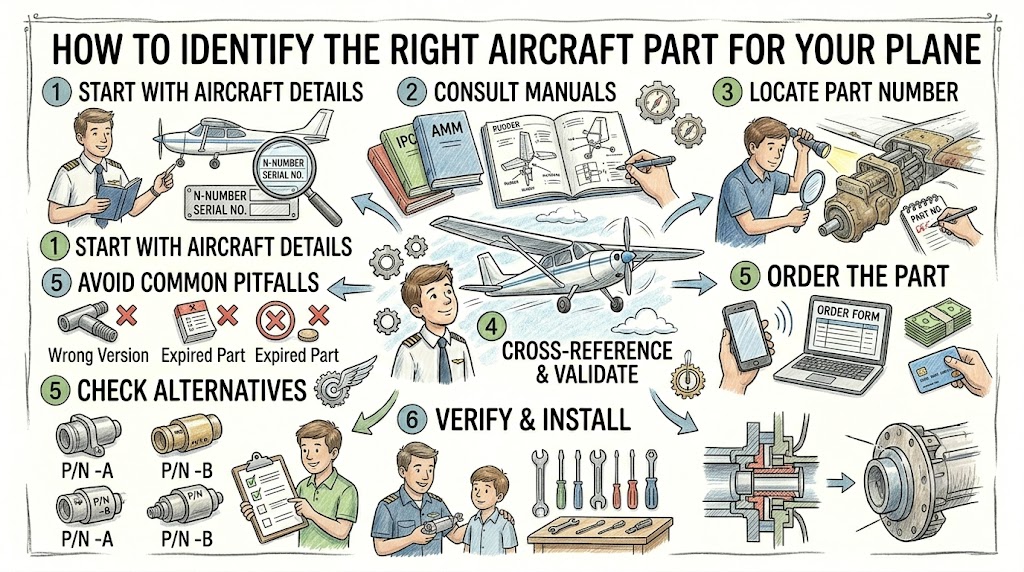
Ensuring your aircraft operates safely and efficiently begins with selecting the correct parts. Using the wrong component can compromise performance, lead to costly repairs, or even pose serious safety risks. Identifying the right aircraft part requires understanding your plane’s specifications, consulting manuals, verifying part numbers, and sourcing from reliable suppliers. A systematic approach helps aircraft owners, maintenance professionals, and hobbyists maintain regulatory compliance, protect their investment, and keep their aircraft airworthy.
Real-world Use Cases
An aircraft owner replacing a worn landing gear component must ensure the new part matches the original specifications. Installing a part from an incompatible model can cause mechanical failure or trigger a safety inspection. Flight schools and maintenance shops rely on precise identification to ensure training aircraft remain safe for students. Likewise, private pilots performing routine maintenance need to distinguish between OEM, aftermarket, and refurbished components to maintain both safety and warranty coverage.
Evaluation Criteria for Selecting Parts
Before purchasing, consider compatibility, certification, supplier reliability, maintenance history, and part condition. Every component must meet regulatory standards and align with the manufacturer’s specifications. Understanding these criteria ensures the aircraft remains compliant with FAA or equivalent aviation authority guidelines, reduces downtime, and minimizes the risk of costly errors.
Steps to Identify the Right Aircraft Part
1- Consult the Aircraft Maintenance Manual
Start by reviewing the aircraft’s maintenance manual for the exact part number, specifications, and installation guidelines. This ensures compatibility with the model and configuration of your plane.
2- Verify Part Numbers
Cross-check part numbers with official documentation or manufacturer databases. Using the correct part number reduces the risk of incorrect installation and safety issues.
3- Understand OEM vs. Aftermarket Parts
OEM (Original Equipment Manufacturer) parts guarantee compatibility and often come with warranty protection. Aftermarket parts may be less expensive but require careful verification to meet safety and performance standards.
4- Assess Certification and Compliance
Ensure the part meets all regulatory certifications, such as FAA-PMA approval in the U.S. Certified parts provide assurance that the component has undergone rigorous testing and is safe for use.
5- Evaluate Condition and History
For used or refurbished components, check maintenance history, service life, and condition. Avoid parts that show excessive wear, corrosion, or modifications not approved by the manufacturer.
6- Source from Trusted Suppliers
Purchase parts from authorized dealers or verified aviation suppliers. Reliable sources reduce the risk of counterfeit or substandard components.
7- Check Installation Requirements
Some parts may require specialized tools, calibration, or professional installation. Understanding these requirements prevents improper installation and potential operational failures.
8- Consider Cost vs. Safety
While cost is a factor, never compromise safety. Investing in the correct, certified part prevents larger expenses caused by failures, repairs, or regulatory penalties.
Tips for Avoiding Mistakes
- Maintain a catalog of part numbers for your aircraft.
- Keep detailed maintenance records to track replacements and lifespan.
- Join aviation forums or networks to learn from other pilots and technicians.
- Avoid sourcing parts from unverified online marketplaces.
Comparison Notes
OEM parts provide the highest assurance of compatibility and warranty coverage, while aftermarket parts can be cost-effective if certified and verified. Refurbished parts offer savings but require careful inspection and knowledge of prior service history. Choosing between these options depends on the part’s criticality, usage, and safety requirements.
FAQs
1- How can I confirm a part is compatible with my plane?
Check the aircraft maintenance manual, part number, and manufacturer specifications to ensure the component matches your model.
2- What is the difference between OEM and aftermarket parts?
OEM parts are produced by the original manufacturer and guaranteed compatible, while aftermarket parts are made by third parties and require verification for safety and compliance.
3- Are refurbished parts safe to use?
Yes, if they are certified, inspected, and come with documentation verifying service history and airworthiness.
4- How do I avoid counterfeit aircraft parts?
Buy only from authorized suppliers, verify part numbers, and review certification documentation.
5- Do I need a mechanic to install aircraft parts?
Some components require professional installation, especially critical systems like engines, avionics, or flight controls.
6- Can I use parts from a different aircraft model?
Only if the part is officially approved for your model. Using incompatible parts can compromise safety and void warranties.
7- What certifications should I look for in an aircraft part?
Look for FAA-PMA, TSO, or equivalent certifications depending on your country’s aviation authority.
8- How do I know when a part needs replacement?
Regular inspections, service bulletins, and manufacturer recommendations provide guidance on replacement intervals.
9- Are all aircraft parts expensive?
Costs vary by component type, criticality, and certification. Budget planning helps manage expenses while maintaining safety.
10- Can online suppliers be trusted for aircraft parts?
Only if they are verified, authorized dealers with proper documentation and certification for each part.
Conclusion
Identifying the right aircraft part is essential for maintaining safety, performance, and compliance. By consulting manuals, verifying part numbers, assessing certifications, and sourcing from trusted suppliers, aircraft owners and maintenance professionals can ensure their planes remain airworthy and reliable. Careful attention to detail, coupled with a systematic approach, reduces the risk of costly mistakes, enhances operational efficiency, and supports long-term aircraft health. Whether purchasing new, aftermarket, or refurbished components, prioritizing accuracy, certification, and safety is the key to successful aircraft maintenance.

