
Introduction
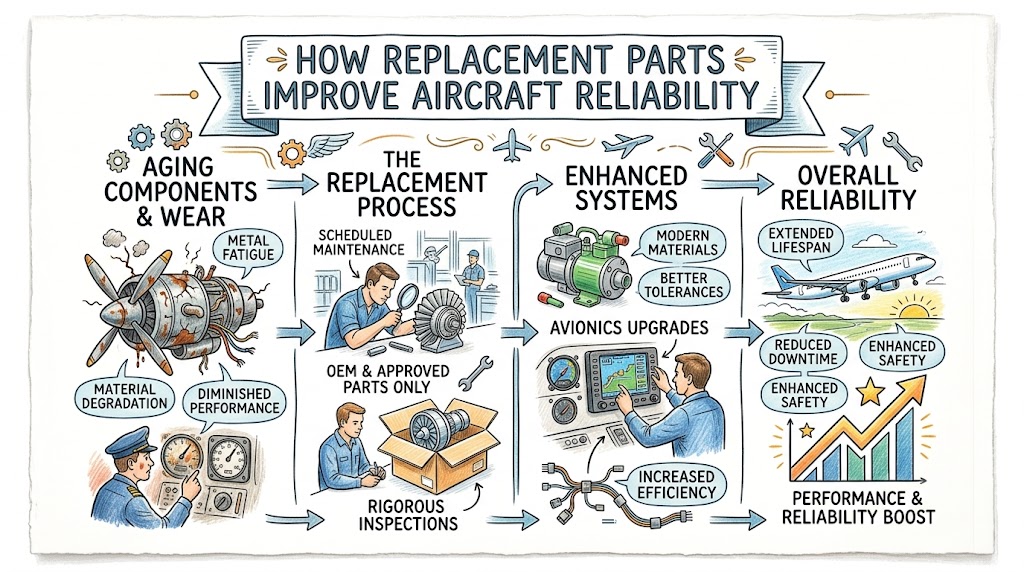
Aircraft reliability depends on the performance and condition of every individual component working together under extreme operational stress. From engines and landing gear to hydraulic systems and avionics, each part plays a critical role in ensuring safe, efficient, and uninterrupted flight operations. Over time, wear and tear from heat, vibration, pressure, and environmental exposure gradually reduce component performance.
Replacing parts at the right time is one of the most effective ways to maintain and improve aircraft reliability. Instead of waiting for a failure to occur, proactive replacement ensures that components continue operating within safe limits, preventing unexpected breakdowns and reducing maintenance disruptions. This approach strengthens overall aircraft performance, improves safety, and significantly increases operational uptime.
This guide explains how replacement parts directly improve aircraft reliability and why they are essential in modern aviation maintenance strategies.
Real-world Use Cases
A fleet operator improves dispatch reliability by replacing aging components before they fail, reducing AOG (Aircraft on Ground) events.
A private aircraft owner prevents engine failure by replacing worn filters and seals during scheduled maintenance.
An MRO technician identifies early bearing wear during inspection and replaces it before it affects engine performance.
A pilot reports unusual vibration, leading to timely part replacement that prevents secondary damage.
A maintenance planner schedules predictive part replacement to improve fleet availability.
A commercial airline reduces delays and cancellations through proactive component replacement programs.
A general aviation operator improves safety and reliability using OEM-certified replacement parts.
Evaluation Criteria for Reliable Aircraft Parts Replacement
Before replacing parts, aviation professionals evaluate:
- Component wear and inspection results
- OEM replacement recommendations
- Safety-critical importance of the part
- Maintenance history and lifecycle data
- Risk of failure and cascading damage
- Aircraft usage intensity and flight hours
- Availability of replacement components
- Cost impact of preventive vs reactive replacement
- Regulatory compliance requirements
- System interdependence and integration impact
- Environmental exposure conditions
- Predictive maintenance data trends
These criteria help ensure reliable and cost-effective maintenance decisions.
Preventing Unexpected Mechanical Failures
Worn components are a leading cause of unexpected aircraft breakdowns.
For example, replacing a degraded fuel pump before failure prevents engine shutdown during flight.
Improving Engine Performance Consistency
New components ensure engines operate within optimal performance ranges.
For example, replacing worn injectors restores smooth combustion and stable thrust.
Reducing Vibration and System Imbalance
Balanced systems reduce stress on aircraft structures.
For example, replacing worn bearings eliminates abnormal vibration during cruise.
Enhancing Fuel Efficiency
Efficient components reduce unnecessary fuel consumption.
For example, clean and functional filters improve airflow and combustion efficiency.
Minimizing Wear on Connected Systems
One faulty component can damage multiple systems.
For example, a leaking seal can cause hydraulic contamination and system degradation.
Improving Flight Safety
Reliable components reduce operational risks significantly.
For example, timely brake replacement ensures safe landing performance.
Supporting Predictive Maintenance Strategies
Replacement data helps forecast future failures.
For example, tracking engine wear patterns allows proactive scheduling of part changes.
Reducing Aircraft Downtime (AOG Situations)
Planned replacements reduce unexpected grounding events.
For example, replacing a sensor before failure avoids flight cancellations.
Ensuring OEM Compliance
OEM-approved parts maintain certified performance standards.
For example, certified components ensure regulatory approval during inspections.
Improving Hydraulic and Electrical Stability
Hydraulic and electrical systems rely on consistent component health.
For example, replacing aging actuators improves landing gear operation reliability.
Enhancing Landing Gear and Structural Integrity
Landing gear components undergo high stress during operations.
For example, worn struts replaced early improve landing stability and safety.
Reducing Cascading System Failures
One failure can trigger multiple system issues.
For example, a failing pump can damage fuel and hydraulic subsystems.
Improving Sensor and Avionics Accuracy
Accurate sensors ensure correct system feedback.
For example, replacing faulty altitude sensors improves navigation reliability.
Maintaining Lubrication and Cooling Efficiency
Proper lubrication prevents overheating and friction damage.
For example, replacing oil filters ensures smooth engine operation.
Extending Aircraft Lifespan
Regular replacement reduces long-term structural wear.
For example, timely part upgrades slow down system degradation over time.
New Replacement Parts vs Worn Components
| Factor | New Parts | Worn Components |
|---|---|---|
| Reliability | High | Low |
| Safety | Strong | Weak |
| Efficiency | Optimal | Reduced |
| Failure Risk | Low | High |
Preventive Replacement vs Reactive Repair
| Factor | Preventive Replacement | Reactive Repair |
| Cost | Lower | Higher |
| Downtime | Planned | Unexpected |
| Safety | High | Risky |
| Efficiency | High | Low |
OEM vs Non-Certified Parts
| Factor | OEM Parts | Non-Certified Parts |
| Compliance | Full | Limited |
| Reliability | High | Uncertain |
| Performance | Optimal | Variable |
| Risk Level | Low | High |
High-Reliability vs Poorly Maintained Aircraft
| Factor | Well-Maintained | Poorly Maintained |
| Safety | High | Low |
| Availability | High | Low |
| Maintenance Cost | Controlled | High |
| Reliability | Strong | Weak |
Benefits of Replacement Parts for Aircraft Reliability
Replacement parts help:
- Improve flight safety
- Reduce unexpected failures
- Increase aircraft availability
- Enhance engine efficiency
- Reduce downtime and delays
- Extend aircraft lifespan
- Improve fleet reliability
- Support predictive maintenance
- Maintain regulatory compliance
- Increase operational efficiency
Practical Tips for Operators
- Follow OEM replacement schedules
- Monitor wear and tear trends
- Replace parts before failure occurs
- Use certified aviation components
- Track lifecycle and usage hours
- Maintain proper maintenance records
- Conduct regular inspections
Common Mistakes to Avoid
- Delaying scheduled replacements
- Using low-quality parts
- Ignoring early warning signs
- Skipping maintenance inspections
- Poor lifecycle tracking
- Not following OEM guidance
FAQs
1. How do replacement parts improve aircraft reliability?
They prevent failures and ensure systems operate within safe performance limits.
2. When should aircraft parts be replaced?
Based on OEM guidelines, inspection results, and usage hours.
3. What happens if parts are not replaced on time?
They may fail and cause system damage or operational disruptions.
4. Are OEM parts more reliable?
Yes, they meet certified safety and performance standards.
5. How do replacement parts reduce downtime?
They prevent unexpected failures and allow planned maintenance.
6. What is predictive maintenance?
It uses data trends to predict when parts should be replaced.
7. Which parts fail most often?
Filters, seals, bearings, and hydraulic components.
8. Can worn parts affect safety?
Yes, they significantly increase operational risk.
9. How do operators choose replacement parts?
Based on certification, compatibility, and reliability standards.
10. What is the biggest benefit of replacement parts?
Improved safety, reliability, and operational efficiency.
Conclusion
Replacement parts play a vital role in maintaining and improving aircraft reliability by ensuring that every system operates efficiently and safely. Proactive replacement of worn components reduces unexpected failures, improves performance, and minimizes costly downtime. By using certified parts, following maintenance schedules, and monitoring component health, operators can significantly enhance aircraft safety and long-term operational reliability. In modern aviation, replacement parts are not just maintenance items—they are essential to ensuring consistent, safe, and efficient flight operations.

