
Introduction
Aircraft engines are complex systems made up of many individual components working together to produce reliable power and safe operation. From internal engine components to fuel, ignition, and supporting systems, every part plays an important role in maintaining aircraft performance and reliability.
Choosing the right engine parts for an aircraft is not simply a matter of finding a replacement component. Aircraft owners and maintenance professionals must consider compatibility, quality, documentation, availability, maintenance requirements, and the specific needs of the aircraft.
The wrong component selection can create installation challenges, maintenance difficulties, and operational concerns. On the other hand, selecting appropriate aircraft engine parts helps support better maintenance planning, improved reliability, and long-term aircraft value.
What Are Aircraft Engine Parts?
Aircraft engine parts are the individual components that work together to allow an aircraft engine to operate efficiently.
Unlike ordinary mechanical systems, aircraft engines require components designed to meet specific aviation requirements related to:
- Reliability
- Performance
- Durability
- Safety
- Maintenance standards
Common aircraft engine parts include:
- Pistons
- Cylinders
- Crankshafts
- Bearings
- Valves
- Spark plugs
- Fuel system components
- Ignition components
- Sensors
- Engine accessories
Each component has a specific function, and proper compatibility is essential for reliable engine operation.
Why Choosing the Right Aircraft Engine Parts Matters
Supports Safety and Reliability
Aircraft engines operate under demanding conditions. Every component must perform correctly to support safe flight operations.
Choosing suitable engine parts helps:
- Maintain engine condition
- Reduce compatibility issues
- Support reliable operation
- Improve maintenance planning
Proper part selection is an important part of responsible aircraft ownership.
Helps Maintain Aircraft Performance
Engine components influence how effectively an aircraft engine operates.
Suitable parts can help support:
- Smooth engine operation
- Consistent performance
- Proper system function
However, aircraft performance depends on many factors, including aircraft design, maintenance practices, and operating conditions.
Improves Maintenance Efficiency
Using correct aircraft engine parts helps maintenance professionals perform repairs and inspections more effectively.
Benefits include:
- Easier installation
- Better documentation
- Reduced maintenance complications
- Improved repair planning
Protects Aircraft Value
Well-maintained aircraft with proper documentation often have better long-term value.
Accurate records of:
- Repairs
- Replacements
- Inspections
- Component history
help demonstrate responsible aircraft management.
Types of Aircraft Engine Parts
Internal Engine Components
Internal engine components are essential for producing mechanical power.
Common examples include:
Pistons
Pistons move inside engine cylinders and help convert combustion energy into mechanical movement.
Cylinders
Cylinders provide the chamber where combustion occurs and play an important role in engine operation.
Crankshafts
Crankshafts convert piston movement into rotational motion used to produce engine power.
Bearings
Bearings help reduce friction between moving engine components.
Ignition Components
Ignition components help start and maintain the combustion process.
Examples include:
- Spark plugs
- Ignition systems
- Related electrical components
Proper ignition component selection supports reliable engine operation.
Fuel System Components
Fuel system parts control the delivery of fuel to the engine.
Examples include:
- Fuel pumps
- Fuel injectors
- Fuel system components
Correct fuel system operation is essential for consistent engine performance.
Cooling Components
Aircraft engines require effective temperature management.
Cooling-related components help:
- Control engine temperature
- Prevent excessive heat
- Maintain operating efficiency
Engine Accessories
Engine accessories support overall aircraft engine operation.
Examples include:
- Starters
- Alternators
- Sensors
- Monitoring equipment
These components help manage engine functionality and information systems.
Factors to Consider When Choosing Aircraft Engine Parts
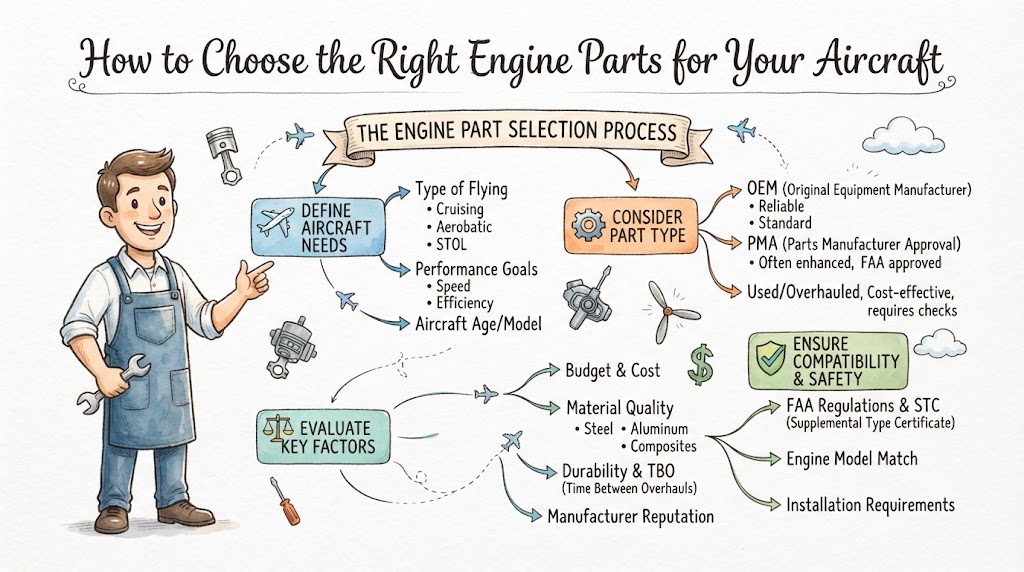
1. Aircraft Compatibility
The first and most important consideration is compatibility.
Before selecting any engine part, verify:
- Aircraft model
- Engine model
- Existing component information
- Manufacturer specifications
A component that works for one aircraft may not be suitable for another.
2. Quality and Documentation
Aircraft parts should have proper documentation and traceability information.
Important considerations include:
- Part identification
- Maintenance records
- Technical information
- Supplier documentation
Proper documentation supports maintenance planning and aircraft history management.
3. OEM Parts vs Alternative Parts
Aircraft owners may consider different sourcing options.
OEM Parts
Original equipment manufacturer parts are designed according to manufacturer specifications.
Potential advantages include:
- Manufacturer-specific design
- Established documentation
- Known compatibility
Alternative Parts
Some aircraft operators may consider approved alternative options.
Important considerations include:
- Compatibility verification
- Quality information
- Documentation
- Aviation approval requirements
The right choice depends on aircraft requirements and maintenance considerations.
4. Material and Manufacturing Quality
Aircraft engine components must withstand demanding operating conditions.
Important quality factors include:
- Material durability
- Manufacturing consistency
- Component reliability
- Proper specifications
Quality evaluation helps support long-term engine performance.
5. Maintenance Requirements
Before purchasing engine parts, consider future maintenance needs.
Evaluate:
- Installation requirements
- Inspection procedures
- Replacement planning
- Technical support availability
A component should fit into the aircraft’s overall maintenance strategy.
6. Supplier Reputation
The supplier you choose can significantly affect the purchasing experience.
Consider:
- Aviation experience
- Product knowledge
- Documentation support
- Customer service
- Parts availability
Reliable suppliers help aircraft owners make informed decisions.
How to Verify Aircraft Engine Part Compatibility
Step 1: Identify Aircraft Information
Collect important details such as:
- Aircraft type
- Engine model
- Existing part information
Step 2: Review Part Specifications
Check:
- Component specifications
- Technical details
- Manufacturer information
Step 3: Confirm Documentation
Review available:
- Records
- Identification details
- Maintenance information
Step 4: Consult Aviation Professionals
When uncertain, aircraft owners should work with qualified aviation professionals to verify suitability.
New Aircraft Engine Parts vs Used Parts
| Feature | New Engine Parts | Used Engine Parts |
|---|---|---|
| Condition | New condition | Requires evaluation |
| Documentation | Usually available | Depends on history |
| Initial Cost | Often higher | May be lower |
| Maintenance History | No previous use history | Previous records required |
| Reliability Confidence | More predictable | Depends on condition |
| Inspection Requirements | Standard verification | Additional evaluation may be needed |
| Component Life | Full service life available | Remaining life varies |
| Availability | Depends on production | Depends on market |
| Support | Manufacturer support may be available | Supplier dependent |
| Risk Level | Lower uncertainty | Higher uncertainty |
| Long-Term Planning | Easier forecasting | Requires careful assessment |
| Quality Verification | Based on manufacturing standards | Based on inspection results |
| Installation Planning | More predictable | May require additional checks |
| Ownership Confidence | Generally higher | Depends on documentation |
| Purchase Decision | Based on specifications | Based on condition |
Common Mistakes When Buying Aircraft Engine Parts
Choosing Parts Only Based on Price
The lowest-cost option may not always provide the best long-term value.
Consider:
- Quality
- Compatibility
- Documentation
- Support
Ignoring Documentation
Missing records can create problems during maintenance planning and future inspections.
Not Confirming Compatibility
Incorrect parts may create:
- Installation issues
- Maintenance delays
- Operational concerns
Always verify compatibility before purchase.
Buying From Unknown Sources
Aircraft parts require careful sourcing.
Choose suppliers that provide:
- Clear product information
- Proper documentation
- Aviation experience
Delaying Necessary Replacement
Waiting too long to replace worn components may increase maintenance challenges.
Aircraft Engine Parts Maintenance Best Practices
Good maintenance practices include:
Regular Inspections
Routine inspections help identify component conditions.
Accurate Record Keeping
Maintain records of:
- Replacements
- Repairs
- Inspections
Proper Storage
Aircraft components should be stored according to recommended conditions.
Component Tracking
Monitoring part history helps improve maintenance planning.
How Aircraft Owners Can Manage Engine Parts Inventory
Effective inventory management helps prevent unnecessary delays.
Best practices include:
- Tracking commonly replaced components
- Maintaining purchase records
- Organizing technical documents
- Planning future maintenance needs
Choosing the Right Aircraft Parts Supplier
Product Availability
A reliable supplier should provide access to required components.
Technical Knowledge
A knowledgeable supplier can help customers understand product requirements.
Documentation Support
Proper documentation improves confidence in aircraft parts.
Customer Service
Good communication helps solve purchasing and technical questions.
Aviation Experience
Experience in aviation parts is valuable when dealing with specialized components.
Aircraft Engine Parts Selection Checklist
| Consideration | Why It Matters |
|---|---|
| Aircraft Compatibility | Ensures correct fit and function |
| Engine Compatibility | Matches component requirements |
| Documentation | Supports maintenance records |
| Quality Standards | Improves reliability confidence |
| Supplier Reputation | Supports better purchasing decisions |
| Maintenance Requirements | Helps long-term planning |
| Part Availability | Reduces delays |
| Budget Planning | Supports cost management |
| Installation Support | Helps maintenance efficiency |
| Long-Term Reliability | Supports aircraft ownership |
Quality-Focused Selection vs Price-Focused Selection
| Feature | Quality-Focused Selection | Price-Focused Selection |
|---|---|---|
| Reliability | Primary consideration | May vary |
| Compatibility Checking | Detailed evaluation | Sometimes limited |
| Documentation | Strong focus | May be incomplete |
| Long-Term Value | Higher priority | Short-term focus |
| Maintenance Planning | Better support | May create challenges |
| Supplier Support | Usually stronger | Depends on source |
| Risk Management | More structured | Less predictable |
| Component History | Carefully reviewed | May be overlooked |
| Installation Confidence | Higher | Variable |
| Aircraft Protection | Stronger focus | Cost-focused |
| Ownership Planning | More effective | Limited planning |
| Quality Verification | Detailed | May vary |
| Future Maintenance | Easier | Potential challenges |
| Decision Process | Research-based | Price-driven |
| Overall Confidence | Higher | Depends on circumstances |
Frequently Asked Questions
1. Why is choosing the right aircraft engine parts important?
Correct engine parts support compatibility, reliability, maintenance efficiency, and proper aircraft operation.
2. What are the main types of aircraft engine parts?
Major categories include internal engine components, ignition parts, fuel system components, cooling components, and engine accessories.
3. How do I verify aircraft engine part compatibility?
Verify aircraft and engine information, review specifications, check documentation, and consult aviation professionals when needed.
4. Should I choose OEM or alternative aircraft parts?
The choice depends on aircraft requirements, documentation, compatibility, and maintenance considerations.
5. What documents should aircraft parts include?
Documentation may include identification details, technical information, and maintenance records.
6. Are used aircraft engine parts reliable?
Used parts can be suitable when properly inspected and supported by accurate history and documentation.
7. How do quality parts affect aircraft maintenance?
Quality components can support reliable operation and better maintenance planning.
8. Why is supplier reputation important?
Experienced suppliers can provide better product information, support, and documentation assistance.
9. Can incorrect engine parts affect aircraft performance?
Incorrect components may create compatibility or operational issues.
10. How often should aircraft engine parts be inspected?
Inspection schedules depend on aircraft type, engine requirements, operating conditions, and maintenance programs.
Conclusion
Choosing the right engine parts for your aircraft requires careful consideration of compatibility, quality, documentation, maintenance requirements, and supplier reliability. Aircraft engines depend on many interconnected components, and selecting suitable parts is essential for maintaining dependable operation.
Aircraft owners and maintenance professionals should focus on long-term reliability rather than making decisions based only on price. Proper research, accurate records, and trusted aviation suppliers help ensure better maintenance outcomes.

