
Introduction
Purchasing aircraft engine parts is a critical part of aircraft maintenance. Every engine component contributes to the safe and efficient operation of an aircraft, making it important to choose replacement parts with care. Whether maintaining a private aircraft, supporting a commercial fleet, or restoring an older airplane, buying the right engine parts helps improve reliability, reduce maintenance costs, and support long-term performance.
Many buyers unintentionally make purchasing mistakes because they focus only on price or overlook important details such as compatibility, documentation, or supplier credibility. These mistakes can result in unnecessary repairs, increased downtime, and additional expenses. Understanding what to look for before making a purchase helps ensure better maintenance decisions and safer aircraft operations.
Why Choosing Quality Aircraft Engine Parts Is Important
Aircraft engines operate under demanding conditions, including high temperatures, constant vibration, and heavy workloads. Every component must perform exactly as expected to maintain engine efficiency and flight safety.
Selecting reliable aircraft engine parts offers several advantages:
- Improves engine reliability
- Supports safe aircraft operations
- Reduces unexpected maintenance
- Extends engine service life
- Helps maintain consistent performance
- Protects the overall value of the aircraft
Choosing quality parts today often prevents expensive repairs in the future.
Common Aircraft Engine Parts Replaced During Maintenance
Routine inspections and scheduled maintenance often require replacement of engine components such as:
- Cylinders
- Pistons
- Connecting rods
- Crankshafts
- Camshafts
- Bearings
- Valves
- Magnetos
- Fuel pumps
- Oil pumps
- Spark plugs
- Gaskets
- Seals
- Engine mounts
- Filters
- Turbocharger components
Every part performs a specific function, making accuracy and quality essential during replacement.
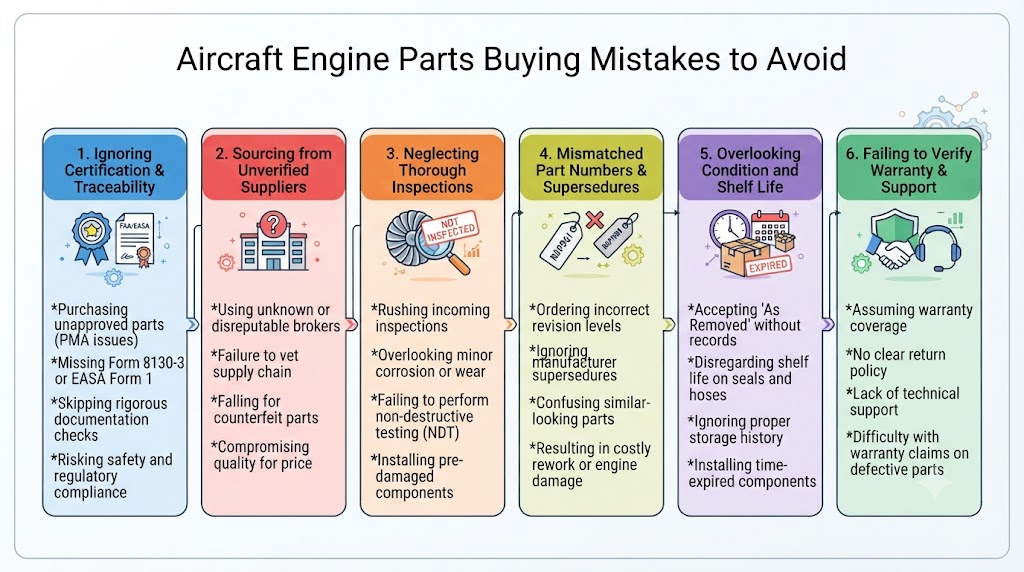
Common Aircraft Engine Parts Buying Mistakes
Buying Only Based on Price
One of the most common mistakes is choosing the lowest-priced component without evaluating its quality.
Although saving money may seem beneficial, inexpensive parts may not always provide the durability or reliability required for aircraft maintenance. Replacing a poor-quality component can increase labour costs, aircraft downtime, and future repair expenses.
Instead of comparing only prices, consider:
- Product quality
- Supplier reputation
- Warranty
- Customer support
- Long-term value
A dependable part is often more economical over its entire service life.
Purchasing the Wrong Part Number
Aircraft engine parts often look similar, but even small differences in part numbers can indicate completely different specifications.
Installing an incorrect part may lead to:
- Installation difficulties
- Reduced engine performance
- Additional maintenance work
- Increased operating costs
Always compare the manufacturer’s part number with maintenance manuals before ordering.
Ignoring Engine Compatibility
Not every aircraft engine part is designed for every engine model.
Before purchasing, verify:
- Engine model
- Aircraft model
- Manufacturer recommendations
- Serial number compatibility
Confirming compatibility before ordering helps avoid delays and unnecessary returns.
Buying From Unverified Suppliers
The quality of a supplier is just as important as the quality of the product.
Unknown suppliers may offer products with limited documentation, uncertain quality, or poor customer support.
Choose suppliers that provide:
- Aviation industry experience
- Clear product information
- Reliable customer service
- Consistent product availability
- Professional technical assistance
Working with a trusted supplier reduces purchasing risks.
Not Reviewing Product Documentation
Proper documentation plays an important role in aircraft maintenance.
Before completing a purchase, ask whether the supplier provides relevant documentation, including:
- Product identification
- Manufacturer information
- Traceability records
- Inspection reports
- Applicable certifications
Keeping complete records simplifies future maintenance and inspections.
Purchasing Used Parts Without Inspection
Used aircraft engine parts can be a cost-effective option when properly evaluated.
However, purchasing used components without inspection may introduce hidden problems such as:
- Corrosion
- Cracks
- Excessive wear
- Previous repair damage
Always inspect used parts carefully or have them evaluated by qualified maintenance professionals before installation.
Ignoring Warranty Information
Warranty coverage is often overlooked during the purchasing process.
Understanding warranty terms helps buyers know what protection is available if a product develops a manufacturing defect.
Review:
- Warranty duration
- Coverage details
- Replacement policy
- Return conditions
A clear warranty policy reflects supplier confidence in product quality.
Overlooking Long-Term Maintenance Costs
The initial purchase price represents only one part of the overall ownership cost.
Consider additional factors such as:
- Expected service life
- Maintenance frequency
- Installation costs
- Future replacement expenses
- Aircraft downtime
Higher-quality components frequently provide lower overall operating costs.
Skipping Expert Advice
Aircraft maintenance requires technical knowledge.
If there is any uncertainty regarding compatibility or replacement options, seek guidance from:
- Licensed aircraft mechanics
- Aircraft maintenance engineers
- Approved maintenance organizations
- Technical support specialists
Professional advice helps prevent costly purchasing mistakes.
Focusing on Immediate Needs Instead of Long-Term Reliability
Some buyers purchase parts simply to solve an immediate maintenance issue without considering future performance.
A better approach is to choose components that provide:
- Reliable operation
- Long service life
- Better maintenance planning
- Consistent engine performance
Thinking long term supports more efficient aircraft ownership.
How to Select Reliable Aircraft Engine Parts
Making a careful purchasing decision involves more than finding a suitable price.
Follow these best practices:
- Verify the correct part number.
- Confirm engine compatibility.
- Buy from experienced aviation suppliers.
- Review available documentation.
- Compare warranty policies.
- Evaluate supplier reputation.
- Inspect used components carefully.
- Ask technical questions before purchasing.
- Consult maintenance professionals when necessary.
- Choose quality over short-term savings.
Benefits of Buying From a Trusted Aircraft Parts Supplier
Working with a reliable supplier offers several important benefits.
These include:
- Consistent product quality
- Better technical guidance
- Dependable customer support
- Faster product availability
- Reduced purchasing risk
- Improved maintenance planning
- Greater confidence in replacement parts
A trusted supplier such as planespart.com helps aircraft owners, maintenance organizations, and aviation professionals source dependable aircraft engine parts while supporting safe and efficient aircraft maintenance.
Aircraft Engine Parts Buying Comparison
| Buying Mistake | Possible Result | Recommended Approach |
|---|---|---|
| Buying only on price | Lower quality and shorter lifespan | Focus on value and reliability |
| Incorrect part number | Installation issues | Verify manufacturer specifications |
| Ignoring compatibility | Poor engine performance | Match aircraft and engine model |
| Buying from unknown suppliers | Product quality concerns | Choose experienced aviation suppliers |
| Missing documentation | Maintenance record issues | Request complete documentation |
| Purchasing used parts without inspection | Hidden defects | Perform professional inspection |
| Ignoring warranty | Unexpected replacement costs | Review warranty before purchasing |
| No expert consultation | Incorrect purchasing decisions | Seek professional guidance |
Aircraft Engine Parts Buying Checklist
Before placing your order, make sure you can answer “Yes” to each of these questions.
- Have you confirmed the correct part number?
- Is the part compatible with the engine model?
- Does it match the aircraft specifications?
- Is the supplier experienced in aviation parts?
- Have you reviewed the available documentation?
- Have you checked warranty coverage?
- Has the part been inspected if it is used?
- Have you compared product quality?
- Have you consulted a maintenance professional if needed?
- Are you choosing long-term reliability over the lowest price?
Frequently Asked Questions
1. Why is selecting the correct aircraft engine part so important?
The correct component helps maintain engine performance, reliability, and aircraft safety while reducing unnecessary maintenance.
2. Are used aircraft engine parts safe to purchase?
Yes, provided they have been properly inspected, documented, and approved for the intended application.
3. What should buyers verify before ordering?
Confirm the part number, compatibility, supplier reputation, documentation, and warranty.
4. Why is documentation important?
Documentation supports maintenance records, product traceability, and future inspections.
5. Is the lowest-priced part always the best option?
No. Lower-priced parts may lead to reduced durability and higher long-term maintenance costs.
6. How can buyers avoid purchasing incorrect parts?
Always verify manufacturer part numbers and confirm compatibility with the aircraft engine.
7. Should professional advice be taken before buying?
Yes. Maintenance professionals can help identify the correct replacement component and reduce purchasing errors.
8. What qualities should a reliable aviation parts supplier offer?
A dependable supplier should provide quality products, technical support, clear documentation, warranty information, and responsive customer service.
9. How does buying quality parts reduce costs?
Reliable components typically last longer, reduce unexpected repairs, and minimize aircraft downtime.
10. Where can buyers find dependable aircraft engine parts?
Aircraft owners and maintenance professionals can source quality aircraft engine parts from trusted suppliers such as planespart.com, where product quality, technical support, and dependable service are prioritized.
Final Thoughts
Buying aircraft engine parts requires careful planning, attention to detail, and a focus on quality rather than simply choosing the lowest price. Verifying compatibility, checking documentation, evaluating supplier reputation, and consulting experienced maintenance professionals all contribute to smarter purchasing decisions.
Avoiding common buying mistakes not only improves aircraft reliability but also helps reduce maintenance expenses and supports safe flight operations. By working with a trusted supplier like planespart.com, buyers can confidently source dependable aircraft engine parts that meet the demands of professional aircraft maintenance while protecting their investment for years to come.

