
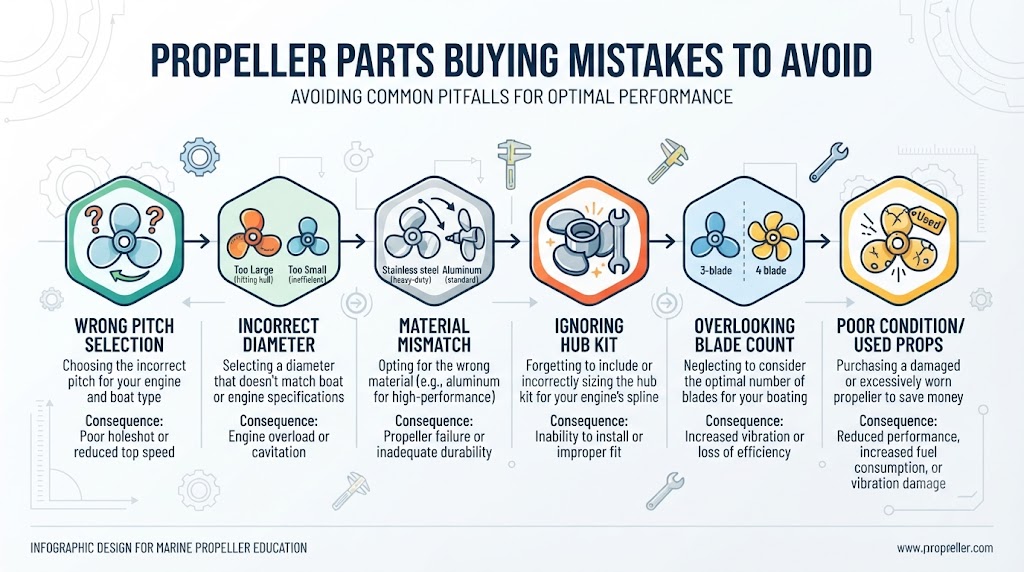
Buying the right aircraft propeller parts is an important responsibility for aircraft owners, builders, pilots, and maintenance professionals. Propeller components are not ordinary replacement items; they must match the specific aircraft, engine, propeller system, and applicable documentation.
A part that looks correct may still have different specifications, compatibility requirements, or service history. By asking the right questions and checking the details before purchasing, buyers can reduce the risk of ordering an unsuitable component and make more informed decisions.
Why Careful Propeller Parts Buying Matters
An aircraft propeller operates as part of an integrated propulsion system. Individual components must work with the applicable propeller and aircraft configuration.
Before purchasing a replacement or spare component, buyers should consider:
- Exact part number
- Propeller model
- Aircraft configuration
- Engine configuration
- Manufacturer information
- Component condition
- Maintenance history
- Documentation
- Traceability
- Supplier information
- Return and warranty terms
Taking time to verify these details can prevent costly purchasing mistakes and unnecessary delays.
1. Buying a Part Without Confirming Compatibility
One of the biggest mistakes is assuming that a component will fit simply because it looks similar to the existing part.
Aircraft propeller systems can have specific requirements based on the:
- Aircraft
- Engine
- Propeller model
- Propeller configuration
- Component design
- Manufacturer specifications
Before purchasing, verify that the part is intended for the exact application.
If compatibility is unclear, consult the appropriate manufacturer documentation or a qualified aviation maintenance professional.
2. Choosing a Part Only Because It Is Cheaper
Price is naturally an important consideration, but it should not be the only factor when purchasing aviation components.
A lower-priced part may not provide the same level of documentation, traceability, condition information, or supplier support as another option.
Compare the complete purchase based on:
- Compatibility
- Condition
- Documentation
- Part identification
- Supplier reliability
- Return terms
- Warranty information where applicable
- Shipping
- Overall suitability
The goal should be to purchase the correct component rather than simply the least expensive one.
3. Failing to Verify the Exact Part Number
Part numbers are essential when identifying aircraft components.
Two parts can have similar names or appearances while having different specifications or applications.
Before ordering, compare:
- Part number
- Manufacturer
- Propeller model
- Applicable configuration
- Serial information where relevant
- Revision information where applicable
Do not rely solely on photographs or descriptions such as “looks like the original.”
The exact identification should be confirmed through reliable documentation.
4. Ignoring Manufacturer Documentation
Manufacturer documentation can provide valuable information about a component’s intended application and requirements.
Depending on the component, relevant information may include:
- Parts information
- Installation documentation
- Maintenance instructions
- Service information
- Inspection requirements
- Configuration information
Buyers should review the documentation applicable to their specific aircraft and propeller.
If the available information is incomplete or contradictory, seek clarification before purchasing or installing the component.
5. Not Checking the Condition of Used Parts
Used aircraft propeller parts may require additional investigation before purchase.
A buyer should determine whether the component is:
- New
- Used
- Overhauled
- Reconditioned
- Previously repaired
- Inspected
- Stored for an extended period
Ask the seller for available information about the component’s history.
Condition should not be judged only from photographs. An appropriately qualified professional may need to inspect the component before it is considered suitable for service.
6. Overlooking Maintenance and Service History
A component’s history can provide important context.
Where records are available, buyers should look for information about:
- Previous maintenance
- Repairs
- Inspections
- Overhaul
- Previous use
- Storage
- Component replacement
Complete documentation can help establish what has happened to the part before it reaches the buyer.
If significant history is unavailable, buyers should understand the limitations of what can be verified.
7. Assuming Every Used Propeller Part Is Acceptable
Used does not automatically mean unsuitable, but it also does not automatically mean acceptable.
A used component should be evaluated according to the requirements applicable to that particular part and aircraft.
Questions to consider include:
- Is the part correctly identified?
- Is its history known?
- Is the condition documented?
- Is the component compatible?
- Is inspection required?
- Is appropriate traceability available?
- Does the applicable documentation support its intended use?
The final determination of serviceability should be made through appropriate aviation maintenance procedures and qualified personnel.
8. Ignoring Material and Specification Requirements
Aircraft propeller components can be manufactured using specific materials and processes for their intended application.
Buyers should avoid selecting components based simply on:
- Appearance
- Color
- Shape
- Material similarity
- Size
Instead, verify the applicable specifications.
Important information may include:
- Material
- Dimensions
- Design characteristics
- Manufacturing specifications
- Applicable configuration
- Manufacturer requirements
A component made from a seemingly similar material is not necessarily an acceptable substitute.
9. Buying From an Unverified Source
The source of an aircraft component matters.
Before purchasing, evaluate whether the seller can provide useful information about the component.
Consider asking:
- Is the part properly identified?
- Is the manufacturer known?
- Is supporting documentation available?
- Can the seller explain the component’s condition?
- Is traceability information available?
- Are return conditions clearly stated?
- Does the seller communicate clearly about compatibility?
A professional purchasing process should involve verification rather than relying entirely on a seller’s description.
10. Not Asking About Authenticity and Traceability
Traceability can be an important consideration when purchasing aircraft components.
Buyers should understand where a component came from and what information supports its identity.
Depending on the part, useful information may include:
- Manufacturer
- Part number
- Serial number where applicable
- Source
- Previous documentation
- Maintenance history
- Supporting records
If the identity or history of a component cannot be established, buyers should seek appropriate professional guidance before considering it for aircraft use.
11. Relying Only on Photographs
Online photographs can be useful for initial research, but they cannot establish every important characteristic of an aircraft component.
A photograph may not reveal:
- Internal condition
- Material properties
- Previous repairs
- Hidden damage
- Exact dimensions
- Service history
- Traceability
- Documentation
Use photographs as an initial reference, not as the sole basis for determining whether a component is appropriate.
12. Forgetting to Check Shipping and Packaging
Propeller components should be packaged appropriately for transportation.
When ordering a component, ask how it will be:
- Packaged
- Protected
- Stored before shipment
- Shipped
- Insured where applicable
After receiving a component, examine the packaging and item for signs of shipping damage.
If damage is suspected, document the condition and contact the supplier before proceeding with any use or installation.
13. Assuming Installation Is Simple
Another common mistake is treating a propeller component like an ordinary mechanical replacement part.
Aircraft propeller systems have specific installation and maintenance requirements.
Buyers should not rely on generic online instructions for critical aircraft maintenance.
Instead:
- Review applicable manufacturer documentation.
- Confirm the required hardware.
- Follow the aircraft and propeller manufacturer’s instructions.
- Use appropriate maintenance procedures.
- Consult a qualified aviation maintenance professional when required.
Purchasing a part and installing a part are separate decisions, and both require appropriate attention.
14. Ignoring Hardware Requirements
The component itself is only part of the installation.
Related hardware may have specific requirements concerning:
- Type
- Size
- Material
- Configuration
- Condition
- Installation
- Torque
- Locking arrangements
Never assume that generic replacement hardware is acceptable simply because it physically fits.
Always follow the applicable documentation for the specific aircraft and propeller configuration.
15. Failing to Consider the Complete Propeller System
A propeller component should not always be evaluated in isolation.
The overall configuration may involve:
- Propeller assembly
- Engine
- Propeller hub
- Fasteners
- Spinner components
- Related controls
- Aircraft structure
- Other associated systems
A change to one component may affect compatibility with other components.
Before purchasing, make sure the proposed part belongs to the correct overall configuration.
16. Not Reviewing Return Policies
Aircraft components can be highly application-specific, making return terms important.
Before ordering, understand:
- Whether returns are accepted
- Time limits for returns
- Condition requirements
- Compatibility-related returns
- Restocking conditions where applicable
- Warranty terms
Clear purchasing terms can prevent misunderstandings if the component is later determined to be unsuitable.
17. Failing to Ask Questions Before Ordering
When a product description does not answer an important question, buyers should ask before placing the order.
Useful questions include:
- What is the exact part number?
- Which propeller models does it support?
- Is the component new or previously used?
- Is documentation available?
- What is the component’s history?
- Is traceability available?
- Are there applicable service requirements?
- What hardware is included?
- What are the return conditions?
A few questions before purchase can prevent unnecessary complications afterward.
18. Not Considering Long-Term Maintenance
A component may appear suitable for immediate replacement, but buyers should also consider its long-term maintenance requirements.
Ask:
- What inspections apply?
- What documentation should be retained?
- Are there service considerations?
- How should the component be maintained?
- What conditions require professional inspection?
Understanding these factors before purchase can help aircraft owners plan for future maintenance.
Propeller Parts Buying Checklist
Use this checklist before purchasing an aircraft propeller component:
- Confirm the aircraft model.
- Confirm the engine configuration.
- Identify the propeller model.
- Verify the exact part number.
- Confirm the manufacturer.
- Check component condition.
- Review maintenance history.
- Request available documentation.
- Verify traceability where applicable.
- Ask about previous repairs.
- Confirm compatibility.
- Review applicable specifications.
- Check included hardware.
- Understand shipping arrangements.
- Review return conditions.
- Review warranty information where applicable.
- Consult qualified maintenance personnel when necessary.
Questions to Ask Before Buying Propeller Parts
Before placing an order, consider asking the seller the following questions:
Compatibility Questions
- Is this component compatible with my propeller?
- What aircraft and engine configurations is it intended for?
- What is the exact part number?
- Is there a manufacturer’s compatibility reference?
Condition Questions
- Is the component new, used, overhauled, or reconditioned?
- Has it previously been repaired?
- Is its condition documented?
- Has it been inspected?
Documentation Questions
- Are maintenance records available?
- Is traceability information available?
- Are installation or maintenance instructions included?
- Is manufacturer documentation available?
Purchasing Questions
- What exactly is included?
- How will the component be packaged?
- What are the return conditions?
- Is there applicable warranty coverage?
- What should I do if the component is found to be incompatible?
How to Make Better Aircraft Propeller Parts Purchasing Decisions
A structured buying process can make component selection more reliable.
Step 1: Identify the Existing Configuration
Record the aircraft, engine, propeller, and relevant component information before searching for replacement parts.
Step 2: Find the Exact Part Number
Use applicable documentation to identify the correct component rather than relying on photographs or general descriptions.
Step 3: Verify Compatibility
Confirm that the part is appropriate for the intended aircraft and propeller configuration.
Step 4: Investigate Condition and History
For used or previously serviced components, request available records and condition information.
Step 5: Evaluate the Supplier
Consider the supplier’s ability to provide accurate identification, documentation, and clear purchasing terms.
Step 6: Review the Complete Purchase
Consider the part, shipping, documentation, return terms, and supplier support rather than focusing only on price.
Step 7: Consult a Qualified Professional
When there is uncertainty about serviceability, installation, compatibility, or maintenance, seek appropriate aviation maintenance guidance.
New vs. Used Propeller Parts
| Consideration | New Parts | Used Parts |
|---|---|---|
| Condition | Generally supplied as new | Requires careful evaluation |
| History | Usually easier to establish | May require additional investigation |
| Documentation | Manufacturer information may be available | Documentation may vary |
| Traceability | Should be verified where applicable | Requires careful review |
| Cost | May be higher | May be lower |
| Inspection | Follow applicable requirements | Condition may require additional professional evaluation |
| Compatibility | Must still be verified | Must still be verified |
The choice between new and used components should be based on the specific application, documentation, condition, and applicable requirements rather than price alone.
Why Documentation Should Stay With the Aircraft Records
Good documentation can be valuable long after the purchase is complete.
Aircraft owners should retain appropriate records related to purchased components, including applicable:
- Invoices
- Part identification
- Maintenance documentation
- Installation records
- Inspection information
- Supplier information
- Component history
Maintaining organized records can make future maintenance, inspections, and component identification easier.
Frequently Asked Questions
Q1. How do I identify the correct aircraft propeller part?
Start with the aircraft and propeller documentation and identify the exact applicable part number. Do not rely solely on visual similarity.
Q2. Why is the exact part number important?
A part number identifies a specific component and helps distinguish it from parts that may look similar but have different specifications or applications.
Q3. Should I buy used propeller parts?
Used components should be evaluated individually. Buyers should consider compatibility, condition, history, documentation, and applicable maintenance requirements before making a decision.
Q4. What documents should I request?
Depending on the component, request available information concerning identification, maintenance, inspection, repairs, traceability, and applicable manufacturer documentation.
Q5. Can I determine a propeller part’s condition from photographs?
Photographs can provide useful visual information but cannot establish every aspect of a component’s condition, history, or serviceability.
Q6. Why is supplier reliability important?
A reliable supplier can make it easier to obtain accurate part identification, documentation, condition information, and clear purchasing terms.
Q7. Can I install propeller parts myself?
Aircraft propeller components can involve safety-critical maintenance considerations. Installation should follow applicable manufacturer documentation and appropriate aviation maintenance requirements, with qualified professional assistance when required.
Final Thoughts
Buying aircraft propeller parts requires careful attention to details that may not be obvious from a product photograph or basic description. Compatibility, exact part numbers, condition, documentation, traceability, supplier information, and applicable maintenance requirements should all be considered before making a purchase. The biggest mistake is treating an aviation component like an ordinary replacement part. A component that appears to fit may not be appropriate for a particular aircraft or propeller configuration.

