
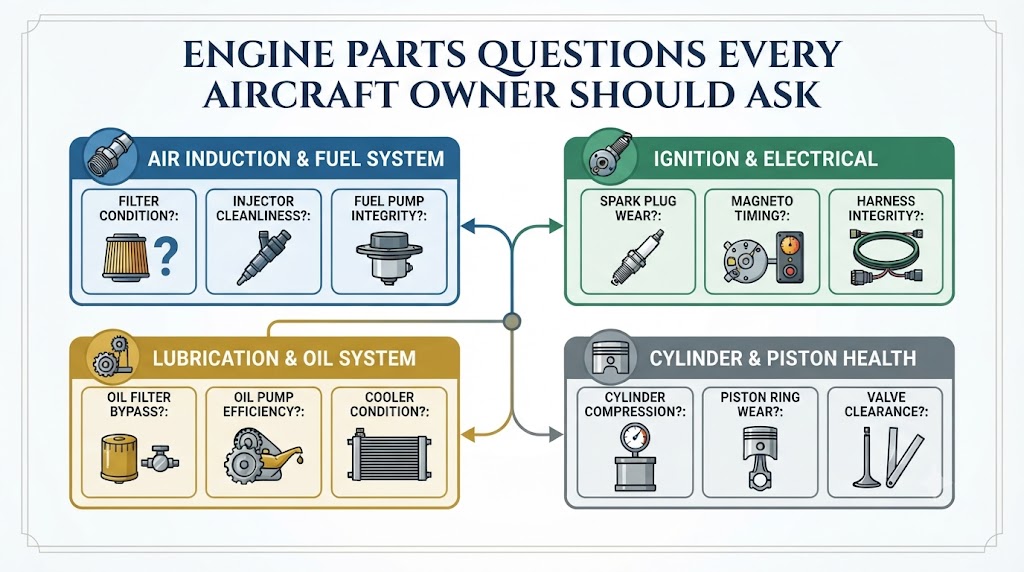
Aircraft ownership comes with many responsibilities, and maintaining the engine is one of the most important aspects of safe and reliable flying. The aircraft engine is a complex system made up of numerous components that work together to generate power, maintain performance, and support safe flight operations.
Every engine part, whether large or small, has an important role. A worn, poor-quality, or incompatible component can affect engine efficiency, increase maintenance requirements, and create potential safety concerns.
For aircraft owners, choosing the right aircraft engine parts requires careful research and proper planning. Before purchasing, replacing, or upgrading engine components, owners should ask important questions about compatibility, quality, certification, maintenance, and long-term reliability
Why Aircraft Engine Parts Are Important
Aircraft engines operate under demanding conditions. Components must handle high temperatures, pressure, vibration, and continuous operation during flights.
Quality engine parts help maintain:
- Reliable engine performance
- Smooth aircraft operation
- Fuel efficiency
- Flight safety
- Longer engine lifespan
Using incorrect or low-quality components can result in:
- Reduced engine performance
- Frequent maintenance issues
- Increased operating costs
- Potential safety risks
Aircraft owners should understand that engine maintenance is not only about replacing damaged parts. It is about selecting reliable components that support the overall health of the aircraft.
Essential Questions Every Aircraft Owner Should Ask About Engine Parts
1. Is This Engine Part Compatible With My Aircraft?
The first question every aircraft owner should ask is whether the part is compatible with their specific aircraft and engine model.
Aircraft engines are designed with precise specifications, and not every component will work correctly with every aircraft.
Owners should verify:
- Aircraft make and model
- Engine model number
- Part number requirements
- Manufacturer specifications
- Installation guidelines
Using an incompatible component can cause:
- Installation problems
- Poor engine performance
- Increased wear
- Safety concerns
Before purchasing any engine component, aircraft owners should confirm compatibility through proper documentation and technical guidance.
2. Is the Engine Part New, Used, or Refurbished?
Aircraft owners often have multiple options when purchasing engine components. Understanding the condition of a part is important before making a decision.
New Engine Parts
New components usually provide:
- Latest manufacturing standards
- Full service life
- Better reliability
- Manufacturer support
However, they may have a higher upfront cost.
Used Engine Parts
Used parts can offer cost advantages, but owners should carefully review:
- Previous operating history
- Maintenance records
- Remaining service life
- Inspection results
Refurbished or Overhauled Parts
Refurbished components may provide a balance between cost and reliability when properly restored and inspected.
Owners should confirm:
- Restoration quality
- Inspection procedures
- Certification documentation
- Service history
The right choice depends on aircraft usage, maintenance goals, and budget considerations.
3. Does the Part Meet Aviation Safety Standards?
Aircraft components must meet strict aviation quality and safety requirements.
Before purchasing engine parts, owners should ask about:
- Certification documentation
- Quality inspections
- Manufacturing standards
- Airworthiness requirements
- Traceability records
Proper documentation helps verify that the component is suitable for aircraft use.
Unlike many automotive parts, aircraft engine components require a higher level of reliability because failures can directly impact flight safety.
4. Who Is the Manufacturer of the Engine Part?
The manufacturer behind an aircraft component plays an important role in quality and reliability.
Owners should consider:
- Manufacturer reputation
- Industry experience
- Product quality history
- Technical support availability
- Customer feedback
Established manufacturers usually follow strict production standards and provide better documentation and support.
Choosing components from trusted manufacturers can reduce maintenance challenges and improve long-term engine reliability.
5. How Does This Part Affect Engine Performance?
Every engine component contributes to aircraft performance. Even smaller parts can influence efficiency, reliability, and smooth operation.
Important engine components include:
Pistons
Pistons help convert engine combustion energy into mechanical movement.
Cylinders
Cylinders contain the combustion process and directly affect engine power output.
Valves
Valves control airflow and fuel movement inside the engine.
Spark Plugs
Spark plugs support proper ignition and efficient combustion.
Fuel System Components
Fuel-related components help deliver the correct amount of fuel for engine operation.
Filters
Filters protect the engine by removing unwanted particles and contaminants.
Bearings and Internal Components
These parts reduce friction and support smooth engine operation.
Using quality components helps maintain consistent engine performance and reduces unnecessary wear.
6. What Is the Expected Lifespan of the Engine Part?
Aircraft owners should understand how long a component is expected to operate before replacement is required.
Important factors include:
- Operating hours
- Flight conditions
- Maintenance schedule
- Manufacturer recommendations
- Aircraft usage patterns
Planning replacements before failure occurs helps prevent unexpected downtime.
Regular inspections allow owners to identify worn components early and maintain aircraft reliability.
7. Is the Engine Part Easy to Maintain or Replace?
Maintenance accessibility is an important consideration when selecting engine components.
Owners should ask:
- How difficult is installation?
- Are maintenance procedures available?
- Are qualified technicians familiar with the component?
- Are replacement instructions provided?
Parts that are easier to inspect and service can reduce aircraft downtime and simplify maintenance planning.
Proper documentation and technical support also make future repairs easier.
8. Are Replacement Parts Easily Available?
Long-term parts availability is an important factor that many aircraft owners overlook.
Before purchasing an engine component, owners should consider:
- Future replacement availability
- Supplier reliability
- Manufacturer support
- Inventory access
- Alternative component options
A component may perform well today, but difficulty finding replacements later can create significant challenges.
Reliable access to aviation spare parts helps keep aircraft operational and reduces maintenance delays.
9. Should I Buy OEM or Aftermarket Engine Parts?
Aircraft owners often compare original equipment manufacturer (OEM) parts with aftermarket alternatives.
OEM Aircraft Parts
Advantages include:
- Designed specifically for certain aircraft systems
- Strong compatibility
- Established quality standards
- Manufacturer-backed documentation
Aftermarket Aircraft Parts
Potential benefits include:
- More purchasing options
- Competitive pricing
- Availability advantages
When choosing between OEM and aftermarket components, owners should consider:
- Safety requirements
- Certification
- Quality standards
- Performance expectations
- Cost considerations
The cheapest option is not always the best option when aircraft reliability is involved.
10. Should I Consult an Aviation Professional Before Purchasing?
Aircraft engine components require specialized knowledge. Consulting experienced professionals can help owners make better decisions.
Helpful experts include:
- Aircraft mechanics
- Maintenance technicians
- Aviation engineers
- Experienced aircraft owners
Professional guidance can help with:
- Selecting the correct component
- Reviewing technical specifications
- Understanding installation requirements
- Avoiding incorrect purchases
Expert advice can prevent costly mistakes and improve aircraft safety.
Factors to Consider When Choosing Aircraft Engine Parts
| Factor | Why It Matters |
|---|---|
| Compatibility | Ensures proper installation and operation |
| Quality Standards | Supports safety and reliability |
| Manufacturer Reputation | Provides confidence in component quality |
| Part Condition | Determines lifespan and value |
| Documentation | Confirms authenticity and compliance |
| Availability | Supports future maintenance needs |
Common Mistakes Aircraft Owners Make When Buying Engine Parts
Choosing Parts Only Based on Price
Lower-cost components may create higher expenses later if they require frequent replacement or repairs.
Ignoring Compatibility
Using the wrong component can affect engine operation and aircraft performance.
Buying Without Proper Documentation
Missing records can create problems related to quality, compliance, and maintenance history.
Not Researching the Supplier
Purchasing from unreliable sources can increase the risk of receiving poor-quality components.
Delaying Replacement of Worn Parts
Waiting too long to replace aging components can lead to bigger maintenance problems.
Ignoring Professional Advice
Experienced aviation professionals can help owners avoid costly mistakes.
Benefits of Choosing Quality Aircraft Engine Parts
Improved Aircraft Safety
Reliable components reduce the chances of unexpected engine problems.
Better Engine Performance
High-quality parts help maintain efficient and consistent operation.
Reduced Maintenance Costs
Durable components can reduce frequent repairs and replacements.
Increased Aircraft Reliability
Proper engine components improve confidence during flights.
Longer Engine Life
Quality parts and proper maintenance help extend engine service life.
How PlanesPart.com Supports Aircraft Owners
Maintaining an aircraft requires access to reliable and quality components. Choosing the right engine parts helps owners protect aircraft performance, safety, and long-term value.
PlanesPart.com helps aircraft owners find aviation components and engine-related solutions that support maintenance and repair needs.
By selecting dependable aircraft parts and understanding important purchasing considerations, owners can make better maintenance decisions and keep their aircraft operating efficiently.
Reliable aviation parts support safer flights, improved performance, and greater confidence for aircraft owners.
Frequently Asked Questions (FAQs)
1. What questions should aircraft owners ask before buying engine parts?
Owners should ask about compatibility, certification, manufacturer reputation, part condition, documentation, and long-term availability.
2. Why is aircraft engine part compatibility important?
Compatible parts ensure proper installation, performance, and safe operation of the aircraft engine.
3. Should aircraft owners choose OEM or aftermarket parts?
The choice depends on safety requirements, certification, quality standards, availability, and budget considerations.
4. How can owners verify aircraft engine part quality?
Owners should review certifications, documentation, manufacturer information, and supplier reputation.
5. How often should aircraft engine parts be replaced?
Replacement schedules depend on operating hours, manufacturer recommendations, maintenance inspections, and aircraft usage.
6. Why are certified aircraft parts important?
Certified parts meet aviation safety standards and provide greater confidence in reliability and performance.
7. Where can aircraft owners find reliable engine components?
Aircraft owners should work with trusted aviation parts suppliers that provide quality components and proper documentation.
Final Thoughts
Choosing the right aircraft engine parts is one of the most important responsibilities of aircraft ownership. Engine components directly affect safety, performance, reliability, and maintenance costs. Before purchasing any part, aircraft owners should carefully evaluate compatibility, quality standards, manufacturer reputation, documentation, lifespan, and professional recommendations. Investing in reliable engine components helps protect the aircraft, reduce unexpected maintenance issues, and create a safer flying experience. With proper research and responsible maintenance decisions, aircraft owners can ensure their engines continue to perform reliably for years to come.

