
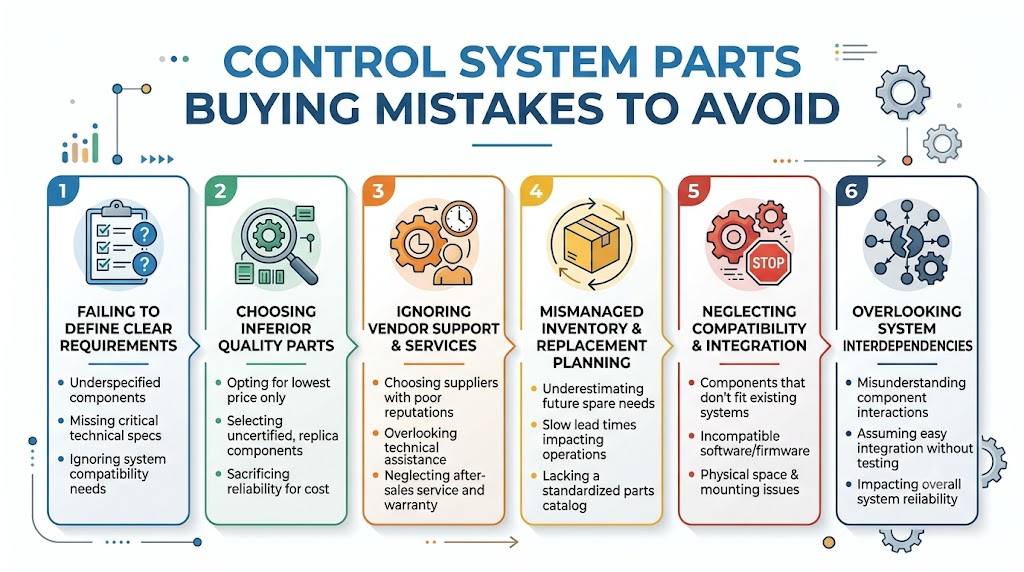
Aircraft control systems play a vital role in safe and predictable aircraft operation. Components such as control cables, pulleys, push-pull rods, bellcranks, rod ends, bearings, hinges, and related hardware must match the aircraft’s approved configuration and applicable maintenance requirements.
Buying the wrong component can create more than a procurement problem. It can lead to delays, returns, documentation issues, compatibility concerns, and additional maintenance work.
For aircraft owners, operators, maintenance organizations, and aviation procurement teams, a disciplined purchasing process can reduce these risks. The key is to verify the part, application, condition, documentation, and supplier before completing an order.
Understanding Aircraft Control System Parts
Aircraft control systems connect pilot inputs with the aircraft’s flight-control surfaces. The exact arrangement varies by aircraft design.
Depending on the aircraft, a control system may contain components such as:
- Control cables
- Pulleys
- Push-pull rods
- Bellcranks
- Rod ends
- Bearings
- Hinges
- Control-system brackets
- Attachments and fittings
- Fasteners
- Related hardware
Not every aircraft uses the same components or configuration. Even parts that appear physically similar may have different applications, specifications, or approval requirements.
That makes application verification essential before purchasing any control system component.
Why Correct Parts Selection Matters
Aircraft control components require careful sourcing because they can contribute directly to flight-control operation.
An incorrect purchase can create several problems:
- Procurement delays
- Incorrect inventory
- Installation compatibility concerns
- Returns and replacement costs
- Documentation gaps
- Maintenance delays
- Aircraft downtime
- Additional verification work
A low purchase price does not necessarily represent a lower overall cost if the part arrives without the information needed to establish its suitability.
12 Common Control System Parts Buying Mistakes
1. Buying Without Confirming Aircraft Compatibility
One of the most common mistakes is ordering a part based only on its general description.
For example, a buyer may search for an aircraft control cable or rod end without confirming the specific aircraft application.
Before ordering, verify the relevant aircraft information and applicable parts documentation.
Consider:
- Aircraft make
- Aircraft model
- Aircraft serial number where applicable
- Configuration
- Applicable part number
- Manufacturer information
- Approved or acceptable replacement information
A component should not be treated as compatible simply because its name or appearance seems similar.
2. Relying Only on a Part Number
A part number provides valuable identification information, but buyers should not automatically assume that a number alone answers every compatibility question.
Aircraft configurations can change through approved modifications, replacements, or other aircraft-specific circumstances.
Before purchasing, confirm that the part number applies to the specific aircraft and configuration involved.
3. Ignoring Aircraft Configuration
Two aircraft of the same general model may not necessarily have identical equipment or configurations.
Configuration differences can affect the applicable components.
Before ordering, consider:
- Aircraft configuration
- Modification history
- Applicable equipment
- Serial-number ranges
- Manufacturer documentation
- Previous approved changes
If the application remains uncertain, seek clarification before placing the order.
4. Choosing a Part Based Only on Price
Price matters in aviation procurement, but it should not become the only purchasing criterion.
A lower-priced component may not provide the documentation, traceability, condition, or application information required for the intended use.
Instead of asking only:
“What is the cheapest option?”
A better purchasing question is:
“Does this option meet the applicable requirements for the intended aircraft and provide the necessary supporting information?”
The total procurement cost can include shipping, verification, returns, downtime, and replacement expenses.
5. Failing to Verify Documentation
Aircraft parts may require supporting documentation appropriate to their application and condition.
Depending on the part and transaction, buyers may need to consider information such as:
- Part identification
- Condition
- Source
- Traceability
- Applicable documentation
- Supporting records
- Manufacturer information
The exact documentation requirements vary according to the part, aircraft, jurisdiction, and intended use.
Buyers should verify requirements before completing the transaction rather than discovering a documentation problem after delivery.
6. Ignoring Traceability
Traceability can be an important part of aircraft parts procurement.
A buyer should understand where a component came from and what supporting records accompany it when such information is required.
Poor traceability can create additional questions during receiving, inspection, inventory management, or maintenance planning.
When traceability matters for a particular component, verify the available records before purchasing.
7. Assuming a Visually Similar Part Is Interchangeable
Two components may look almost identical while having different specifications or applications.
This is particularly important for control-system components, where dimensions, materials, attachment characteristics, and other requirements can matter.
Avoid making purchasing decisions based solely on:
- Shape
- Size
- Appearance
- Thread appearance
- Color
- Packaging
Visual similarity does not establish interchangeability.
8. Overlooking Specifications
Part identification involves more than a basic product name.
Depending on the component, buyers may need to verify information such as:
- Dimensions
- Material
- Configuration
- Connection type
- Applicable specification
- Manufacturer identification
- Part number
- Required quantity
The relevant specifications depend on the specific component and aircraft.
If required information is unclear, obtain clarification before placing the order.
9. Failing to Check Part Condition
Aircraft parts may be offered in different conditions.
Common descriptions can include:
- New
- Used
- Repaired
- Overhauled
- Serviceable
These terms should not be treated as interchangeable.
The buyer should understand exactly what condition is being offered and whether the available documentation supports the intended use.
10. Choosing an Unreliable Supplier
The supplier matters as much as the part description.
A supplier that provides incomplete information can create additional procurement work.
Before ordering, consider whether the supplier can clearly provide:
- Accurate part identification
- Product condition
- Available documentation
- Traceability information where applicable
- Clear commercial terms
- Appropriate packaging
- Responsive communication
A professional purchasing process should make verification easier, not harder.
11. Failing to Inspect the Delivered Part
The purchasing process does not end when the package arrives.
Receiving personnel should compare the delivered item with the purchase information.
Check relevant details such as:
- Part number
- Quantity
- Description
- Condition
- Packaging
- Documentation
- Visible shipping damage
- Identification markings where applicable
If something does not match the order, pause the process and resolve the discrepancy.
12. Not Checking the Information Before Ordering
Rushed purchasing can lead to avoidable errors.
A buyer may accidentally:
- Enter the wrong part number.
- Order the wrong quantity.
- Miss a configuration requirement.
- Overlook a documentation requirement.
- Confuse similar components.
- Forget to confirm the required condition.
A short verification step before submitting an order can prevent many of these problems.
How to Verify Aircraft Control Part Compatibility
A structured verification process makes purchasing more reliable.
Step 1: Identify the Aircraft
Record the aircraft make and model.
Where relevant, include the aircraft serial number and configuration information.
Step 2: Identify the Required Component
Determine the exact component required rather than relying on a general description.
Step 3: Verify the Part Number
Check the applicable documentation and confirm that the part number corresponds to the intended application.
Step 4: Review Configuration Information
Consider modifications, equipment differences, and other aircraft-specific factors.
Step 5: Confirm Documentation
Determine what documentation should accompany the part.
Step 6: Confirm Condition
Make sure the supplier’s description clearly identifies whether the component is new, used, repaired, overhauled, or otherwise described.
Step 7: Review Supplier Information
Evaluate the supplier’s ability to provide accurate identification and supporting records.
Step 8: Confirm the Order
Before purchasing, compare the requested component with the final order information.
Understanding Part Numbers and Specifications
Part numbers provide an important starting point for identifying aircraft components.
However, buyers should avoid treating a part number as the only piece of information needed.
Depending on the application, verification may involve:
- Aircraft model
- Serial-number applicability
- Component configuration
- Manufacturer
- Applicable documentation
- Supersession information
- Approved replacement information
- Required specifications
If a component has been superseded, the buyer should confirm the applicable replacement information through appropriate documentation rather than assuming that a supplier’s description is sufficient.
Why Documentation and Traceability Matter
Documentation helps establish what a part is, where it came from, what condition it is in, and what information supports its intended use.
This becomes particularly important when a component enters an organized aircraft maintenance environment.
Good documentation can help with:
- Receiving
- Inventory control
- Maintenance planning
- Part identification
- Recordkeeping
- Audit preparation
- Procurement verification
Documentation requirements vary, so buyers should determine what applies to the specific component and aircraft.
New, Used, Repaired, and Overhauled Parts
Aircraft buyers may encounter different part conditions during procurement.
New Parts
A new part is generally supplied as a new component, but buyers should still verify identification and applicable documentation.
Used Parts
Used components require careful attention to their condition, history, documentation, and suitability for the intended application.
Repaired Parts
A repaired component may have undergone a repair process. The buyer should understand the supporting documentation and applicable requirements.
Overhauled Parts
An overhauled component has undergone an overhaul process, but the specific meaning and documentation should be confirmed for the particular component.
Important Point
Do not select a part condition solely because it costs less. Verify whether the condition and supporting records satisfy the requirements of the intended use.
Control System Parts Buying Checklist
Use this checklist before completing a purchase:
| Verification Area | What to Confirm |
|---|---|
| Aircraft | Make and model |
| Configuration | Applicable aircraft configuration |
| Serial Number | Where relevant |
| Part Number | Exact identification |
| Manufacturer | Component manufacturer information |
| Specifications | Applicable dimensions or requirements |
| Condition | New, used, repaired, overhauled, etc. |
| Documentation | Required supporting records |
| Traceability | Available source information where applicable |
| Quantity | Correct quantity |
| Supplier | Reliability and information quality |
| Packaging | Suitable protection during shipment |
| Receiving | Match delivered item against order |
Questions to Ask Before Buying Aircraft Control System Parts
Before placing an order, buyers can ask:
- Is this part intended for my specific aircraft application?
- Has the part number been verified against applicable documentation?
- Does the aircraft configuration affect the required component?
- What condition is the part supplied in?
- What documentation accompanies the part?
- What traceability information is available?
- Are there applicable replacement or supersession details?
- Does the supplier clearly identify the component?
- What quantity is required?
- Can the supplier clarify any uncertain identification information before ordering?
These questions can help identify problems before money, shipping time, and maintenance resources are committed.
Red Flags When Choosing an Aircraft Parts Supplier
Buyers should pay attention when a supplier:
- Cannot clearly identify the part.
- Provides inconsistent part information.
- Avoids questions about documentation.
- Cannot explain the stated part condition.
- Uses vague descriptions for critical components.
- Provides unclear traceability information when traceability is expected.
- Pressures buyers to order before verification.
- Treats similar-looking parts as automatically interchangeable.
These signs do not automatically prove that a supplier is unsuitable, but they indicate that additional verification may be appropriate.
How to Reduce Aircraft Parts Procurement Errors
A reliable procurement process can follow a simple sequence:
Identify → Verify → Document → Order → Receive → Recheck
Identify
Determine exactly which component the aircraft requires.
Verify
Confirm compatibility, identification, configuration, and applicable requirements.
Document
Record important purchasing and identification information.
Order
Place the order only after the required information has been checked.
Receive
Compare the delivered component against the order.
Recheck
Resolve discrepancies before the component enters the maintenance process.
This approach creates a repeatable process that can reduce avoidable purchasing errors.
Procurement Mistakes and Better Practices
| Common Mistake | Potential Problem | Better Practice |
|---|---|---|
| Buying by description alone | Wrong application | Verify aircraft and part information |
| Choosing by price only | Hidden procurement costs | Evaluate complete purchasing requirements |
| Ignoring configuration | Compatibility concerns | Check aircraft configuration |
| Skipping documentation checks | Receiving delays | Confirm records before ordering |
| Assuming visual similarity | Incorrect component | Verify technical identification |
| Ignoring condition | Unexpected part status | Confirm condition before purchase |
| Using unreliable suppliers | Information gaps | Evaluate supplier practices |
| Skipping receiving inspection | Order discrepancies | Compare delivered part with order |
| Rushing the purchase | Preventable mistakes | Add a verification step |
Building a More Reliable Aircraft Parts Buying Process
Aircraft parts procurement works best when buyers establish consistent procedures.
A useful internal process can include:
Maintain Accurate Aircraft Information
Keep relevant aircraft identification and configuration information readily available to authorized purchasing and maintenance personnel.
Standardize Purchase Requests
Require important fields such as part number, description, quantity, aircraft application, condition, and documentation requirements.
Separate Identification From Price Comparison
First determine which parts meet the applicable requirements. Then compare commercial options.
Keep Procurement Records
Retain appropriate order, receiving, and documentation information according to organizational requirements.
Involve Qualified Personnel
When a component’s application or suitability is uncertain, involve the appropriate maintenance, engineering, or technical personnel before purchasing.
Frequently Asked Questions
Q1. What are the most common aircraft control system parts buying mistakes?
Common mistakes include failing to verify compatibility, relying only on a part number, overlooking configuration differences, ignoring documentation, selecting parts based only on price, and assuming similar-looking components are interchangeable.
Q2. Can I buy an aircraft control part based only on its appearance?
No. Visual similarity does not establish compatibility or interchangeability. Buyers should verify the component using applicable aircraft and parts documentation.
Q3. Why is the aircraft serial number sometimes important?
Some components or configurations may have applicability tied to particular aircraft or serial-number ranges. The relevance depends on the specific aircraft and part.
Q4. Is the cheapest aircraft control part always the best purchasing option?
Price alone does not establish suitability. Buyers should consider compatibility, condition, documentation, traceability, supplier reliability, and other applicable requirements.
Q5. What information should I provide when requesting an aircraft control part?
Relevant information may include the aircraft make and model, serial number where applicable, part number, component description, quantity, required condition, and documentation requirements.
Q6. What does traceability mean in aircraft parts procurement?
Traceability generally concerns information that helps establish the origin and history of a component where such information is required. Specific requirements vary by part and application.
Q7. Are used aircraft control components automatically unsuitable?
Not necessarily. Suitability depends on the specific component, condition, applicable requirements, documentation, and intended use.
Q8. Why should I inspect the part after delivery?
Receiving checks can identify incorrect part numbers, quantities, condition, packaging damage, or documentation discrepancies before the component proceeds further into the maintenance process.
Q9. Can two aircraft use the same control system component?
Possibly, but buyers should not assume interchangeability. The applicable documentation and qualified technical review should establish whether a component is appropriate.
Q10. What should I do if I am unsure about a control system part?
Pause the purchase and seek clarification from the appropriate manufacturer documentation, supplier, maintenance organization, engineering resource, or other qualified aviation professional before proceeding.
Conclusion
Buying aircraft control system parts requires more than finding a matching description or the lowest price.
Buyers should verify aircraft compatibility, part identification, configuration, condition, documentation, and traceability where applicable.
A structured procurement process can reduce incorrect orders, delays, and unnecessary costs.
Receiving checks also help confirm that the delivered component matches the purchase information.
When technical suitability remains uncertain, qualified aviation personnel should help resolve the question.
Careful verification before purchase creates a more reliable foundation for responsible aircraft parts procurement.

