
Introduction
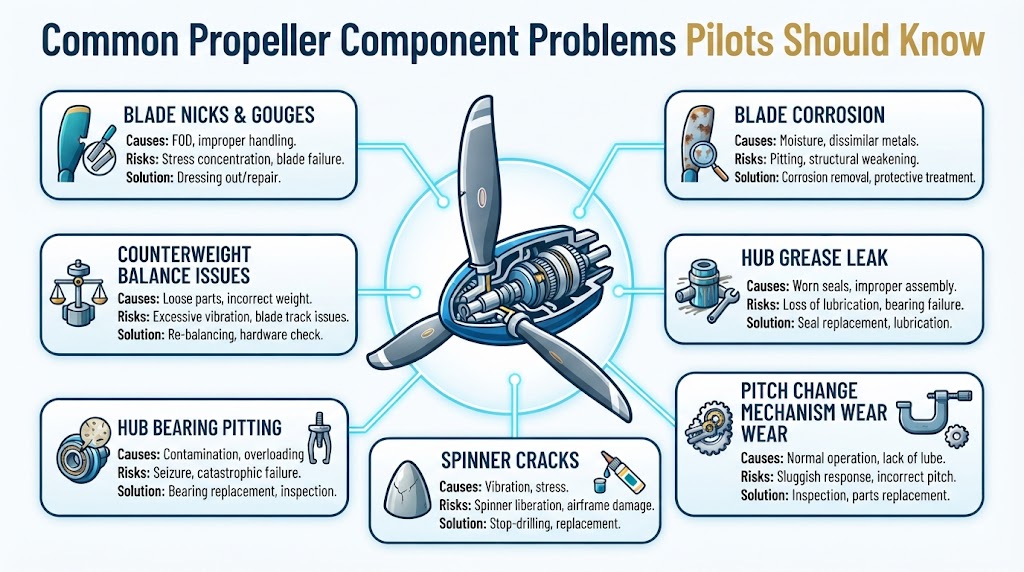
An aircraft propeller may look like a relatively simple component, but it is a carefully engineered system that plays a critical role in producing thrust and maintaining aircraft performance. Propeller blades, hubs, spinners, pitch-control mechanisms, bearings, seals, and associated hardware must function properly for the system to operate as intended. Pilots are not expected to diagnose or repair complex propeller problems during a routine inspection, but they should know how to recognize obvious warning signs. Unusual vibration, visible blade damage, corrosion, fluid leakage, abnormal noise, or changes in engine or propeller behavior deserve attention. Understanding these potential problems can help pilots make better preflight and operational decisions.
Why Propeller Condition Matters
The propeller converts engine power into thrust, making its condition directly relevant to aircraft operation.
A propeller problem can potentially affect:
- Aircraft performance
- Engine operation
- Vibration levels
- Noise
- Fuel efficiency
- Handling characteristics
- Component service life
- Overall flight safety
A problem does not necessarily begin as an obvious failure. A small nick, developing corrosion, loose spinner hardware, or abnormal vibration may be an early indication that professional evaluation is appropriate.
For that reason, pilots should treat the propeller as an important part of every appropriate preflight inspection.
The aircraft manufacturer’s checklist should always take priority over a general inspection guide.
Understanding the Main Propeller Components
Before discussing common problems, it helps to understand the basic components pilots may encounter.
Propeller Blades
Blades generate thrust by moving through the air and are exposed to aerodynamic loads and environmental conditions.
Propeller Hub
The hub connects the blades and transfers engine power into the propeller assembly.
Spinner
The spinner is the aerodynamic fairing around the propeller hub. It can also help manage airflow around the front of the engine.
Pitch-Control Mechanism
Controllable-pitch propellers use mechanisms that allow blade angle to change. Constant-speed propellers use additional components to maintain the selected engine or propeller operating condition.
Bearings
Applicable propeller assemblies may contain bearings that support rotating or pitch-related components.
Seals
Seals help retain lubricants or fluids in applicable assemblies and prevent contamination.
Fasteners and Hardware
Propeller assemblies rely on properly installed hardware to secure components and maintain structural integrity.
De-Icing Components
Some propellers are equipped with systems designed to reduce or prevent ice accumulation on the blades. These systems vary considerably by aircraft and propeller design.
Not every propeller contains all of these components.
Propeller Blade Damage
Blade damage is one of the most recognizable propeller concerns.
Possible problems include:
- Nicks
- Dents
- Scratches
- Cracks
- Corrosion
- Erosion
- Distortion
- Foreign object damage
- Impact damage
Small damage may result from stones, gravel, runway debris, or other foreign objects. Even when damage appears minor, pilots should not assume it is harmless.
A propeller blade operates under significant aerodynamic and rotational loads. The correct response to suspected damage depends on the aircraft, propeller, location and severity of the damage, and applicable manufacturer instructions.
Pilots should not attempt to file, sand, reshape, straighten, or otherwise repair a blade unless specifically authorized and qualified to perform that maintenance.
If a blade appears damaged, follow the aircraft’s applicable procedures and obtain appropriate maintenance evaluation before further operation when required.
Propeller Hub Problems
The hub is a particularly important part of the propeller assembly because it connects the blades and transfers power.
Potential hub-related concerns can include:
- Corrosion
- Cracking
- Damage
- Wear
- Abnormal component movement
- Evidence of improper maintenance
Some hub problems may not be obvious during a casual visual inspection.
Pilots should therefore pay attention to visible abnormalities and any unusual vibration or operating behavior associated with the propeller.
A suspected hub problem should be evaluated by appropriately qualified maintenance personnel using applicable technical documentation.
Spinner and Spinner Bulkhead Problems
A spinner can sometimes be overlooked because pilots may think of it primarily as an aerodynamic cover.
However, cracks, distortion, loose hardware, or damage around attachment areas can become important maintenance concerns.
Potential warning signs include:
- Visible cracks
- Dents
- Distortion
- Loose or missing fasteners
- Damaged attachment points
- Unusual movement
- Evidence of contact with another component
A damaged spinner can sometimes contribute to vibration.
If a spinner appears loose, cracked, significantly damaged, or improperly secured, pilots should follow the aircraft manufacturer’s procedures rather than attempting an improvised repair.
Pitch-Control Problems
Propeller pitch systems vary significantly between fixed-pitch, controllable-pitch, constant-speed, and other propeller designs.
For applicable systems, pilots may notice potential warning signs such as:
- Abnormal RPM behavior
- Unexpected pitch changes
- Delayed response
- Unusual noise
- Difficulty maintaining expected operating conditions
- Fluid leakage where applicable
These symptoms do not necessarily mean the propeller itself is defective. Engine controls, governors, instrumentation, or other components may also contribute to abnormal behavior.
The important point for a pilot is to recognize a significant change from normal operation and have it appropriately evaluated rather than attempting to identify the exact failed component in flight.
Bearing Problems
Bearings in applicable propeller assemblies support rotating or moving components.
Potential signs of a bearing-related concern may include:
- Unusual vibration
- Abnormal noise
- Rough operation
- Excessive movement when properly assessed by qualified personnel
- Lubrication concerns
Bearing condition generally requires maintenance expertise for proper evaluation.
Pilots should not disassemble a propeller assembly to investigate a suspected bearing problem. Instead, unusual sounds, vibration, or other abnormalities should be reported and evaluated according to applicable maintenance procedures.
Seal and Lubrication Problems
Some propeller assemblies contain lubrication systems and seals that help retain fluids and protect internal components.
Potential warning signs include:
- Oil leakage
- Grease leakage
- Unusual residue
- Contamination
- Fluid accumulation
- Evidence of deteriorated sealing
Not every visible fluid trace indicates the same problem, and different propeller designs use different lubrication arrangements.
For this reason, pilots should avoid guessing about the source or seriousness of a leak.
A new or unexplained leak around the propeller assembly should be reported and assessed according to the applicable maintenance documentation.
Propeller Fastener and Hardware Problems
Propeller-related hardware must be correctly installed and maintained.
Potential concerns include:
- Missing fasteners
- Damaged hardware
- Corroded hardware
- Loose or visibly abnormal components
- Incorrect installation
- Damaged attachment areas
Pilots should look for obvious abnormalities during the inspections they are authorized and trained to perform.
They should not attempt to tighten, replace, or modify propeller hardware without the appropriate authorization, procedures, tools, and qualifications.
Propeller installation and related hardware work can involve critical safety considerations.
Propeller Corrosion
Corrosion can affect aircraft components in different ways depending on the material, environment, location, and severity.
Propellers may encounter moisture, salt, chemicals, dirt, and other environmental factors.
Potential areas of concern include:
- Blade surfaces
- Hub areas
- Attachment areas
- Hardware
- Other exposed components
Visible corrosion should not automatically be considered cosmetic.
Pitting, deep corrosion, cracking, or corrosion around structurally important areas can require professional evaluation.
Aircraft owners should follow applicable inspection and maintenance requirements rather than relying on appearance alone to determine whether a component remains serviceable.
Propeller Vibration
Unusual vibration is an important warning sign.
Possible causes can include:
- Propeller damage
- Propeller imbalance
- Blade condition
- Spinner problems
- Engine-related issues
- Mounting problems
- Other drivetrain components
This is why pilots should avoid assuming that every vibration automatically means the propeller is the source.
A new, increasing, or unusual vibration should be taken seriously.
If vibration occurs during flight, the pilot’s response should be guided by the aircraft’s approved procedures, operating environment, and the circumstances of the flight.
After landing, appropriate maintenance evaluation may be necessary to determine the cause.
Propeller Tracking Problems
Propeller tracking describes the relationship between the paths followed by the blades as the propeller rotates.
Poor tracking can be associated with vibration and may have several possible causes.
Potential contributing factors can include:
- Propeller condition
- Blade differences
- Installation issues
- Damage
- Other mechanical factors
Tracking is a maintenance concern that should be evaluated using appropriate procedures and equipment.
Pilots should not attempt to adjust blade tracking based solely on visual observation.
Foreign Object Damage
Propellers are particularly exposed to foreign object damage because they operate at the front of many aircraft.
Possible sources include:
- Gravel
- Stones
- Dirt
- Runway debris
- Taxiway debris
- Ground equipment
- Objects encountered during ground operations
A foreign object strike may leave a visible mark on a blade, but the consequences are not always obvious from the surface.
Pilots should report suspected propeller strikes and follow applicable aircraft and propeller inspection requirements.
Ignoring a suspected impact because the aircraft continues to operate normally is not a reliable method of determining airworthiness.
Overstress and Impact Damage
Propellers can experience abnormal loads during certain events.
Examples may include:
- Hard landings
- Ground contact
- Foreign object strikes
- Abnormal engine events
- Other unusual operating conditions
Some damage may not be immediately visible.
A propeller strike or other abnormal event may trigger specific inspection requirements depending on the aircraft and propeller manufacturer’s documentation.
Pilots should not assume that a propeller is unaffected simply because there is no obvious damage.
De-Icing System Problems Where Applicable
Some aircraft use propeller de-icing systems to help manage ice accumulation.
Depending on the system, components can include:
- De-icing boots
- Electrical connections
- Heating elements
- Wiring
- Controllers
- Fluid-related components
Potential signs of a problem may include visible damage or a system that does not operate as expected.
Because de-icing systems differ significantly, pilots should follow the aircraft-specific operating procedures and maintenance guidance.
Electrical or system troubleshooting should be left to appropriately qualified personnel when it goes beyond the pilot’s authorized procedures.
Warning Signs Pilots Should Know
The following table provides a general reference:
| Warning Sign | Possible Concern | Recommended Response |
|---|---|---|
| New vibration | Propeller, engine, mounting, or related issue | Follow aircraft procedures and seek maintenance evaluation |
| Visible blade damage | Impact or structural concern | Do not ignore; obtain appropriate evaluation |
| Fluid leakage | Seal or related system concern | Report and arrange appropriate inspection |
| Unusual noise | Mechanical or aerodynamic issue | Treat as a maintenance concern |
| Loose spinner | Spinner or attachment problem | Follow aircraft procedures before further operation |
| Corrosion | Environmental or structural concern | Have the condition assessed |
| Abnormal RPM behavior | Possible propeller, engine, or control issue | Seek qualified maintenance evaluation |
| Suspected propeller strike | Possible hidden damage | Follow applicable inspection requirements |
These signs are warning indicators, not diagnoses.
Pilot Preflight Propeller Inspection Checklist
Pilots should always use the aircraft manufacturer’s approved checklist.
As a general awareness guide, an appropriate pilot-level inspection may include looking for:
- Obvious blade damage
- Cracks or unusual surface abnormalities
- Significant nicks or dents
- Visible corrosion
- Foreign object damage
- Unusual fluid leakage where applicable
- Spinner damage
- Missing or visibly abnormal hardware
- Unusual residue or discoloration
- Changes compared with previous inspections
The purpose of a pilot preflight inspection is to identify obvious conditions requiring attention. It is not a substitute for a qualified maintenance inspection.
When Should a Pilot Stop and Seek Maintenance Assistance?
A pilot should seek appropriate maintenance assistance when there is uncertainty about the condition or serviceability of a propeller component.
Examples include:
- New or abnormal vibration
- Significant blade damage
- Suspected cracks
- Fluid leakage
- Unusual propeller noise
- Suspected propeller strike
- Significant corrosion
- Abnormal RPM behavior
- Damaged or loose spinner
- Any condition outside normal aircraft operation
The appropriate response depends on the circumstances and applicable aircraft documentation.
When in doubt, professional evaluation is safer than guessing.
Common Causes of Propeller Component Problems
Propeller problems can develop for different reasons.
Common contributing factors may include:
Foreign Object Damage
Stones, gravel, and debris can damage blade surfaces.
Corrosion
Moisture and environmental exposure can contribute to corrosion.
Normal Wear
Components can experience wear over time depending on design and operating conditions.
Improper Maintenance
Incorrect installation or maintenance practices can create additional risks.
Environmental Exposure
Salt, moisture, dirt, and other environmental factors can affect exposed components.
Abnormal Events
Hard landings, ground contact, propeller strikes, and abnormal engine events may require additional inspection.
Improper Storage
Poor storage conditions can expose aircraft components to moisture and other environmental hazards.
Understanding these factors can help pilots and owners pay closer attention to the areas most relevant to their aircraft.
How Maintenance Professionals Evaluate Propeller Problems
When a propeller concern is identified, qualified maintenance personnel can evaluate it using the appropriate procedures.
Depending on the situation, evaluation may involve:
- Visual inspection
- Maintenance-record review
- Manufacturer documentation
- Component inspection
- Appropriate measurements
- Specialized inspection techniques
- Tracking evaluation
- Balancing evaluation
- Damage assessment
- Review of previous maintenance
The exact process depends on the aircraft, propeller model, suspected problem, and applicable maintenance documentation.
Pilots should not substitute general online information for the manufacturer’s approved maintenance procedures.
Why Manufacturer Documentation Matters
Propellers differ significantly between manufacturers and models.
The correct inspection or maintenance procedure may therefore depend on:
- Propeller model
- Aircraft model
- Engine configuration
- Installation
- Operating environment
- Applicable service information
- Maintenance history
Relevant documentation may include:
- Aircraft maintenance manuals
- Propeller maintenance manuals
- Manufacturer service information
- Airworthiness directives where applicable
- Approved inspection procedures
- Applicable regulations
This is why a generic internet checklist cannot replace aircraft-specific documentation.
Propeller Maintenance Records
Maintenance records provide important information about an aircraft’s history.
Owners and operators should maintain appropriate documentation relating to:
- Inspections
- Repairs
- Component replacement
- Overhaul
- Service history
- Modifications
- Damage-related inspections
Good records help maintenance professionals understand the component’s history and can make future troubleshooting more efficient.
They can also be important when evaluating an aircraft’s maintenance history before purchase.
Preventive Habits for Pilots and Owners
Pilots and owners can support propeller reliability through responsible operating habits.
These include:
- Follow the aircraft checklist
- Perform required preflight inspections
- Avoid unnecessary contact with propeller blades
- Keep the aircraft appropriately stored
- Monitor unusual vibration
- Report abnormalities promptly
- Maintain accurate records
- Follow manufacturer instructions
- Complete required inspections
- Obtain professional evaluation after suspected damage
Preventive habits do not eliminate the possibility of component problems, but they can help identify concerns earlier.
Common Mistakes Pilots Should Avoid
Ignoring Small Blade Damage
A small mark may look insignificant, but pilots should not determine airworthiness based solely on appearance.
Flying With Unexplained Vibration
Unusual vibration should be investigated rather than dismissed as normal.
Assuming Cosmetic Appearance Means Good Condition
Some problems may not be visible during a basic inspection.
Performing Unauthorized Repairs
Propeller components can be safety-critical. Repairs should follow applicable maintenance requirements.
Using Incorrect Hardware
Aircraft hardware should never be substituted casually.
Ignoring Corrosion
Corrosion can require professional assessment depending on its location and severity.
Failing to Document Maintenance
Accurate records support ongoing maintenance and troubleshooting.
Continuing After a Suspected Propeller Strike
A lack of obvious damage does not necessarily prove that no internal or structural concern exists.
Propeller Component Problems: Quick Reference Checklist
| Component | Common Concern | Pilot-Level Warning Sign |
|---|---|---|
| Blade | Nicks, cracks, corrosion, impact damage | Visible damage |
| Hub | Corrosion, cracks, wear | Visible abnormality |
| Spinner | Cracks, looseness, distortion | Loose or damaged spinner |
| Pitch system | Control or leakage concerns | Abnormal RPM or pitch response |
| Bearings | Wear or lubrication concerns | Unusual vibration or noise |
| Seals | Leakage | Oil or grease residue |
| Hardware | Damage or looseness | Missing or visibly abnormal hardware |
| De-icing system | Electrical or system issue | System not operating as expected |
This table is intended for general awareness. It does not replace the aircraft’s approved checklist or maintenance documentation.
How PLANESPART.COM Can Support Aircraft Owners and Pilots
PLANESPART.COM can serve as a useful aviation resource for pilots, aircraft owners, and aviation enthusiasts researching aircraft parts and components.
Understanding how aircraft components function and recognizing common maintenance concerns can help owners communicate more effectively with aviation maintenance professionals.
When a propeller-related issue is suspected, however, pilots should rely on qualified maintenance personnel and applicable manufacturer documentation for inspection, diagnosis, repair, and servicing decisions.
Frequently Asked Questions
1. What are the most common aircraft propeller problems?
Common concerns include blade damage, corrosion, vibration, spinner damage, hardware problems, lubrication or seal issues, pitch-control concerns, and damage resulting from foreign objects or abnormal events.
2. What should pilots look for during a propeller preflight inspection?
Pilots should follow the aircraft manufacturer’s checklist and look for obvious damage, cracks, corrosion, foreign object damage, fluid leakage where applicable, spinner problems, and other abnormal conditions within the scope of their inspection.
3. Can a small propeller nick be dangerous?
The significance of a nick depends on factors such as its location, depth, and the applicable propeller manufacturer’s requirements. Pilots should not independently determine whether damaged blades remain serviceable.
4. What can cause unusual aircraft propeller vibration?
Potential causes include propeller imbalance, blade damage, spinner issues, engine-related problems, mounting concerns, and other mechanical conditions. Proper maintenance evaluation is needed to identify the actual cause.
5. How does corrosion affect propeller components?
Corrosion can affect exposed propeller surfaces and, depending on its location and severity, may become a significant maintenance concern. The condition should be evaluated according to applicable manufacturer guidance.
6. What are common signs of a propeller hub problem?
Visible damage, corrosion, unusual vibration, or abnormal operating behavior may indicate a potential concern. Hub problems can require specialized inspection and should not be diagnosed through casual observation alone.
7. Why should pilots pay attention to spinner damage?
A cracked, distorted, or loose spinner can contribute to vibration or indicate an attachment or structural problem. Suspected spinner problems should be evaluated before continued operation when required.
8. What should I do after a suspected propeller strike?
Follow the applicable aircraft and propeller manufacturer’s procedures and obtain an appropriate maintenance evaluation. Do not assume the propeller is unaffected simply because visible damage appears minor.
9. Can pilots repair aircraft propeller components themselves?
Only maintenance activities specifically permitted by applicable regulations and within the person’s qualifications should be performed. Propeller repairs and adjustments often require specialized knowledge, approved procedures, and qualified maintenance personnel.
10. How often should an aircraft propeller be inspected?
Inspection requirements depend on the aircraft, propeller, operation, applicable regulations, manufacturer instructions, and maintenance program. Pilots and owners should follow the specific requirements applicable to their aircraft rather than relying on a universal interval.
Final Thoughts
Propeller components deserve careful attention because they play a fundamental role in aircraft performance and safe operation. Blades, hubs, spinners, pitch-control systems, bearings, seals, and hardware can all experience different types of wear or damage. Pilots can help by recognizing visible abnormalities, unusual vibration, unexpected noise, leakage, corrosion, and changes in normal operation. However, recognizing a warning sign is different from diagnosing or repairing a component. Aircraft owners and pilots should follow the manufacturer’s approved procedures and seek qualified maintenance assistance when concerns arise. A careful approach to propeller condition can support safer and more reliable aircraft operation.

