
Introduction
Every aircraft relies on its engine to deliver dependable performance throughout every phase of flight. Whether powering a training aircraft, business aircraft, agricultural airplane, or privately owned general aviation aircraft, the engine must operate consistently and reliably under demanding conditions. Behind that reliability are hundreds of carefully engineered components working together as a complete system.
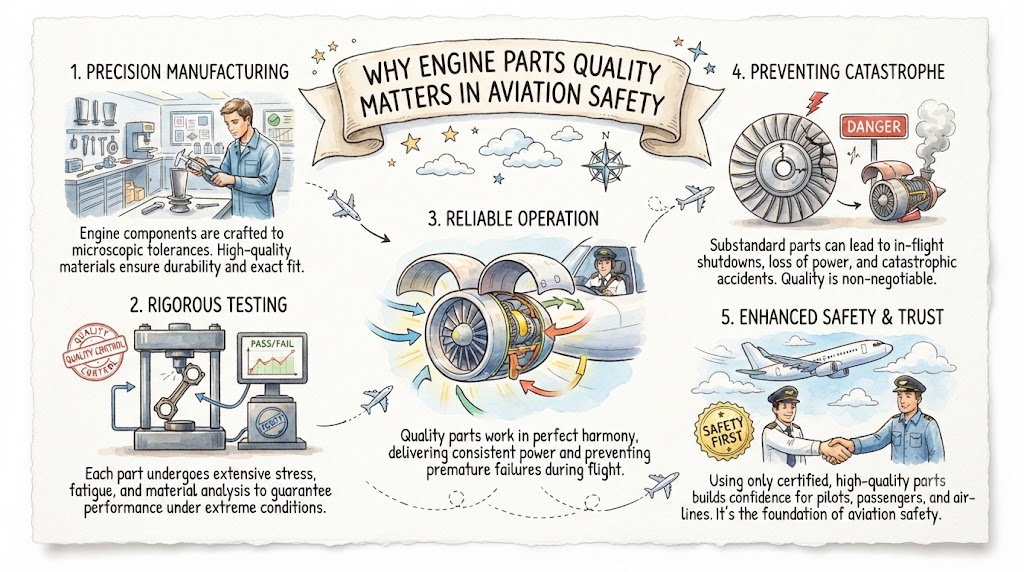
The quality of these engine parts plays a critical role in aviation safety. Even a small component can influence engine performance, fuel efficiency, maintenance requirements, and overall operational reliability. Selecting quality replacement parts and following proper maintenance practices helps aircraft owners and maintenance professionals reduce risks, improve engine longevity, and support safe flight operations.
Understanding Aircraft Engine Parts
An aircraft engine is made up of numerous components that work together to generate power efficiently and safely. Each part has a specific purpose, and the reliability of the engine depends on how well these components perform as an integrated system.
Major engine systems include:
- Fuel system
- Ignition system
- Lubrication system
- Cooling system
- Air induction system
- Exhaust system
- Electrical system
Within these systems are many individual parts such as pistons, cylinders, valves, bearings, seals, spark plugs, filters, and fuel pumps. A problem with any one of these components can affect overall engine operation.
Why Engine Parts Quality Matters
Choosing quality engine parts is about more than replacing worn components. High-quality parts contribute to reliable engine operation, predictable performance, and improved long-term maintenance outcomes.
Quality components help support:
- Reliable engine performance
- Better aircraft safety
- Longer component life
- Consistent engine efficiency
- Reduced maintenance interruptions
- Improved operational confidence
Every replacement decision contributes to the overall health of the aircraft.
Reliable Engine Performance
Aircraft engines operate under demanding conditions that require precision and consistency.
Quality engine parts help maintain:
Stable Power Output
Consistent engine operation supports safe takeoffs, climbs, cruise flight, and landings.
Efficient Combustion
Properly manufactured components help engines operate more efficiently while supporting smooth performance.
Reduced Operational Interruptions
Reliable components reduce the likelihood of unexpected mechanical issues that could interrupt flight operations.
When all engine systems function together as intended, pilots can have greater confidence in aircraft performance.
Aviation Safety Begins with Reliable Components
Safety is the highest priority in aviation.
Aircraft maintenance focuses on identifying worn or damaged components before they affect engine operation.
Quality replacement parts contribute to safety by helping maintain:
- Reliable ignition
- Consistent fuel delivery
- Proper lubrication
- Effective cooling
- Stable engine performance
Preventive maintenance combined with dependable components helps reduce operational risks and supports safe flight operations.
Longer Engine Service Life
Engine components experience wear throughout normal operation.
High-quality replacement parts help:
- Reduce premature wear
- Improve durability
- Support smooth engine operation
- Extend component service life
- Reduce long-term maintenance requirements
Investing in dependable parts often contributes to better long-term ownership experiences.
Improved Fuel Efficiency
Engine efficiency depends on how accurately every component performs its function.
Properly matched, quality components help maintain:
- Efficient fuel delivery
- Proper combustion
- Smooth engine operation
- Stable operating temperatures
Efficient engines generally operate more consistently and may reduce unnecessary fuel consumption over time.
Better Aircraft Reliability
Aircraft availability is important for flight schools, private owners, charter operators, and maintenance organizations.
Reliable engine parts help improve:
- Dispatch reliability
- Flight schedule consistency
- Reduced unscheduled maintenance
- Greater operational confidence
Minimizing unexpected maintenance keeps aircraft available for their intended missions.
Supporting Proper Maintenance Practices
Quality components work best when combined with good maintenance practices.
Maintenance professionals typically focus on:
- Scheduled inspections
- Proper installation
- Correct torque procedures
- Routine lubrication
- Engine monitoring
- Documentation
Following recommended maintenance procedures helps ensure replacement parts perform as intended.
Common Aircraft Engine Parts That Require Careful Selection
Every engine contains components that directly affect reliability and safety.
Examples include:
Pistons
Convert combustion pressure into mechanical motion.
Cylinders
Provide the combustion chamber where engine power is generated.
Valves
Control airflow into and out of the combustion chamber.
Bearings
Reduce friction while supporting rotating engine components.
Spark Plugs
Provide reliable ignition for efficient combustion.
Fuel Pumps
Deliver fuel consistently throughout engine operation.
Oil Filters
Help remove contaminants from engine oil.
Seals and Gaskets
Prevent leaks and maintain proper engine pressures.
Selecting compatible, well-manufactured components supports dependable engine operation.
Warning Signs of Engine Component Wear
Routine inspections help identify problems before they become serious.
Common warning signs include:
Increased Oil Consumption
May indicate internal engine wear requiring further evaluation.
Unusual Engine Vibrations
Can suggest component imbalance or developing mechanical issues.
Difficult Engine Starting
May be related to ignition or fuel system components.
Abnormal Engine Temperatures
Unexpected temperature changes should be investigated promptly.
Reduced Engine Performance
Loss of power or rough operation may indicate worn engine components.
Unusual Noises
Knocking, grinding, or other abnormal sounds require immediate inspection by qualified maintenance personnel.
Recognizing these signs early supports safer maintenance planning.
Choosing Quality Aircraft Engine Parts
Selecting replacement parts involves more than comparing prices.
Important considerations include:
- Compatibility with the aircraft and engine
- Product documentation
- Traceability
- Supplier reputation
- Manufacturing quality
- Technical support
- Long-term availability
Working with trusted aviation parts suppliers helps simplify component selection and maintenance planning.
Preventive Maintenance Best Practices
Preventive maintenance helps identify small issues before they become major repairs.
Recommended practices include:
- Conduct regular inspections.
- Follow manufacturer maintenance schedules.
- Replace worn components promptly.
- Monitor engine performance.
- Keep detailed maintenance records.
- Perform oil analysis when appropriate.
- Inspect filters regularly.
- Verify proper fluid levels.
- Address unusual engine behavior immediately.
Consistent maintenance supports safer and more reliable aircraft operation.
The Importance of Parts Traceability
Traceability helps maintenance professionals understand the history of aircraft components.
Good documentation may include:
- Maintenance records
- Installation dates
- Component identification
- Inspection history
- Service information
Accurate records support effective maintenance planning throughout the aircraft’s service life.
Why Quality Parts Reduce Long-Term Costs
Although quality components may require a greater initial investment, they often contribute to lower long-term ownership costs by helping reduce:
- Repeat repairs
- Unexpected maintenance
- Aircraft downtime
- Component replacement frequency
- Operational interruptions
Reliable parts support efficient maintenance planning and improve aircraft availability.
Aircraft Engine Maintenance Checklist
Before Installing Replacement Parts
- Verify compatibility.
- Inspect documentation.
- Confirm part condition.
- Review maintenance procedures.
- Prepare installation tools.
During Routine Inspections
- Inspect for leaks.
- Monitor engine temperatures.
- Check ignition components.
- Review oil condition.
- Inspect filters.
Before Returning the Aircraft to Service
- Verify proper installation.
- Complete functional inspections.
- Review maintenance documentation.
- Confirm system operation.
- Perform required operational checks.
Long-Term Engine Care
- Maintain inspection schedules.
- Replace wear items promptly.
- Monitor engine performance.
- Keep detailed maintenance records.
- Consult qualified maintenance professionals whenever concerns arise.
Frequently Asked Questions
1. Why are quality engine parts important in aviation?
Quality engine parts support reliable performance, reduce the likelihood of unexpected failures, and contribute to safer aircraft operation.
2. Can lower-quality replacement parts affect engine performance?
Poorly matched or lower-quality components may influence engine reliability, durability, and maintenance requirements.
3. How often should engine components be inspected?
Inspection schedules depend on the aircraft, engine, operating conditions, and applicable maintenance recommendations.
4. What is parts traceability?
Traceability refers to maintaining documentation that identifies the history and origin of aircraft components, helping support maintenance planning and recordkeeping.
5. Why is preventive maintenance important?
Preventive maintenance helps identify wear before it develops into larger maintenance issues, improving reliability and reducing downtime.
6. How can aircraft owners identify quality replacement parts?
Choose compatible components from reputable suppliers and ensure appropriate documentation and traceability are available.
7. Should aircraft owners always use compatible replacement components?
Yes. Proper compatibility supports safe operation, reliable performance, and easier maintenance.
8. What are common signs of engine wear?
Examples include increased oil consumption, unusual vibrations, abnormal engine temperatures, reduced performance, and unusual engine noises.
9. How do quality parts improve reliability?
Well-manufactured components are designed to work consistently with the engine system, supporting dependable operation over time.
10. How do quality engine parts support long-term aircraft ownership?
Reliable parts help reduce maintenance interruptions, improve engine longevity, and support consistent aircraft availability.
Conclusion
The quality of aircraft engine parts has a direct impact on aviation safety, engine reliability, and long-term aircraft performance. Every component, from spark plugs and bearings to fuel pumps and seals, plays an essential role in keeping an engine operating efficiently. By selecting compatible, high-quality replacement parts, following preventive maintenance practices, and working with qualified maintenance professionals, aircraft owners and operators can reduce operational risks and improve the overall reliability of their aircraft. Investing in quality components is not simply a maintenance decision—it is an important step toward safer, more dependable flight operations.

