
Introduction
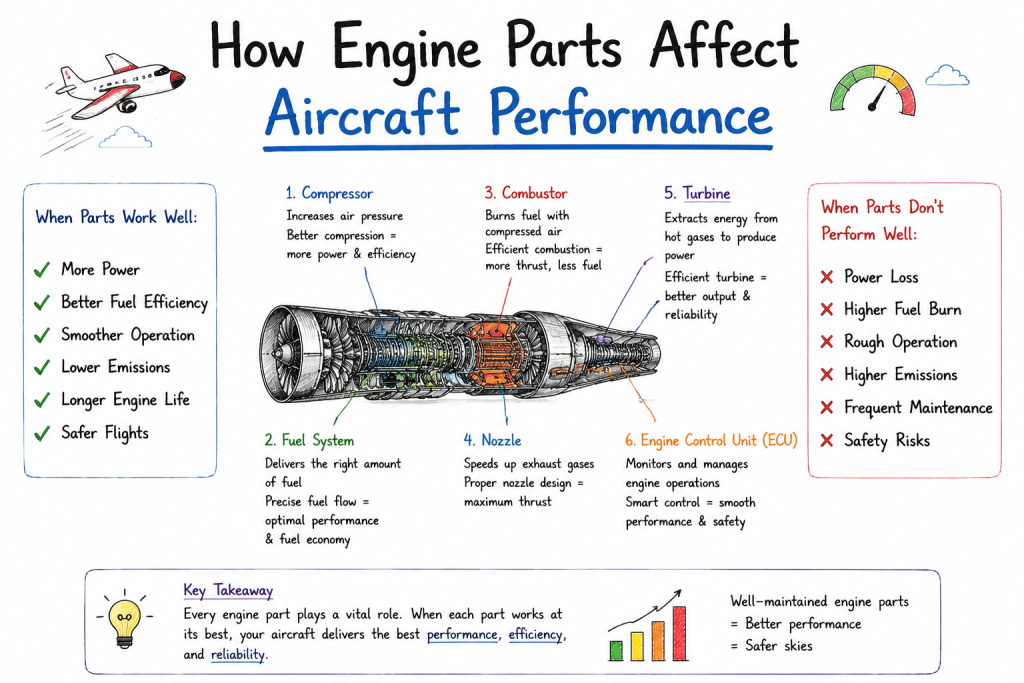
An aircraft engine is one of the most important systems responsible for safe and efficient flight operations. While engine design and horsepower receive significant attention, the individual components inside and around the engine play an equally important role in determining aircraft performance.
Every engine part contributes to how efficiently an aircraft generates power, manages fuel, maintains reliability, and responds during different flight conditions. A small component issue can affect fuel consumption, reduce performance, increase maintenance requirements, or create operational concerns.
For aircraft owners, pilots, and maintenance professionals, understanding how engine parts influence performance helps make better decisions about maintenance, inspections, and replacement components.
Quality engine parts do more than keep an aircraft running. They support consistent power delivery, improved efficiency, longer engine life, and safer flight operations.
Understanding Aircraft Engine Parts
An aircraft engine consists of many interconnected components that work together to convert fuel energy into mechanical power.
Important engine components include:
- Pistons
- Cylinders
- Spark plugs
- Fuel system components
- Air intake components
- Bearings
- Valves
- Cooling system components
- Lubrication components
- Electrical systems
- Propeller-related components
Each component has a specific purpose. If one part performs poorly, it can affect the entire engine system.
Aircraft performance depends on how effectively these components work together.
Why Engine Parts Matter for Aircraft Performance
Aircraft performance is influenced by several engine-related factors:
- Power output
- Fuel efficiency
- Reliability
- Engine response
- Operating temperature
- Maintenance requirements
High-quality components help ensure that the engine operates closer to its intended design performance.
Poor-quality or worn components can lead to:
- Reduced engine efficiency
- Higher fuel consumption
- Increased vibration
- Lower power output
- Unexpected maintenance issues
How Engine Parts Affect Aircraft Performance
1. Engine Efficiency and Power Output
The primary function of an aircraft engine is to generate power. Engine components directly influence how effectively this power is produced.
Components such as:
- Pistons
- Cylinders
- Valves
- Fuel injectors
- Ignition systems
all contribute to combustion efficiency.
When these components operate correctly, the engine can:
- Generate consistent power
- Maintain smooth operation
- Respond effectively during flight
Worn or damaged components may reduce combustion efficiency, resulting in lower engine performance.
For example, inefficient combustion can reduce available power during:
- Takeoff
- Climb
- High-altitude operations
Maintaining engine components properly helps preserve aircraft performance.
2. Impact on Fuel Efficiency
Fuel efficiency is an important factor for aircraft operators.
Engine parts influence how effectively fuel is converted into usable energy.
Components affecting fuel efficiency include:
Fuel System Components
Fuel delivery systems must provide the correct amount of fuel for combustion.
Problems can result in:
- Poor fuel mixture
- Reduced efficiency
- Uneven engine performance
Air Intake Components
Engines require proper airflow for efficient combustion.
Blocked or damaged intake components can reduce:
- Airflow quality
- Combustion efficiency
- Engine performance
Ignition Components
Spark plugs and ignition systems affect combustion timing.
Proper ignition helps:
- Improve fuel burning
- Maintain smooth operation
- Reduce unnecessary fuel usage
3. Influence on Aircraft Reliability
Reliability is one of the most important factors in aviation.
Aircraft owners depend on engines that deliver consistent performance throughout different operating conditions.
Quality engine parts help support:
- Stable engine operation
- Reduced unexpected failures
- Longer service intervals
- Improved confidence during flight
Reliable components reduce the possibility of performance issues caused by premature wear or poor manufacturing quality.
4. Effect on Flight Safety
Aircraft safety depends heavily on engine reliability.
Engine components must perform correctly during:
- Takeoff
- Climb
- Cruise
- Landing
A failing component can affect:
- Engine power
- Pilot workload
- Aircraft control
- Flight planning
Regular inspections and quality replacement parts help reduce these risks.
Aviation maintenance is focused on prevention because identifying problems early is safer than dealing with failures during operation.
5. Impact on Engine Lifespan
Engine longevity depends on the condition of individual components.
Quality parts help reduce:
- Excessive wear
- Mechanical stress
- Heat-related damage
- Premature failures
Important factors affecting engine lifespan include:
- Proper lubrication
- Component compatibility
- Regular maintenance
- Correct installation
Using suitable engine parts supports longer service life and better operational reliability.
Key Aircraft Engine Components and Their Performance Impact
Pistons and Cylinders
Pistons and cylinders are essential for generating engine power.
They influence:
- Compression efficiency
- Combustion performance
- Power production
Poor cylinder condition can result in:
- Reduced compression
- Lower power output
- Increased fuel consumption
Properly maintained piston and cylinder systems help maintain consistent engine performance.
Spark Plugs and Ignition Systems
Spark plugs play a critical role in combustion.
They affect:
- Ignition timing
- Fuel burning efficiency
- Engine smoothness
Worn spark plugs may cause:
- Rough engine operation
- Reduced efficiency
- Difficulty starting
Regular inspection and replacement help maintain reliable engine performance.
Fuel System Components
The fuel system controls how fuel reaches the engine.
Important components include:
- Fuel pumps
- Injectors
- Filters
- Fuel control systems
A properly functioning fuel system supports:
- Stable engine operation
- Efficient combustion
- Consistent power delivery
Fuel system problems can negatively affect aircraft performance.
Air Intake Components
Aircraft engines require clean and consistent airflow.
Air intake components help provide the oxygen required for combustion.
Problems with intake systems may cause:
- Reduced engine efficiency
- Poor combustion
- Lower power output
Proper maintenance ensures the engine receives adequate airflow.
Bearings and Moving Components
Bearings reduce friction between moving engine parts.
They contribute to:
- Smooth operation
- Reduced mechanical wear
- Engine durability
Damaged bearings can create:
- Increased vibration
- Mechanical stress
- Potential engine problems
Cooling System Components
Aircraft engines operate under high temperatures.
Cooling components help maintain safe operating temperatures.
They support:
- Engine protection
- Performance consistency
- Reduced heat damage
Poor cooling performance can lead to overheating and reduced reliability.
Quality Engine Parts vs Low-Quality Components
| Feature | Quality Aircraft Parts | Low-Quality Components |
|---|---|---|
| Reliability | Consistent performance | Higher failure risk |
| Durability | Longer service life | Faster wear |
| Safety | Better operational confidence | Increased concerns |
| Performance | Maintains engine efficiency | May reduce efficiency |
| Compatibility | Designed for proper fit | Possible installation issues |
| Maintenance | Fewer unexpected problems | More frequent attention |
Choosing quality components is an important part of aircraft ownership and maintenance planning.
Signs That Engine Parts May Affect Aircraft Performance
Aircraft owners should pay attention to warning signs such as:
Reduced Engine Power
A noticeable decrease in power may indicate component wear or system problems.
Increased Fuel Consumption
Higher fuel usage can suggest inefficient engine operation.
Unusual Vibrations
Excessive vibration may indicate mechanical issues.
Difficult Engine Starting
Starting problems may be linked to ignition or fuel system components.
Irregular Engine Operation
Unstable performance should always be investigated.
Early inspection can prevent small issues from becoming major problems.
Importance of Regular Aircraft Engine Maintenance
Regular maintenance helps ensure that engine components continue operating properly.
Maintenance activities include:
- Component inspections
- Performance monitoring
- Part replacement
- Lubrication checks
- System evaluations
Preventive maintenance improves:
- Reliability
- Safety
- Performance consistency
Aircraft engines require careful attention because even minor issues can affect flight operations.
Choosing the Right Aircraft Engine Parts
Selecting replacement components requires careful consideration.
Compatibility
Parts should match:
- Aircraft specifications
- Engine model
- Manufacturer requirements
Incorrect components may affect performance and safety.
Quality Standards
Aircraft parts should meet appropriate aviation quality expectations.
Important factors include:
- Material quality
- Manufacturing accuracy
- Reliability
Performance Requirements
The right component depends on:
- Aircraft usage
- Flight environment
- Operating conditions
Supplier Reliability
Choosing a trusted aviation parts supplier helps ensure access to suitable components.
OEM vs Aftermarket Aircraft Parts
Aircraft owners often compare original equipment manufacturer and aftermarket components.
OEM Components
Advantages:
- Designed specifically for aircraft systems
- Established compatibility
- Manufacturer support
Quality Aftermarket Components
Advantages:
- Additional sourcing options
- Availability
- Cost flexibility
Regardless of the source, quality, compatibility, and reliability should always remain the priority.
Common Mistakes When Selecting Engine Components
1. Choosing Parts Only Based on Price
The cheapest option may not always provide the best long-term value.
Low-quality components can increase:
- Maintenance requirements
- Downtime
- Replacement costs
2. Ignoring Compatibility
Using incorrect parts can affect:
- Performance
- Reliability
- Safety
3. Delaying Replacement of Worn Components
Small issues can become larger problems if maintenance is postponed.
4. Ignoring Manufacturer Recommendations
Aircraft systems require components that meet specific requirements.
How Engine Parts Improve Aircraft Performance Optimization
Proper engine components contribute to:
Better Power Delivery
Reliable components help maintain consistent engine output.
Improved Fuel Efficiency
Efficient systems reduce unnecessary fuel consumption.
Reduced Downtime
Quality parts help minimize unexpected maintenance issues.
Better Flight Confidence
Reliable engines provide greater operational confidence for pilots.
Role of Technology in Modern Aircraft Components
Modern aviation components benefit from improvements in:
- Manufacturing processes
- Material engineering
- Testing methods
- Precision production
Advanced component technology helps improve:
- Reliability
- Efficiency
- Performance
Aircraft owners benefit from continued improvements in aviation engineering.
Why Aircraft Owners Choose PlanesPart
Aircraft owners require reliable access to quality components to maintain safe and efficient operations.
PlanesPart focuses on supporting aviation needs by providing aircraft parts and component solutions for maintenance and performance requirements.
Choosing suitable aviation components helps aircraft owners achieve:
- Better reliability
- Improved performance
- Reduced maintenance challenges
- Greater operational confidence
Aircraft Engine Maintenance Checklist
Before Maintenance
✓ Identify aircraft requirements
✓ Review engine condition
✓ Check component specifications
✓ Understand replacement needs
During Maintenance
✓ Inspect engine components
✓ Replace damaged parts
✓ Confirm correct installation
✓ Follow maintenance procedures
After Maintenance
✓ Test engine performance
✓ Monitor operating conditions
✓ Update maintenance records
✓ Plan future inspections
Frequently Asked Questions
1. How do engine parts affect aircraft performance?
Engine parts influence power output, fuel efficiency, reliability, safety, and overall aircraft operation.
2. Why is aircraft engine component quality important?
Quality components help maintain reliable performance and reduce the risk of unexpected failures.
3. Which engine parts affect performance the most?
Components such as pistons, cylinders, fuel systems, ignition systems, and cooling components have major performance impacts.
4. Can worn engine parts reduce aircraft efficiency?
Yes. Worn components can reduce combustion efficiency and increase fuel consumption.
5. How do aircraft parts affect fuel usage?
Properly functioning components help engines operate efficiently, while damaged parts may increase fuel requirements.
6. Why is regular engine maintenance important?
Maintenance helps identify issues early and keeps aircraft engines operating safely and reliably.
7. How should aircraft owners choose replacement parts?
Owners should consider compatibility, quality, reliability, and supplier reputation.
8. What are signs of engine component problems?
Common signs include reduced power, vibration, unusual sounds, fuel efficiency changes, and starting issues.
9. Can quality parts improve engine lifespan?
Yes. Reliable components can reduce wear and support longer engine service life.
10. Why are aviation-specific components important?
Aircraft components must meet specific requirements for safety, reliability, and performance.
Conclusion
Aircraft engine parts play a critical role in determining performance, reliability, efficiency, and safety. While the engine as a complete system is responsible for generating power, every individual component contributes to how effectively that power is produced and maintained. From pistons and fuel systems to ignition components and cooling systems, each part influences aircraft operation. Poor-quality or worn components can reduce efficiency, increase maintenance needs, and affect safety. For aircraft owners and aviation professionals, selecting reliable engine components and following proper maintenance practices are essential steps toward achieving consistent performance.

