
Introduction
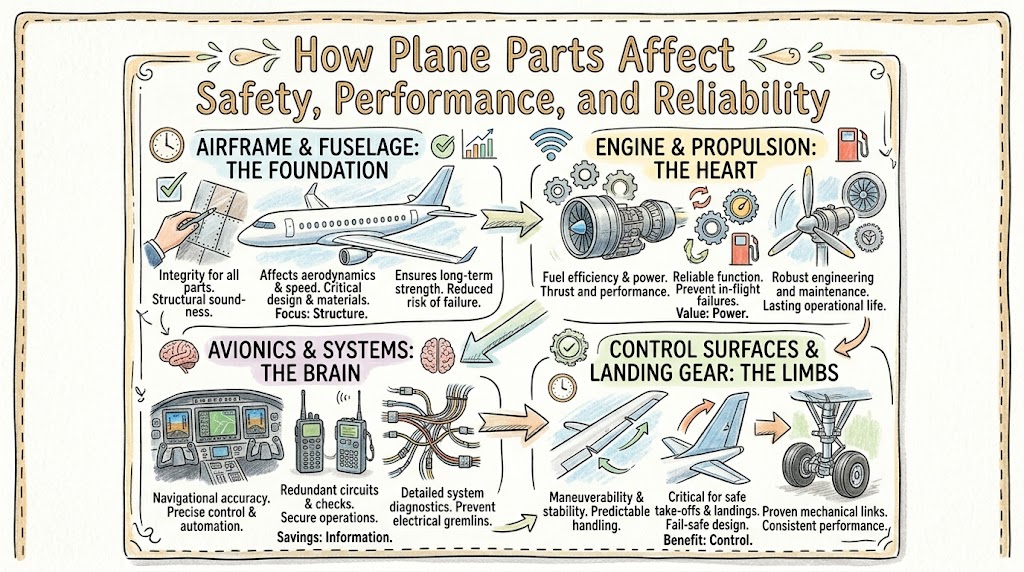
Aircraft safety and performance rely heavily on the quality, compatibility, and reliability of every component installed. From engines to avionics, structural components to landing gear, plane parts form the backbone of operational efficiency and flight safety. Even minor discrepancies in materials, specifications, or installation can compromise reliability, reduce performance, or increase the risk of in-flight issues. Understanding how each part contributes to overall aircraft function is essential for owners, operators, and maintenance professionals who prioritize safety and long-term efficiency.
Real-world Use Cases
Consider an aircraft owner replacing engine components without verifying manufacturer specifications. Even slight mismatches can reduce engine efficiency, increase fuel consumption, and create mechanical stress. Similarly, installing incompatible avionics can lead to inaccurate flight data, affecting navigation and decision-making. Airlines and flight schools maintain strict part compatibility to ensure fleet reliability and prevent operational disruptions. These examples underscore why proper part selection, installation, and maintenance are vital for consistent safety and performance.
Evaluation Criteria for Aircraft Components
Before purchasing or installing parts, operators and maintenance teams evaluate certifications, material quality, compatibility, manufacturer reliability, and past performance records. Ensuring components meet these criteria supports operational safety, predictable performance, and long-term aircraft reliability.
Key Ways Plane Parts Affect Safety, Performance, and Reliability
1- Engine Components
Engines require precision components to maintain thrust, fuel efficiency, and reliability. Even minor deviations can lead to mechanical failure or reduced operational lifespan.
2- Avionics and Instrumentation
Accurate instruments and reliable avionics are critical for navigation, communication, and flight safety. Faulty components can compromise situational awareness and decision-making.
3- Structural Integrity
Airframe components, including wings, fuselage, and landing gear, must meet design specifications to handle flight loads and stress safely. Substandard parts risk structural failure.
4- Material Quality
Using corrosion-resistant metals and certified composites ensures longevity, reduces maintenance, and maintains predictable flight performance.
5- Weight and Balance
Component weight affects center of gravity, stability, and control. Incorrect parts can alter handling characteristics and reduce overall performance.
6- System Compatibility
Parts must integrate seamlessly with existing systems. Incompatible components can cause malfunctions, reduce reliability, and increase maintenance costs.
7- Maintenance Predictability
High-quality, certified parts reduce the frequency of repairs and inspections, improving operational reliability and minimizing downtime.
8- Safety and Compliance
Certified components help maintain regulatory compliance with FAA or equivalent aviation authorities, reducing risk of grounding or fines.
Practical Tips for Aircraft Owners and Operators
- Verify part numbers and specifications with manuals and manufacturer documentation.
- Source certified or OEM components to ensure reliability.
- Conduct thorough inspections and testing before installation.
- Keep detailed records for maintenance and regulatory audits.
- Plan for spare parts to reduce downtime in case of unexpected failures.
Comparison Notes
OEM parts offer guaranteed compatibility and certification, ensuring maximum safety, performance, and reliability. Aftermarket or refurbished parts may reduce costs but require careful verification to maintain operational integrity. Selecting the right parts balances safety, performance, and cost-effectiveness.
FAQs
1- Why are aircraft parts critical for safety?
High-quality, compatible components prevent failures and ensure predictable aircraft operation.
2- Can aftermarket parts affect performance?
Yes. Non-certified parts may reduce efficiency, alter handling, or increase the risk of malfunctions.
3- How do I verify part compatibility?
Check manufacturer specifications, assembly manuals, and certifications before purchase.
4- Do all components require certification?
Critical components like engines, avionics, and structural parts must meet regulatory and manufacturer standards.
5- How does material quality impact reliability?
Durable materials resist wear, corrosion, and stress, maintaining long-term operational safety.
6- Can incorrect parts cause accidents?
Yes. Using substandard or incompatible components increases the risk of system failures or control issues.
7- Are refurbished parts safe to use?
If inspected and certified, refurbished components can be safe, but thorough verification is essential.
8- Do parts affect fuel efficiency and performance?
Yes. Engine, propeller, and aerodynamic components directly influence consumption and flight efficiency.
9- Should I keep spare parts for critical systems?
Yes. Having compatible spares reduces downtime and ensures safe, continuous operations.
10- How do parts influence aircraft resale value?
Aircraft with certified, well-maintained components retain higher resale value and buyer confidence.
Conclusion
Plane parts are fundamental to aircraft safety, performance, and reliability. By prioritizing quality, compatibility, and certification, owners and operators can ensure predictable performance, minimize maintenance challenges, and maintain regulatory compliance. Careful selection and documentation of components reduce risks, extend operational life, and provide confidence in every flight. Whether for personal, commercial, or training use, attention to aircraft parts transforms maintenance and operation into a safe, efficient, and reliable process.

