
Introduction
Aircraft engines operate under demanding conditions, producing the power required for safe takeoffs, climbs, cruising, and landings. Every flight depends on the engine performing reliably, making routine inspections one of the most important aspects of aircraft maintenance. Even a small issue with an engine component can affect performance, fuel efficiency, and overall flight safety if left undetected.
Regular engine inspections help identify wear, corrosion, leaks, or damage before they develop into more serious problems. They also support preventive maintenance by allowing maintenance personnel to repair or replace components before failures occur. Whether an aircraft is used for private flying, commercial operations, flight training, or business aviation, a well-maintained engine contributes to dependable performance and longer service life.
Aircraft engines consist of many interconnected parts that work together under high temperatures, pressure, and continuous mechanical stress. Because of these operating conditions, several components require frequent inspection to ensure they remain in good working condition.
Why Aircraft Engine Inspections Matter
Routine engine inspections are an essential part of aircraft maintenance and safety management.
Regular inspections help:
- Improve flight safety
- Maintain engine reliability
- Support consistent engine performance
- Detect problems early
- Reduce unexpected maintenance issues
- Extend component service life
- Maintain compliance with applicable maintenance requirements
Identifying minor issues before they become major mechanical problems helps reduce downtime and supports safer aircraft operations.
Factors That Influence Engine Component Wear
Aircraft engine components experience wear at different rates depending on operating conditions.
Flight Hours
The more an engine operates, the greater the mechanical stress placed on internal components. Higher flight hours generally increase the need for inspections and preventive maintenance.
Engine Operating Conditions
Frequent takeoffs, climbs, and high-power settings may place additional stress on engine parts compared with steady cruise operations.
Weather and Environment
Environmental conditions such as heat, humidity, dust, salt air, and moisture may accelerate corrosion and component wear.
Maintenance Practices
Regular inspections, proper servicing, and timely repairs contribute significantly to engine reliability and longevity.
Fuel Quality
Clean, properly specified fuel helps reduce contamination and supports efficient engine performance.
Lubrication Quality
Proper lubrication minimizes friction, reduces wear, and protects moving engine components.
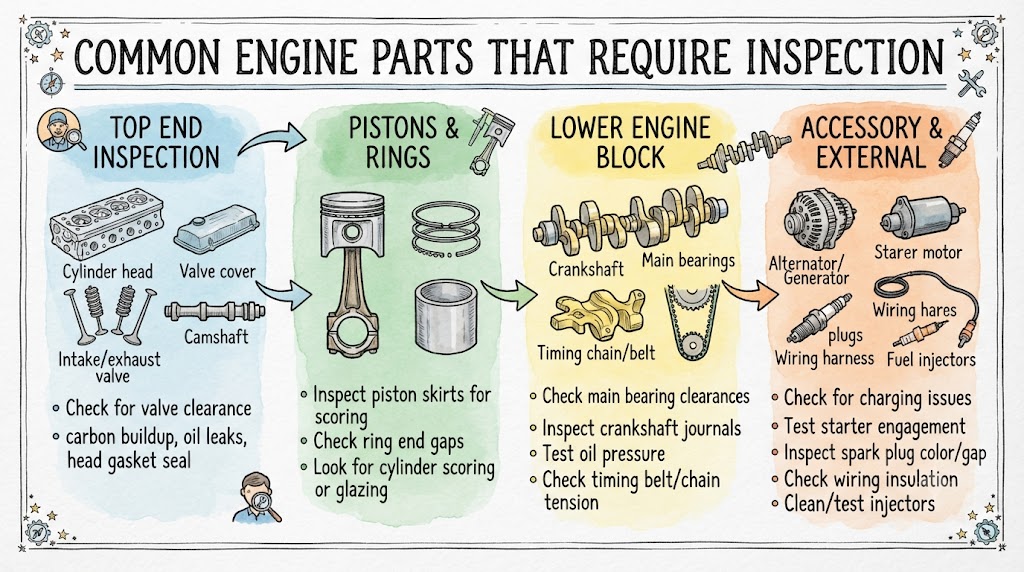
Common Engine Parts That Require Inspection
1. Spark Plugs (For Applicable Engine Types)
Spark plugs provide the ignition source needed for combustion in many piston aircraft engines.
Inspection Focus
- Electrode wear
- Carbon deposits
- Cracks
- Fouling
- Proper gap condition
Damaged or worn spark plugs may affect engine efficiency and smooth operation.
2. Ignition System Components
The ignition system supplies the electrical energy required for combustion.
Components commonly inspected include:
- Magnetos
- Electronic ignition systems
- Ignition leads
- Electrical connectors
Inspection Focus
- Secure connections
- Proper timing
- Wiring condition
- Corrosion
- Operational performance
Reliable ignition contributes to consistent engine operation.
3. Cylinders
Cylinders contain the combustion process that generates engine power.
Inspection Focus
- Compression
- Cooling fin condition
- Surface cracks
- Corrosion
- Internal wear
- Leakage indications
Cylinder inspections help identify developing engine problems before they affect performance.
4. Pistons and Piston Rings
Pistons convert combustion energy into mechanical movement.
Piston rings help seal combustion gases and control oil consumption.
Inspection Focus
- Wear patterns
- Compression performance
- Oil consumption indicators
- Surface condition
Proper piston operation contributes to efficient combustion.
5. Valves and Valve Train
Valves control airflow into and out of engine cylinders.
Common inspection areas include:
- Intake valves
- Exhaust valves
- Valve guides
- Valve springs
Inspection Focus
- Wear
- Proper seating
- Carbon buildup
- Cracks
- Heat damage
Valve condition significantly affects engine performance.
6. Crankshaft
The crankshaft converts piston movement into rotational power.
Inspection Focus
- Structural integrity
- Bearing condition
- Surface wear
- Vibration indicators
- Lubrication condition
Because the crankshaft experiences continuous stress, regular inspections are essential.
7. Camshaft
The camshaft controls valve timing throughout engine operation.
Inspection Focus
- Cam lobe wear
- Lubrication
- Timing accuracy
- Surface condition
Proper camshaft operation supports efficient combustion.
8. Bearings
Bearings reduce friction between moving engine components.
Inspection Focus
- Wear
- Lubrication
- Surface damage
- Overheating signs
Healthy bearings help prevent unnecessary engine wear.
9. Fuel System Components
The fuel system delivers clean fuel to the engine.
Common inspection areas include:
- Fuel pumps
- Fuel injectors
- Carburetors (where applicable)
- Fuel lines
- Fuel filters
Inspection Focus
- Leaks
- Contamination
- Blockages
- Secure fittings
- Proper fuel flow
Fuel system inspections support reliable engine performance.
10. Oil System Components
The lubrication system protects internal engine parts from excessive wear.
Common components include:
- Oil pump
- Oil filter
- Oil cooler
- Oil lines
- Oil fittings
Inspection Focus
- Oil leaks
- Filter condition
- Proper oil circulation
- Contamination
- Oil pressure indications
Maintaining a healthy oil system is one of the most important aspects of engine maintenance.
11. Cooling System Components
Depending on engine design, cooling systems may use airflow or liquid cooling.
Inspection areas include:
- Cooling fins
- Radiators
- Hoses
- Coolant lines
- Airflow passages
Inspection Focus
- Blockages
- Damage
- Leaks
- Corrosion
- Airflow efficiency
Proper cooling prevents overheating and supports long-term engine reliability.
12. Exhaust System
The exhaust system removes combustion gases from the engine.
Inspection Focus
- Cracks
- Corrosion
- Loose connections
- Heat damage
- Attachment security
Exhaust inspections help identify issues that could affect both performance and safety.
13. Propeller Hub and Mounting Area
Although technically part of the propulsion system, the propeller mounting area is closely connected with engine operation.
Inspection Focus
- Attachment security
- Corrosion
- Wear
- Vibration
- Mounting integrity
Proper inspection helps maintain smooth engine performance.
Aircraft Engine Inspection Checklist
Before every scheduled maintenance event, consider reviewing the following checklist:
- Perform a complete visual engine inspection.
- Check for oil leaks.
- Inspect fuel system components.
- Examine spark plugs where applicable.
- Inspect ignition system components.
- Verify cylinder condition and compression.
- Inspect the exhaust system.
- Review cooling system components.
- Examine the propeller hub and mounting area.
- Review engine maintenance records.
Using a structured checklist helps ensure inspection consistency.
Warning Signs That Require Immediate Attention
Some engine symptoms require prompt inspection by qualified maintenance personnel.
Common warning signs include:
Unusual Engine Vibration
Unexpected vibration may indicate imbalance, loose components, or internal wear.
Abnormal Oil Consumption
Rapid oil loss may suggest internal engine issues or external leaks.
Metal Particles in Oil
Metal contamination during oil inspection may indicate internal component wear.
Power Loss
Reduced engine performance should always be investigated promptly.
Rough Engine Operation
Rough running may result from ignition, fuel, or internal mechanical issues.
Fluid Leaks
Fuel, oil, or coolant leaks should never be ignored.
Overheating
Higher-than-normal operating temperatures require immediate attention.
Unusual Engine Noises
Knocking, grinding, or abnormal sounds may indicate developing mechanical problems.
Preventive Maintenance Best Practices
Preventive maintenance helps reduce unexpected engine failures.
Perform Routine Visual Inspections
Regular visual inspections often identify small issues before they become larger problems.
Follow Scheduled Maintenance
Maintenance schedules established by manufacturers and applicable regulations help maintain engine reliability.
Maintain Proper Lubrication
Using the correct lubricants and maintaining proper oil levels protects engine components.
Care for the Fuel System
Clean fuel, proper filtration, and contamination control contribute to dependable engine performance.
Monitor Engine Performance
Engine monitoring systems help identify abnormal operating conditions early.
Maintain Accurate Maintenance Records
Well-organized maintenance documentation supports future inspections and maintenance planning.
Common Inspection Mistakes to Avoid
Ignoring Minor Oil Leaks
Small leaks may become larger problems if left unresolved.
Skipping Visual Inspections
Routine inspections often detect issues that are not immediately noticeable during normal operation.
Poor Maintenance Documentation
Incomplete records make long-term maintenance planning more difficult.
Using Incorrect Replacement Parts
Only compatible and approved replacement components should be used according to applicable maintenance requirements.
Delaying Repairs
Addressing minor issues promptly helps prevent additional damage.
Ignoring Manufacturer Recommendations
Manufacturer maintenance guidance provides valuable information regarding inspection procedures and component care.
Aircraft Engine Inspection Tools
Maintenance professionals commonly use specialized inspection tools to evaluate engine condition.
Examples include:
Flashlights
Support detailed visual inspections.
Borescopes
Allow inspection of internal engine components without major disassembly.
Compression Testers
Help evaluate cylinder condition.
Torque Wrenches
Ensure components are installed using correct torque values.
Oil Analysis
Laboratory analysis can help identify internal engine wear trends.
Engine Monitoring Systems
Digital monitoring systems provide valuable operational data that supports preventive maintenance.
Technology Improving Aircraft Engine Inspections
Modern technology continues to improve maintenance efficiency.
Digital Maintenance Records
Electronic documentation improves maintenance organization and traceability.
Engine Monitoring Systems
Real-time monitoring helps identify abnormal operating conditions.
Predictive Maintenance Software
Advanced software analyzes operational data to support maintenance planning.
Borescope Imaging
High-quality imaging allows detailed internal engine inspections.
AI-Assisted Maintenance Analysis
Emerging technologies help maintenance organizations evaluate engine performance trends more efficiently.
Digital Inspection Checklists
Electronic inspection systems improve consistency and documentation accuracy.
Frequently Asked Questions
1. Why are aircraft engine inspections important?
Regular inspections help identify wear, maintain reliability, improve safety, and reduce the likelihood of unexpected mechanical issues.
2. Which engine parts require the most frequent inspection?
Common inspection areas include spark plugs, ignition components, cylinders, fuel systems, oil systems, cooling components, and the exhaust system.
3. How do mechanics identify engine wear?
Maintenance professionals use visual inspections, compression testing, borescopes, oil analysis, engine monitoring systems, and manufacturer-approved inspection procedures.
4. What are common signs of engine problems?
Warning signs include unusual vibration, rough operation, abnormal oil consumption, overheating, fluid leaks, power loss, and unusual engine noises.
5. Why is oil system inspection important?
The oil system lubricates internal engine components and helps reduce wear, making regular inspection essential for reliable engine operation.
6. What inspection tools are commonly used?
Flashlights, borescopes, compression testers, torque wrenches, oil analysis, and engine monitoring systems are commonly used during inspections.
7. Can preventive maintenance reduce repair costs?
Yes. Identifying and addressing minor issues early may help prevent more extensive repairs and reduce unexpected maintenance downtime.
8. Why should maintenance records be updated regularly?
Accurate records support maintenance planning, inspection history, regulatory compliance, and long-term aircraft reliability.
9. How does engine monitoring improve reliability?
Monitoring systems help detect abnormal operating conditions early, allowing maintenance personnel to investigate potential issues before they become more serious.
10. Why should aircraft owners follow manufacturer maintenance recommendations?
Manufacturer guidance is developed specifically for each engine model and helps ensure appropriate inspection procedures, maintenance practices, and long-term engine reliability.
Conclusion
Routine inspection of aircraft engine components is one of the most effective ways to maintain safety, reliability, and consistent performance. From spark plugs and ignition systems to cylinders, fuel systems, oil systems, cooling components, and exhaust assemblies, every engine part plays a vital role in supporting dependable aircraft operation. Regular inspections help identify wear, leaks, corrosion, or developing mechanical issues before they progress into more significant problems.
A proactive maintenance approach not only extends engine service life but also reduces the likelihood of unexpected downtime and costly repairs. By following manufacturer guidance, maintaining accurate maintenance records, using appropriate inspection tools, and working with qualified maintenance professionals, aircraft owners and operators can help ensure that their engines continue to perform safely and efficiently throughout their operational life.

