
Introduction
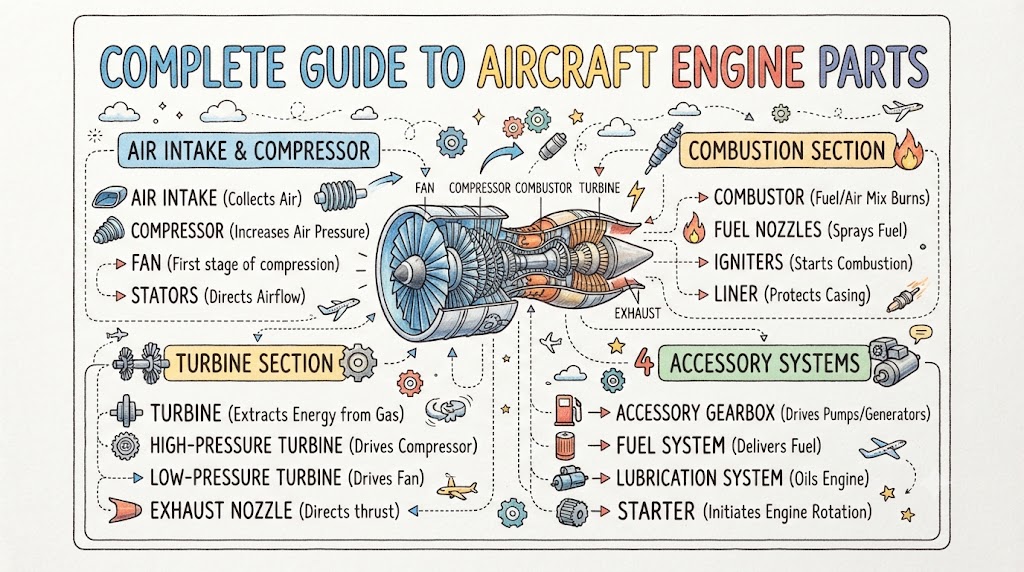
An aircraft engine is one of the most important systems responsible for safe and reliable flight operations. Unlike many mechanical systems, aircraft engines operate under demanding conditions where reliability, precision, and regular maintenance are essential. Every component inside and around the engine plays an important role in producing power, controlling performance, and supporting safe aircraft operation.
Understanding aircraft engine parts helps aircraft owners, pilots, maintenance professionals, and aviation enthusiasts make better decisions about inspections, repairs, replacements, and long-term aircraft care. From pistons and cylinders to ignition systems, fuel systems, and lubrication components, every part contributes to the overall performance of the aircraft powerplant.
What Are Aircraft Engine Parts?
Aircraft engine parts are the individual mechanical and electrical components that work together to produce power and support aircraft operation.
An aircraft engine converts fuel energy into mechanical energy, which is transferred to the propeller or propulsion system to create thrust.
Major engine components include:
- Crankcase
- Crankshaft
- Pistons
- Cylinders
- Connecting rods
- Valves
- Camshaft
- Bearings
- Ignition components
- Fuel system components
- Lubrication components
- Cooling components
- Exhaust components
Each component must operate correctly because even a small failure can affect engine performance and flight safety.
Major Aircraft Engine Parts and Their Functions
Engine Crankcase
The crankcase is the main structural housing of many aircraft piston engines.
It supports and protects internal engine components while maintaining proper alignment between moving parts.
Functions include:
- Supporting engine components
- Containing lubricating oil
- Maintaining structural strength
- Protecting internal mechanisms
A damaged crankcase can affect engine reliability and may require detailed inspection.
Crankshaft
The crankshaft converts the movement of pistons into rotational motion.
During engine operation:
- Fuel combustion pushes the piston downward.
- Connecting rods transfer movement.
- The crankshaft converts this motion into rotation.
- Rotational power is transferred to the propeller.
The crankshaft must withstand significant mechanical forces during operation.
Pistons
Pistons move inside engine cylinders and help convert combustion energy into mechanical movement.
Key functions include:
- Compressing the fuel-air mixture
- Receiving combustion force
- Transferring energy through connecting rods
Proper piston condition is important for maintaining engine efficiency and reliability.
Cylinders
Cylinders provide the chamber where combustion occurs.
They contain:
- Pistons
- Valves
- Combustion chambers
Cylinder condition affects:
- Compression
- Power production
- Heat management
- Overall engine performance
Regular inspection helps identify wear or damage.
Connecting Rods
Connecting rods connect pistons to the crankshaft.
Their purpose is to transfer piston movement into crankshaft rotation.
Because connecting rods experience repeated stress during operation, proper inspection is important for engine reliability.
Camshaft
The camshaft controls valve timing.
It ensures that:
- Intake valves open at the correct time.
- Exhaust valves open properly.
- Engine cycles occur efficiently.
Proper valve timing is essential for smooth engine operation.
Valves
Aircraft engines typically use intake and exhaust valves.
Intake Valves
Allow the fuel-air mixture to enter the combustion chamber.
Exhaust Valves
Allow combustion gases to leave the engine.
Valve condition affects:
- Compression
- Engine efficiency
- Temperature management
Bearings
Bearings reduce friction between moving engine components.
They support:
- Crankshaft movement
- Rotating components
- Mechanical alignment
Proper lubrication is essential for bearing protection.
Spark Plugs
Spark plugs provide the ignition source needed for combustion in many piston aircraft engines.
They influence:
- Engine starting
- Combustion quality
- Engine smoothness
Regular inspection helps identify:
- Wear
- Contamination
- Incorrect operation
Magnetos and Ignition System Components
Aircraft piston engines commonly use magneto ignition systems.
The ignition system provides the spark needed for combustion.
Important components include:
- Magnetos
- Ignition wires
- Spark plugs
A properly functioning ignition system supports dependable engine operation.
Aircraft Engine Fuel System
The fuel system delivers fuel to the engine for combustion.
Common components include:
- Fuel pumps
- Fuel lines
- Filters
- Carburetors
- Fuel injection systems
The fuel system must provide clean and consistent fuel delivery.
Maintenance considerations include:
- Checking for leaks
- Inspecting fuel filters
- Monitoring fuel quality
- Ensuring proper connections
Aircraft Engine Lubrication System
The lubrication system reduces friction and helps control engine temperatures.
Important components include:
- Engine oil
- Oil pump
- Oil filter
- Oil passages
Lubrication helps:
- Reduce wear
- Protect moving components
- Remove heat
- Improve engine durability
Regular oil maintenance is one of the most important engine care practices.
Aircraft Engine Cooling System
Aircraft engines generate significant heat during operation.
Cooling systems help maintain safe operating temperatures.
Cooling methods may include:
- Air cooling
- Liquid cooling
Important cooling components include:
- Cooling fins
- Baffles
- Radiators
- Coolant systems
Poor cooling can contribute to overheating and component damage.
Aircraft Exhaust System
The exhaust system removes combustion gases from the engine.
It also helps:
- Direct exhaust flow
- Reduce unwanted heat exposure
- Support efficient engine operation
Regular inspection is important because exhaust components experience high temperatures.
How Aircraft Engine Parts Work Together
Aircraft engine performance depends on the interaction between multiple systems.
For example:
- The fuel system delivers fuel.
- The ignition system creates combustion.
- Pistons convert combustion energy into movement.
- Connecting rods transfer movement.
- The crankshaft produces rotation.
- The propeller converts rotation into thrust.
A problem in one area can affect the entire engine system.
How Aircraft Engine Parts Affect Performance
The condition of engine components directly influences:
Power Output
Worn components can reduce engine efficiency.
Fuel Efficiency
Properly functioning systems help maintain effective fuel use.
Engine Smoothness
Balanced and well-maintained components reduce vibration and irregular operation.
Reliability
Quality components and proper maintenance support dependable performance.
Flight Safety
Engine reliability is essential for safe aircraft operation.
Common Aircraft Engine Wear Parts
Some components require more frequent inspection or replacement due to normal operation.
Common wear items include:
- Spark plugs
- Filters
- Gaskets
- Seals
- Hoses
- Ignition components
- Bearings
- Other serviceable components
Replacement decisions should always follow manufacturer guidance and inspection findings.
Aircraft Engine Inspection Practices
Regular inspections help identify problems before they become serious.
Important inspection activities include:
Preflight Inspection
Pilots check for visible issues before every flight.
Common checks include:
- Oil levels
- Leaks
- External damage
- Loose components
Routine Maintenance Inspections
Maintenance professionals inspect:
- Engine condition
- Fuel systems
- Ignition components
- Lubrication systems
- Cooling systems
Compression Testing
Compression testing helps evaluate cylinder condition.
Oil Analysis
Oil analysis can provide information about internal engine conditions by identifying unusual particles or contamination.
Borescope Inspection
Borescope inspections allow technicians to examine internal engine areas without complete disassembly.
Aircraft Engine Maintenance Best Practices
Proper maintenance improves reliability and reduces unexpected problems.
Recommended practices include:
Follow Maintenance Guidelines
Always follow aircraft and engine manufacturer recommendations.
Maintain Accurate Records
Detailed records help track:
- Inspections
- Repairs
- Replacements
- Modifications
Monitor Engine Performance
Pay attention to:
- Unusual sounds
- Temperature changes
- Vibration
- Performance changes
Address Small Problems Early
Minor issues can become major repairs if ignored.
Common Aircraft Engine Problems
Oil Leaks
Oil leaks may indicate problems with seals, connections, or engine components.
Overheating
Possible causes include:
- Poor airflow
- Cooling issues
- Operating conditions
- Component problems
Ignition Problems
Issues with ignition components may cause:
- Rough operation
- Starting difficulties
- Reduced performance
Fuel System Problems
Fuel contamination or delivery problems can affect engine operation.
Low Compression
Reduced compression may indicate cylinder or valve-related issues.
Excessive Vibration
Unusual vibration may require inspection of engine or propeller-related components.
Aircraft Engine Overhaul Basics
An engine overhaul is a detailed process involving inspection, repair, replacement, and restoration of engine components.
The process may include:
- Engine disassembly
- Component inspection
- Cleaning
- Measurement
- Replacement of worn parts
- Reassembly
- Testing
The purpose of an overhaul is to restore engine reliability according to approved standards and procedures.
Choosing Quality Aircraft Engine Parts
Selecting the correct replacement components is critical.
Important factors include:
Compatibility
Parts should match the specific aircraft and engine requirements.
Quality Standards
Components should meet appropriate aviation quality expectations.
Documentation
Proper documentation helps verify part information and history.
Supplier Reputation
Reliable suppliers provide accurate information and consistent support.
Aircraft Engine Parts Maintenance Checklist
Aircraft owners and maintenance professionals should consider:
- Check engine oil condition.
- Inspect for leaks.
- Review maintenance records.
- Inspect ignition components.
- Monitor engine temperatures.
- Check fuel system condition.
- Inspect exhaust components.
- Maintain accurate documentation.
- Replace components when required.
- Follow manufacturer recommendations.
OEM Parts vs Approved Replacement Parts
| Feature | OEM Parts | Approved Replacement Parts |
|---|---|---|
| Manufacturer | Original equipment producer | Approved alternative manufacturer |
| Compatibility | Designed for specific systems | Must meet required compatibility standards |
| Documentation | Provided by manufacturer | Supporting documentation available |
| Availability | Depends on manufacturer supply | May provide additional options |
| Cost | May vary | May vary |
| Quality Requirements | Manufacturer standards | Must meet applicable standards |
| Selection Process | Direct match | Requires verification |
| Maintenance Acceptance | Depends on aircraft requirements | Depends on approval status |
| Application | Specific aircraft systems | Specific approved applications |
| Support | Manufacturer support | Supplier support |
| Traceability | Available | Should be maintained |
| Installation | Follow maintenance guidance | Follow approved procedures |
| Performance | Designed specification | Based on approved design |
| Long-Term Support | Manufacturer dependent | Supplier dependent |
| Documentation Records | Important | Important |
Frequently Asked Questions
1. What are the main aircraft engine parts?
Major aircraft engine parts include pistons, cylinders, crankshaft, connecting rods, valves, ignition components, fuel systems, and lubrication components.
2. Why are aircraft engine parts important?
Every engine component contributes to reliable operation, performance, and flight safety.
3. Which aircraft engine parts wear out most often?
Wear varies by component and operating conditions, but service items such as spark plugs, filters, seals, and ignition components commonly require regular attention.
4. How often should aircraft engine parts be inspected?
Inspection schedules depend on the aircraft, engine model, operating environment, and maintenance requirements.
5. What causes aircraft engine problems?
Common causes include poor maintenance, component wear, overheating, fuel issues, lubrication problems, and improper operation.
6. What is an aircraft engine overhaul?
An engine overhaul involves detailed inspection, repair, replacement, and restoration of engine components.
7. Why are maintenance records important?
Accurate records help track component history, inspections, repairs, and future maintenance needs.
8. Can aircraft owners replace engine parts themselves?
Maintenance activities depend on regulations, aircraft type, and owner qualifications. Many tasks require trained aviation maintenance professionals.
9. How do quality engine parts improve safety?
Reliable components reduce the risk of failures and support dependable aircraft operation.
10. What should pilots check before every flight?
Pilots should perform required preflight inspections, including checks for leaks, visible damage, and engine-related concerns.
Conclusion
Aircraft engine parts are the foundation of safe and reliable aircraft operation. Every component, from major internal engine parts to supporting systems such as fuel, ignition, lubrication, and cooling, plays an important role in performance and reliability. Understanding these components helps aircraft owners and aviation professionals make better decisions about maintenance, inspections, and replacements.
Proper maintenance, accurate documentation, and selecting suitable replacement components are essential for protecting aircraft performance and extending engine life. Whether maintaining a general aviation aircraft, experimental aircraft, or training aircraft, quality parts and professional maintenance practices remain key factors in aviation safety.

