
Introduction
Owning an aircraft comes with the responsibility of ensuring that every component remains airworthy, properly maintained, and correctly documented. Over time, replacement aircraft parts become necessary due to wear, scheduled maintenance, upgrades, corrosion, or regulatory requirements.
Unlike general consumer products, aircraft replacement parts cannot be selected based on appearance or price alone. Even small differences in part number, configuration, or approval status can affect safety, performance, and legal airworthiness.
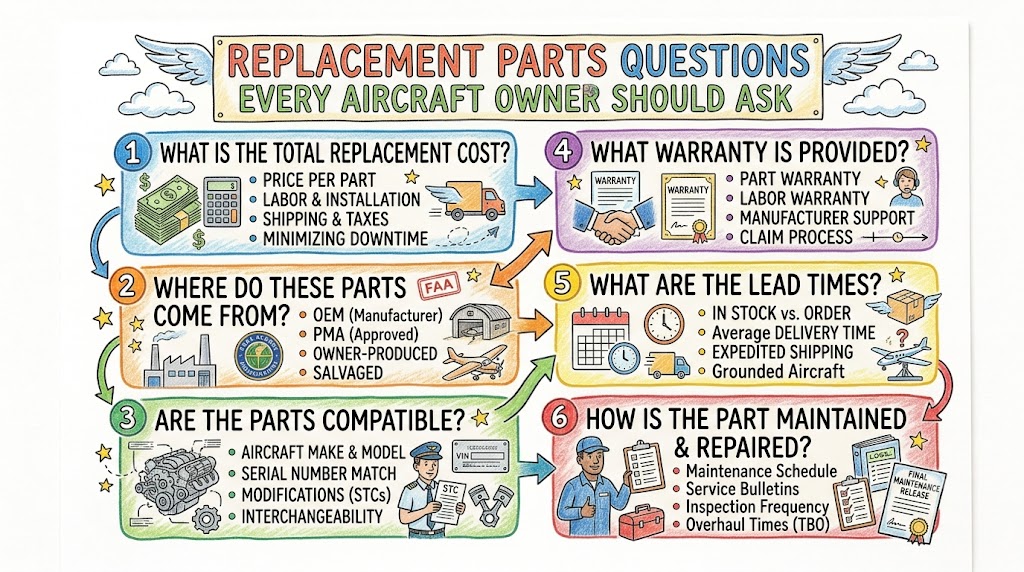
This is why aircraft owners must ask the right questions before purchasing or approving any replacement aircraft parts. A careful evaluation can help avoid installation errors, counterfeit components, unnecessary downtime, and compliance issues.
What Are Aircraft Replacement Parts?
Aircraft replacement parts are components used to repair, maintain, or restore an aircraft to a safe operating condition. These parts may include:
- Engine components
- Propeller systems
- Landing gear assemblies
- Brake systems
- Avionics and electrical equipment
- Fuel system components
- Flight control parts
- Structural elements
- Interior components
- Consumables like filters, seals, and hoses
Replacement parts may be supplied in different conditions, including:
- New
- New old stock
- Used (as removed)
- Serviceable
- Repaired
- Overhauled
- Rebuilt
Each condition has different implications for traceability, inspection, documentation, and continued airworthiness.
Questions About Identifying the Correct Part
1. What Is the Exact Part Number?
Aircraft parts must be identified by their exact part number, not just a description or visual similarity. Even small differences such as suffixes or revision letters may indicate different:
- Material composition
- Electrical specifications
- Dimensions
- Load capacity
- Installation requirements
Using the wrong part number can lead to serious compatibility and safety issues.
2. Has the Part Been Superseded?
Manufacturers often update part numbers over time. A superseded part may still function, but it could require:
- Updated installation procedures
- Additional hardware
- Compatibility checks
- Replacement of related components
Always confirm whether the new part replaces an older version or requires modifications.
3. Is the Part Compatible With My Aircraft Configuration?
Compatibility is not only about aircraft model. Owners must also consider:
- Aircraft serial number
- Engine type
- Installed modifications
- Avionics configuration
- Supplemental type certificates
A part suitable for one aircraft of the same model may not be correct for another due to configuration differences.
Questions About Approval and Eligibility
4. Is This an Approved Aircraft Part?
Aircraft replacement parts must meet applicable approval or acceptance criteria depending on regulatory requirements. Owners should ask how the part is eligible for installation, such as:
- Manufacturer-produced parts
- Approved replacement parts
- Standard hardware
- Parts installed under approved maintenance data
- Properly documented serviceable components
Marketing terms alone are not proof of approval.
5. What Documentation Supports This Part?
Proper documentation is essential. Depending on the part, documentation may include:
- Release certificates
- Maintenance records
- Inspection reports
- Traceability statements
- Overhaul documentation
Without proper paperwork, even a physically correct part may not be eligible for installation.
6. Does Installation Require Additional Approval?
Some parts require additional approvals or engineering support before installation. This may involve:
- Supplemental approvals
- Maintenance data references
- Inspection authorization
- Weight and balance updates
7. Is the Part Affected by Airworthiness Directives?
Aircraft owners must verify whether a part is subject to:
- Airworthiness directives
- Mandatory inspections
- Service bulletins with compliance requirements
- Life-limited restrictions
Ignoring these requirements can affect aircraft legality and safety.
Questions About Part Condition
8. What Is the Condition of the Part?
Aircraft parts may be described as new, used, serviceable, or overhauled. These terms are not interchangeable.
Owners should clarify:
- Who determined the condition
- What inspection was performed
- Whether testing was completed
- What standards were used
9. What Is the History of the Part?
A part’s history is critical. Ask about:
- Time since new or overhaul
- Total cycles or usage hours
- Reason for removal
- Storage conditions
- Any prior failures or issues
10. Has the Part Been Involved in Damage Events?
Parts exposed to unusual conditions such as accidents, corrosion, fire, or flooding may have hidden damage even if they appear usable.
11. Has the Part Been Inspected for Hidden Defects?
Hidden issues may include:
- Internal corrosion
- Structural fatigue
- Electrical damage
- Seal degradation
Questions About Traceability and Documentation
12. Can the Part Be Fully Traced?
Traceability ensures the part’s history is known from origin to current condition. This includes:
- Manufacturing source
- Ownership history
- Maintenance records
- Storage conditions
13. Do All Documents Match the Physical Part?
Always verify:
- Part number
- Serial number
- Manufacturer details
- Condition status
Mismatch between documents and the physical part is a major red flag.
14. Are Serial Numbers Intact and Legible?
Tampered or unclear serial numbers should be treated with caution as they may indicate poor traceability or altered identity.
Questions About Counterfeit and Supplier Risk
15. Is the Supplier Reliable?
Aircraft parts should only be purchased from trusted aviation sources. Owners should evaluate:
- Supplier reputation
- Quality control process
- Inspection procedures
- Handling of returned parts
16. Is the Price Too Low to Be True?
Extremely low pricing may indicate:
- Missing documentation
- Unknown condition
- Non-airworthy components
- Counterfeit risk
Price alone should never determine purchase decisions.
17. How Was the Part Stored?
Improper storage can degrade aircraft parts. Ask about:
- Temperature control
- Moisture protection
- Packaging condition
- Shelf-life management
Questions About Installation
18. Who Will Install the Part?
Aircraft replacement parts should only be installed by qualified maintenance professionals. Owners must confirm:
- Certification of mechanic or repair station
- Approval for the specific aircraft type
- Proper tools and procedures
19. What Installation Data Is Required?
Installation may require:
- Maintenance manuals
- Manufacturer instructions
- Approved technical data
- Compliance documentation
20. Will Installation Affect Aircraft Records?
Some replacements require updates to:
- Maintenance logs
- Weight and balance data
- Equipment lists
Questions About Cost and Downtime
21. What Is Included in the Price?
Owners should confirm whether the price includes:
- Documentation
- Shipping
- Testing
- Core charges
- Accessories
22. What Is the Total Cost of Replacement?
True cost includes more than the part itself:
- Labor
- Downtime
- Inspection
- Testing
- Additional parts
New vs Used Aircraft Parts
New parts offer predictable condition and full manufacturer support, while used parts may offer cost savings but require stronger verification.
The right choice depends on:
- Aircraft type
- Budget
- Availability
- Documentation quality
- Maintenance advice
Neither option is automatically better without proper evaluation.
Common Mistakes Aircraft Owners Should Avoid
- Ordering based only on appearance
- Ignoring part number suffixes
- Skipping documentation review
- Assuming “serviceable” means new
- Buying without mechanic consultation
- Ignoring traceability gaps
- Overlooking installation requirements
Replacement Parts Checklist for Aircraft Owners
Before purchasing, confirm:
- Exact part number
- Aircraft compatibility
- Approval eligibility
- Condition and history
- Documentation completeness
- Supplier reliability
- Installation requirements
- Cost breakdown
- Traceability records
- Maintenance professional review
Frequently Asked Questions
1. Can aircraft owners buy replacement parts directly?
Yes, but installation and approval must still follow aviation maintenance regulations and be performed or supervised by qualified professionals.
2. How do I know a part fits my aircraft?
You must verify aircraft model, serial number, configuration, and maintenance data—not just appearance or general compatibility.
3. What is the difference between new and serviceable parts?
New parts come directly from manufacturing, while serviceable parts have been inspected and deemed suitable for use under defined conditions.
4. Are used aircraft parts safe?
They can be safe if properly documented, traced, and inspected, but unknown history increases risk significantly.
5. What documents should a part include?
Depending on the part, documents may include release certificates, maintenance records, inspection reports, and traceability statements.
6. What is aircraft component traceability?
It is the ability to track a part’s origin, usage history, maintenance, and ownership from manufacture to current status.
7. Can I install aircraft parts myself?
No, installation must be performed by qualified maintenance personnel under applicable regulations.
8. What is a core charge?
It is a refundable deposit applied when an old component must be returned after receiving a replacement.
9. How do I avoid counterfeit aircraft parts?
Buy from trusted suppliers, verify documentation, check serial numbers, and involve maintenance professionals.
10. Should I always choose the cheapest part?
No. The cheapest option may lack documentation or reliability. Total cost and safety are more important than price alone.
Conclusion
Selecting aircraft replacement parts is a critical decision that directly affects safety, compliance, and aircraft performance. Aircraft owners must go beyond price and appearance to carefully evaluate part numbers, compatibility, approval status, condition, traceability, documentation, supplier reliability, and installation requirements.

