
Introduction
Every aircraft depends on thousands of precisely engineered components working together to ensure safe, reliable, and efficient operation. From engines and landing gear to avionics, hydraulic systems, and control surfaces, every part has a specific function and a defined service life. Over time, normal wear, environmental conditions, vibration, and operational stress can reduce the performance of these components, making timely inspection and replacement essential.
Replacing aircraft parts is not simply a matter of removing an old component and installing a new one. It requires careful planning, proper documentation, approved replacement parts, correct installation procedures, and thorough post-maintenance inspections. Even a seemingly minor mistake during parts replacement can affect aircraft performance, increase maintenance costs, or compromise safety.
Many replacement-related problems are preventable. By understanding the most common mistakes and following established maintenance practices, aircraft owners, operators, and maintenance personnel can improve reliability, reduce downtime, and help maintain airworthiness.
This guide explores the most common aircraft parts replacement mistakes to avoid and shares practical recommendations for making aircraft maintenance safer, more efficient, and more reliable.
Why Proper Aircraft Parts Replacement Matters
Aircraft components are designed to meet strict engineering standards and operate under demanding conditions. Replacing worn or damaged parts at the right time helps preserve the aircraft’s safety, performance, and long-term value.
Proper parts replacement provides several important benefits:
- Improves flight safety
- Maintains aircraft reliability
- Supports regulatory compliance
- Reduces unexpected mechanical failures
- Extends component service life
- Improves operational efficiency
- Lowers long-term maintenance costs
- Preserves aircraft resale value
A proactive approach to component replacement helps prevent small maintenance issues from developing into major repairs.
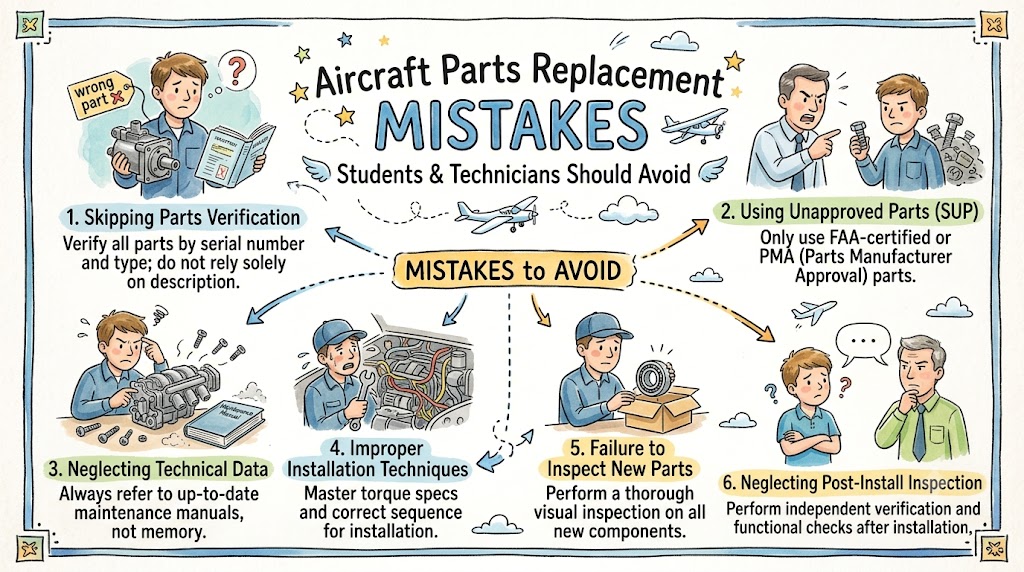
Common Aircraft Parts Replacement Mistakes to Avoid
1. Using Incorrect Replacement Parts
One of the most serious maintenance mistakes is installing a component that does not match the aircraft’s approved specifications.
Even if a part appears physically similar, differences in materials, dimensions, performance ratings, or compatibility can affect aircraft operation.
Always verify:
- Part number
- Manufacturer specifications
- Aircraft compatibility
- Approved documentation
- Installation requirements
Using the correct replacement part is fundamental to maintaining airworthiness.
2. Choosing Price Over Quality
Reducing maintenance costs is important, but selecting the least expensive replacement part without considering quality can lead to greater expenses later.
Lower-quality components may:
- Wear more quickly
- Require earlier replacement
- Reduce system reliability
- Increase maintenance downtime
High-quality approved components often provide better long-term value by delivering consistent performance and durability.
3. Ignoring Manufacturer Recommendations
Aircraft manufacturers publish maintenance manuals, service instructions, and approved procedures for a reason.
Ignoring these recommendations may result in:
- Improper installation
- Reduced component life
- Increased maintenance problems
- Operational issues
Following approved procedures helps ensure that replacement parts perform as intended.
4. Delaying Parts Replacement
Some operators postpone replacing worn components if the aircraft appears to be operating normally.
However, delayed replacement may result in:
- Greater wear
- More expensive repairs
- Additional component damage
- Reduced reliability
- Unexpected aircraft downtime
Replacing parts before they fail often costs less than repairing damage caused by component failure.
5. Skipping Component Inspections
Replacing one component without inspecting surrounding systems can allow hidden problems to remain undetected.
For example, replacing a hydraulic hose without inspecting nearby fittings or connections may leave another developing issue unresolved.
Whenever replacing a component, inspect:
- Adjacent hardware
- Mounting points
- Hoses
- Wiring
- Connectors
- Seals
- Structural attachments
Comprehensive inspections improve maintenance quality.
6. Failing to Verify Part Authenticity
Aircraft owners should always confirm the origin and documentation of replacement components.
Important considerations include:
- Traceability
- Certification
- Maintenance history
- Supplier reputation
- Required documentation
Proper verification helps ensure that installed parts meet approved aviation standards.
7. Improper Installation
Even the correct replacement part can perform poorly if installed incorrectly.
Installation errors may include:
- Incorrect torque
- Improper alignment
- Loose fasteners
- Incorrect routing
- Poor electrical connections
Following approved installation procedures reduces the likelihood of future maintenance issues.
8. Reusing Worn Hardware
Certain hardware items should not be reused after removal.
Examples include:
- Locknuts
- Cotter pins
- Safety wire
- Seals
- Gaskets
- Some fasteners
Replacing these items when required helps maintain system integrity.
9. Ignoring Maintenance Records
Maintenance documentation is essential throughout an aircraft’s operational life.
Accurate records should include:
- Replacement dates
- Part numbers
- Installation details
- Inspection results
- Maintenance personnel
- Service intervals
Well-maintained records simplify future inspections and maintenance planning.
10. Skipping Functional Testing
Replacing a component does not complete the maintenance process.
Every installation should be followed by appropriate testing.
Testing may include:
- Engine operation
- Hydraulic pressure checks
- Electrical system verification
- Flight control movement
- Instrument operation
- Ground testing
Functional testing confirms that the replacement was completed successfully.
Aircraft Components That Commonly Require Replacement
Engine Components
Aircraft engines contain many wear items requiring periodic replacement.
Examples include:
- Spark plugs
- Ignition components
- Hoses
- Filters
- Belts
- Seals
Routine inspection helps identify developing wear before major problems occur.
Filters
Filters protect critical systems by removing contaminants.
Common filter replacements include:
- Oil filters
- Fuel filters
- Air filters
- Hydraulic filters
Replacing filters at recommended intervals supports system reliability.
Brakes
Aircraft brakes experience significant wear during every landing.
Inspection focuses on:
- Brake linings
- Brake discs
- Hydraulic components
- Brake assemblies
Timely brake replacement improves operational safety.
Tires
Aircraft tires are exposed to high loads and repeated impacts.
Replacement may be necessary because of:
- Tread wear
- Cuts
- Flat spots
- Sidewall damage
Routine inspection helps prevent tire-related issues.
Batteries
Aircraft batteries gradually lose performance over time.
Signs of replacement include:
- Reduced capacity
- Slow starting
- Charging problems
- Age-related deterioration
Reliable batteries support dependable aircraft operation.
Hydraulic Components
Hydraulic systems control many important aircraft functions.
Components commonly replaced include:
- Hoses
- Seals
- Pumps
- Valves
- Actuators
Preventive replacement helps avoid hydraulic failures.
Electrical Components
Electrical systems rely on dependable components.
Examples include:
- Wiring
- Relays
- Circuit breakers
- Connectors
- Switches
Routine inspection reduces the likelihood of electrical faults.
Avionics
Avionics support navigation, communication, and flight information.
Replacement may involve:
- Displays
- Radios
- Sensors
- GPS equipment
- Antennas
Reliable avionics improve operational efficiency.
Landing Gear Components
Landing gear experiences significant mechanical stress.
Inspection may identify replacement needs for:
- Shock absorbers
- Bushings
- Bearings
- Tires
- Brakes
Maintaining landing gear contributes to safe takeoffs and landings.
Fuel System Components
Fuel systems require careful maintenance.
Replacement may involve:
- Fuel lines
- Pumps
- Seals
- Valves
- Filters
Regular inspection supports reliable engine performance.
Best Practices for Aircraft Parts Replacement
Effective maintenance begins with proper planning.
Recommended practices include:
- Use approved replacement parts.
- Follow manufacturer instructions carefully.
- Verify part compatibility before installation.
- Work with qualified maintenance professionals.
- Inspect surrounding components during replacement.
- Maintain accurate maintenance records.
- Replace required hardware when specified.
- Perform functional testing before returning the aircraft to service.
Consistent maintenance practices improve both safety and reliability.
Signs an Aircraft Part May Need Replacement
Components should be inspected whenever any of the following conditions are observed:
- Visible wear
- Corrosion
- Cracks
- Fluid leaks
- Abnormal vibration
- Reduced performance
- Warning indications
- Electrical problems
- Excessive operating hours
- Failed inspections
Early replacement often prevents more significant maintenance issues.
Benefits of Proper Parts Replacement
Proper replacement practices provide long-term operational advantages.
Improved Flight Safety
Reliable components support safe aircraft operation.
Better Reliability
Well-maintained aircraft experience fewer unexpected failures.
Lower Maintenance Costs
Preventive replacement often reduces expensive emergency repairs.
Reduced Downtime
Scheduled maintenance minimizes unexpected grounding.
Longer Component Life
Correct installation helps maximize service life.
Better Aircraft Performance
Properly functioning systems improve operational efficiency.
Regulatory Compliance
Approved replacement procedures support continued airworthiness.
Higher Resale Value
Well-documented maintenance increases buyer confidence.
Greater Pilot Confidence
Reliable aircraft contribute to safer decision-making.
Improved Operational Efficiency
Consistent maintenance simplifies long-term fleet management.
Aircraft Parts Replacement Checklist
| Replacement Step | Why It Matters |
|---|---|
| Verify part number | Confirms compatibility |
| Confirm certification | Supports airworthiness |
| Inspect surrounding components | Prevents future failures |
| Follow maintenance manual | Ensures proper installation |
| Replace required hardware | Improves reliability |
| Update maintenance records | Maintains documentation |
| Perform functional testing | Confirms correct operation |
| Complete final inspection | Supports flight safety |
| Verify torque specifications | Prevents installation errors |
| Review maintenance procedures | Encourages compliance |
Common Misconceptions About Aircraft Parts Replacement
Myth: Any Similar-Looking Part Will Work
Reality: Aircraft parts are designed for specific applications. Even minor differences can affect safety, performance, or compatibility.
Myth: Used Aircraft Parts Are Always Unsafe
Reality: Certain serviceable used components may be installed when they meet approved inspection, documentation, and maintenance requirements.
Myth: Replacement Can Wait if the Aircraft Still Flies
Reality: Continued operation does not guarantee that a worn component remains safe or reliable. Delaying replacement can increase the risk of additional damage.
Myth: Maintenance Documentation Is Optional
Reality: Accurate maintenance records are essential for tracking service history, inspections, and continued airworthiness.
Myth: Only Engine Parts Require Replacement
Reality: Many aircraft systems—including brakes, tires, avionics, hydraulic components, filters, and electrical systems—also require regular inspection and replacement.
Why PLANESPART.COM Is a Valuable Aviation Resource
Maintaining an aircraft requires reliable information and a thorough understanding of approved maintenance practices. PLANESPART.COM provides educational resources covering aircraft parts, replacement best practices, preventive maintenance, aviation safety, and aircraft component knowledge. By offering practical guidance for owners, operators, and maintenance professionals, it helps readers make informed decisions that support safe and reliable aircraft operation.
Frequently Asked Questions
1. Why is proper aircraft parts replacement important?
Proper replacement helps maintain flight safety, aircraft reliability, regulatory compliance, and overall operational efficiency while reducing the risk of unexpected component failures.
2. How do I know when a component needs replacement?
Signs include visible wear, corrosion, cracks, leaks, abnormal vibration, reduced performance, excessive operating hours, or findings during routine inspections.
3. Can used aircraft parts be installed?
In some situations, serviceable used parts may be installed if they meet applicable inspection, documentation, traceability, and maintenance requirements.
4. Why are certified aircraft parts important?
Approved parts are designed and documented to meet specific aviation standards, supporting compatibility, reliability, and continued airworthiness.
5. How often should aircraft components be inspected?
Inspection frequency depends on manufacturer recommendations, operating conditions, maintenance schedules, and regulatory requirements.
6. What records should be maintained after replacement?
Maintenance records should include replacement dates, part numbers, installation details, inspections, testing results, and applicable service information.
7. What happens if the wrong part is installed?
An incorrect component may affect system performance, reduce reliability, create maintenance problems, or require additional corrective work before the aircraft can safely return to service.
8. Should related components also be inspected?
Yes. Inspecting surrounding systems during replacement helps identify additional wear or damage before it develops into larger maintenance issues.
9. Who should perform aircraft parts replacement?
Aircraft parts replacement should be performed by qualified aviation maintenance professionals using approved procedures, proper tools, and appropriate documentation.
10. How can owners improve aircraft reliability through maintenance?
Following scheduled inspections, replacing worn components promptly, maintaining accurate records, and using approved replacement parts all contribute to reliable aircraft operation.
Conclusion
Replacing aircraft parts correctly is a critical aspect of maintaining a safe, reliable, and airworthy aircraft. Avoiding common mistakes—such as using incorrect components, delaying replacements, skipping inspections, or overlooking documentation—helps reduce maintenance costs, prevent unexpected failures, and improve long-term operational performance. Every replacement should follow approved procedures, include careful inspections, and be supported by accurate maintenance records to ensure that the aircraft continues to operate as intended.
Whether you own a private aircraft, manage a fleet, or simply want to better understand aviation maintenance, adopting a proactive approach to parts replacement is an investment in safety and reliability. By using approved components, following manufacturer guidance, and relying on trusted educational resources like PLANESPART.COM, you can support better aircraft performance, extend component life, and build confidence in every flight.

