
Introduction
Aircraft are built to perform reliably under demanding conditions, but every component has a service life. Continuous exposure to vibration, temperature changes, weather, repeated takeoffs and landings, and normal operational stress gradually causes wear. While some wear is expected, ignoring it can affect aircraft performance, reliability, and safety.
Pilots may not perform every maintenance task themselves, but they play an important role in recognizing early signs of wear and reporting concerns promptly. A thorough pre-flight inspection, attention during flight, and careful post-flight observations can help identify potential issues before they become larger maintenance problems.
This guide explains why aircraft components wear, the warning signs pilots should watch for, how regular inspections help maintain aircraft reliability, and why timely replacement of worn parts is essential for safe flight operations.
Why Aircraft Components Wear
Every aircraft component experiences some degree of wear throughout its operational life.
Several factors contribute to this process, including:
- Repeated flight operations
- Engine vibration
- Temperature fluctuations
- Environmental exposure
- Moisture
- Corrosion
- Friction between moving parts
Understanding these factors helps pilots appreciate the importance of routine inspections and preventive maintenance.
Common Aircraft Components That Experience Wear
Certain aircraft parts experience greater stress than others and require regular monitoring.
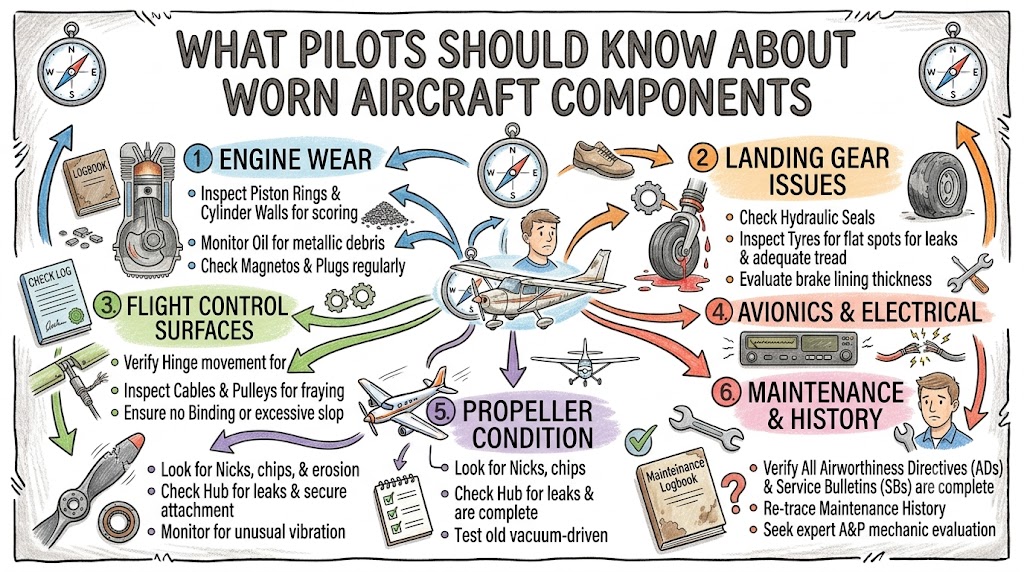
Engine Components
The engine operates under high temperatures and continuous mechanical loads.
Common wear may occur in:
- Belts
- Filters
- Hoses
- Ignition components
- Moving engine parts
Routine inspections help detect early signs of deterioration.
Tires
Aircraft tires experience significant stress during taxiing, takeoff, and landing.
Pilots should look for:
- Uneven tread wear
- Cuts
- Cracks
- Low inflation
- Foreign object damage
Proper tire condition supports safe ground operations.
Brakes
Brake systems experience repeated friction during landings.
Signs of wear include:
- Reduced braking effectiveness
- Uneven brake response
- Excessive wear on brake components
Brake inspections are an important part of routine maintenance.
Landing Gear
Landing gear absorbs substantial forces during every landing.
Maintenance personnel inspect:
- Shock absorbers
- Wheels
- Structural components
- Hydraulic systems
- Attachment points
Proper landing gear condition contributes to safe operations.
Flight Controls
Flight control systems must move smoothly and respond accurately.
Regular inspections verify:
- Control cable condition
- Hinges
- Linkages
- Control surface movement
Any irregularity should be reported immediately.
Propeller
The propeller operates under demanding aerodynamic and mechanical conditions.
Pilots should observe:
- Surface damage
- Corrosion
- Nicks
- Loose hardware
Even minor damage deserves professional evaluation.
Battery
Aircraft batteries naturally lose performance over time.
Routine inspections help identify:
- Corrosion
- Loose connections
- Reduced charging performance
Reliable electrical power supports many aircraft systems.
Hydraulic Components
Aircraft using hydraulic systems require regular inspection for:
- Fluid leaks
- Hose condition
- Seal integrity
- Pressure consistency
Hydraulic reliability supports safe aircraft operation.
Electrical Systems
Electrical components should be inspected for:
- Damaged wiring
- Loose connections
- Abnormal operation
- Corrosion
Reliable electrical systems improve overall aircraft dependability.
Warning Signs of Worn Aircraft Components
Pilots often notice changes before significant problems develop.
Watch for:
Unusual Vibrations
Unexpected vibration may indicate component wear or imbalance.
Fluid Leaks
Oil, hydraulic fluid, or fuel leaks should never be ignored.
Corrosion
Corrosion weakens materials and should be addressed promptly.
Abnormal Noises
New or unusual sounds may indicate developing maintenance issues.
Performance Changes
Reduced engine performance, unusual handling, or system irregularities should be investigated.
Visible Wear
Cracks, loose hardware, damaged surfaces, or excessive wear require attention.
Importance of Regular Aircraft Inspections
Routine inspections help identify wear before it affects aircraft operation.
Important inspections include:
Pre-Flight Inspection
Pilots inspect the aircraft before every flight.
Typical items include:
- Fuel
- Oil
- Tires
- Flight controls
- Propeller
- Lights
- Exterior condition
Scheduled Maintenance Inspections
Maintenance technicians perform detailed inspections according to recommended maintenance schedules.
Preventive Maintenance
Routine servicing reduces wear and extends component life.
Component Monitoring
Tracking component condition helps maintenance teams plan replacements before failures occur.
How Worn Components Affect Aircraft Performance
Component wear can gradually influence several aspects of aircraft operation.
Engine Performance
Worn engine components may reduce efficiency and reliability.
Fuel Efficiency
Mechanical wear may increase fuel consumption.
Aircraft Handling
Wear in flight controls or landing gear can affect handling characteristics.
Reliability
Timely replacement of worn components improves overall dependability.
Operating Costs
Early maintenance often costs less than repairing more significant damage later.
Flight Safety
Properly maintained components help support safe aircraft operation.
Preventive Maintenance Best Practices
Preventive maintenance focuses on addressing wear before it becomes a larger problem.
Recommended practices include:
- Following maintenance schedules
- Replacing worn parts promptly
- Using approved replacement components
- Maintaining accurate maintenance records
- Completing routine servicing
- Inspecting aircraft regularly
Preventive maintenance helps extend aircraft service life.
The Pilot’s Role in Identifying Wear
Pilots interact with the aircraft during every flight and can often recognize developing issues.
Important responsibilities include:
Conduct Thorough Pre-Flight Inspections
Inspect the aircraft carefully before every departure.
Monitor Aircraft Performance
Notice changes in handling, engine response, or system operation.
Report Unusual Observations
Communicate concerns promptly to maintenance personnel.
Complete Post-Flight Reviews
Record observations after each flight when appropriate.
Follow Operating Procedures
Proper aircraft operation reduces unnecessary component stress.
Common Mistakes Pilots Should Avoid
Some maintenance issues become more serious because early warning signs are overlooked.
Examples include:
- Ignoring unusual noises
- Delaying inspections
- Skipping checklist items
- Assuming minor issues will resolve themselves
- Poor communication with maintenance personnel
- Incomplete documentation
Recognizing these mistakes helps improve long-term aircraft reliability.
Benefits of Timely Component Replacement
Replacing worn components before they reach unacceptable condition provides several advantages.
Improved Safety
Reliable components reduce operational risk.
Better Aircraft Performance
Well-maintained systems operate more efficiently.
Lower Long-Term Costs
Preventive replacement often reduces expensive repairs.
Increased Aircraft Availability
Planned maintenance minimizes unexpected downtime.
Longer Aircraft Service Life
Consistent maintenance protects the aircraft over time.
Greater Pilot Confidence
Pilots can focus on safe flight operations when the aircraft is properly maintained.
Aircraft Component Inspection Checklist
Before Every Flight:
- Inspect engine area
- Check fuel
- Verify oil level
- Examine tires
- Inspect propeller
- Test flight controls
- Check lights
- Look for fluid leaks
Routine Maintenance:
- Review maintenance records
- Inspect landing gear
- Examine electrical systems
- Monitor hydraulic components
- Replace worn parts as recommended
Long-Term Care:
- Follow maintenance schedules
- Maintain accurate records
- Store aircraft properly
- Report unusual observations promptly
Frequently Asked Questions
1. Why do aircraft components wear out?
Aircraft components experience wear because of repeated flight operations, vibration, environmental exposure, friction, and normal aging throughout their service life.
2. How can pilots identify worn components?
Pilots can identify potential wear through careful pre-flight inspections, monitoring aircraft performance, observing unusual sounds or vibrations, and reporting visible abnormalities.
3. Which aircraft parts wear most frequently?
Common wear items include tires, brakes, engine components, propellers, batteries, flight control systems, and landing gear components.
4. Why are inspections important?
Routine inspections help identify developing issues early, allowing maintenance personnel to address wear before it affects aircraft reliability or safety.
5. What happens if worn parts are not replaced?
Ignoring worn components may reduce aircraft performance, increase maintenance costs, and create additional mechanical concerns over time.
6. How often should aircraft be inspected?
Aircraft inspection frequency depends on manufacturer recommendations, operating conditions, maintenance programs, and required inspection intervals.
7. Can pilots perform inspections?
Pilots routinely conduct pre-flight inspections, while more detailed maintenance inspections are completed by qualified maintenance professionals.
8. Why is preventive maintenance important?
Preventive maintenance helps reduce unexpected failures, extend component life, improve reliability, and support safe aircraft operation.
9. How do maintenance records help?
Maintenance records document inspections, repairs, and replacements, allowing maintenance teams to monitor aircraft condition more effectively.
10. When should replacement parts be installed?
Replacement should occur according to maintenance schedules, inspection findings, manufacturer recommendations, or whenever wear reaches unacceptable limits.
Conclusion
Understanding worn aircraft components is an important part of responsible aircraft operation. Although wear is a natural result of regular flying, early recognition and timely maintenance help prevent small issues from becoming larger problems. Pilots play a valuable role by conducting careful pre-flight inspections, monitoring aircraft performance, reporting unusual observations, and working closely with maintenance professionals to ensure the aircraft remains reliable and ready for safe flight.
By following recommended maintenance schedules, supporting preventive maintenance, and replacing worn components when necessary, aircraft owners and pilots can improve safety, enhance reliability, reduce long-term operating costs, and extend the service life of their aircraft.

