
Introduction
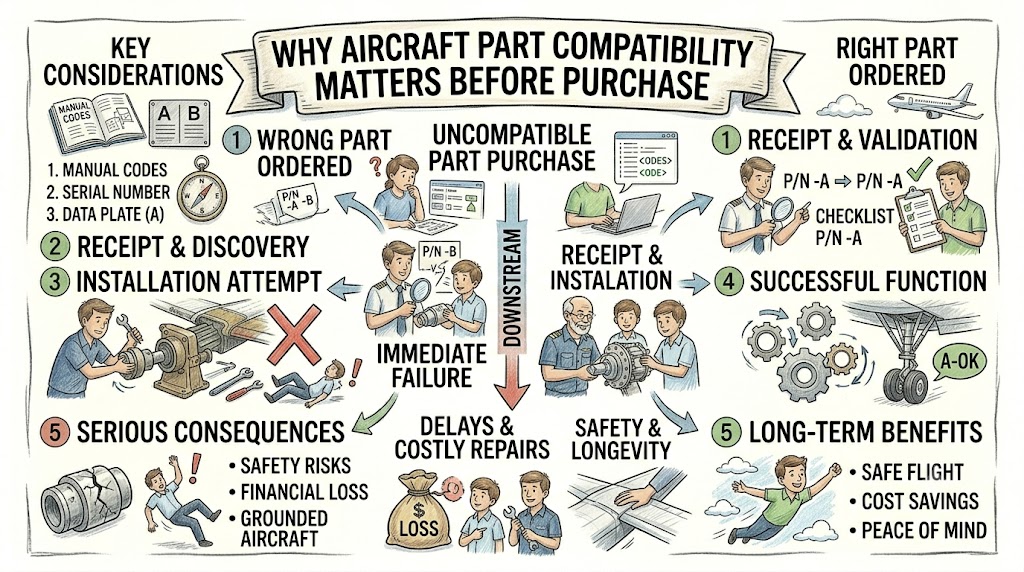
When it comes to aircraft ownership and maintenance, part compatibility is one of the most critical considerations before making a purchase. Using parts that are not fully compatible with your aircraft can compromise safety, reduce performance, void warranties, and even lead to regulatory violations. Ensuring that every component aligns with manufacturer specifications and airworthiness standards is essential for keeping your aircraft reliable, efficient, and safe to operate. By understanding why compatibility matters, aircraft owners and maintenance professionals can make informed purchasing decisions that protect both their investment and the people on board.
Real-world Use Cases
Consider a private aircraft owner replacing an engine component. Installing a part designed for a different model or variant may cause operational issues, including improper fit, reduced efficiency, or even mechanical failure. Similarly, a flight school may order avionics for multiple aircraft; ensuring that each unit is compatible with the specific model prevents costly downtime and keeps students on schedule. These scenarios highlight the importance of verifying compatibility to maintain operational readiness and ensure safety.
Evaluation Criteria for Aircraft Parts
Before purchasing, evaluate parts based on manufacturer specifications, certification, regulatory compliance, operational requirements, and integration with existing systems. Checking documentation, cross-referencing part numbers, and sourcing from trusted suppliers are essential steps to confirm compatibility and avoid operational risks.
Key Reasons Aircraft Part Compatibility Matters
1- Safety
The primary concern is safety. Incompatible parts may fail under stress, leading to mechanical issues or accidents. Properly matched components ensure the aircraft operates within its designed safety parameters.
2- Performance and Efficiency
Using compatible parts preserves aircraft performance. Correctly matched engines, propellers, and avionics maintain optimal fuel efficiency, flight characteristics, and system responsiveness.
3- Regulatory Compliance
Aircraft must meet FAA or equivalent authority standards. Installing non-compatible parts can violate regulations, leading to inspections, fines, or grounding.
4- Cost Management
Incorrect parts can result in additional expenses for replacements, repairs, or modifications. Confirming compatibility upfront avoids unnecessary costs and operational delays.
5- Warranty and Support
Using parts that do not meet manufacturer specifications may void warranties and limit support. Compatibility ensures coverage and access to technical assistance when needed.
6- Maintenance Planning
Compatible parts simplify routine maintenance and inspections. Misaligned or incorrect components can cause additional wear, increase service frequency, or create complex troubleshooting issues.
7- Longevity and Reliability
Aircraft components are designed to work together. Correct parts reduce strain on systems, increasing overall reliability and extending service life.
8- Operational Continuity
Ensuring compatibility minimizes downtime due to installation issues or unexpected malfunctions, keeping aircraft operational and schedules on track.
Practical Tips for Buyers
- Always cross-check part numbers and manufacturer manuals before ordering.
- Purchase from authorized and certified suppliers to guarantee authenticity.
- Verify certifications and compliance with regulatory standards.
- Consult with experienced technicians or engineers for high-risk components.
- Keep a detailed record of parts purchased and installed for maintenance and resale purposes.
Comparison Notes
OEM (Original Equipment Manufacturer) parts provide the highest guarantee of compatibility and certification. Aftermarket or refurbished parts can be cost-effective but require thorough verification to ensure safety, airworthiness, and proper integration. Choosing the right type of part depends on the component’s criticality, operational demands, and long-term goals.
FAQs
1- How can I verify part compatibility before purchase?
Cross-check the aircraft manual, consult the manufacturer, and confirm part numbers with certified suppliers.
2- Are aftermarket parts safe for my aircraft?
Yes, if they meet regulatory standards and are approved for your specific model.
3- What risks exist if I install incompatible parts?
Incompatibility can lead to system failures, reduced performance, safety hazards, and regulatory violations.
4- Do OEM parts always guarantee compatibility?
Yes. OEM parts are designed specifically for the aircraft model and maintain manufacturer warranties.
5- Can incorrect parts affect my aircraft’s resale value?
Absolutely. Using non-compatible or uncertified components can lower resale value and complicate inspections.
6- Is there a difference between used and new parts in compatibility?
Used parts may be compatible if properly inspected and certified, but careful verification is essential.
7- How does compatibility impact maintenance?
Correct parts simplify maintenance, reduce wear on systems, and prevent additional service issues.
8- Do regulatory authorities inspect part compatibility?
Yes. FAA or equivalent inspections often review parts for certification and compatibility to ensure airworthiness.
9- Can I order parts online safely?
Yes, but only from trusted, authorized suppliers who provide documentation and certifications.
10- Should I plan for spare parts when purchasing?
Yes. Having compatible spare components ensures quick replacements and operational continuity.
Conclusion
Aircraft part compatibility is essential for safety, performance, compliance, and cost efficiency. Verifying specifications, choosing certified suppliers, and consulting manuals or experts ensures that each component integrates seamlessly with your aircraft. By prioritizing compatibility before purchase, owners and operators can protect their investment, maintain reliability, and enjoy safe, efficient, and uninterrupted flight operations. Making informed decisions upfront reduces risk, minimizes costs, and supports long-term aircraft performance and airworthiness.

