
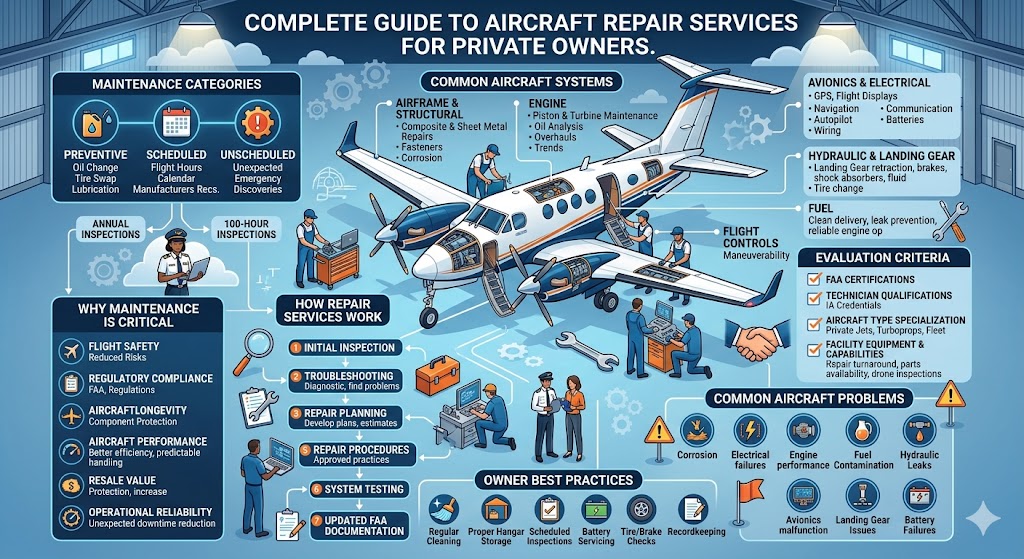
Introduction
Owning a private aircraft offers unmatched flexibility, convenience, and travel efficiency. Whether you operate a piston-powered aircraft, a turboprop, or a business jet, maintaining the aircraft in airworthy condition is one of the most important responsibilities of ownership. Aircraft are complex machines that operate in demanding environments, and even minor maintenance issues can affect safety, performance, reliability, and long-term value.
Unlike automobiles, aircraft maintenance is heavily regulated and requires specialized expertise, approved procedures, and detailed recordkeeping. Every component—from engines and avionics to landing gear and structural systems—must be inspected, maintained, and repaired according to manufacturer recommendations and applicable aviation regulations.
Many private aircraft owners understand the importance of maintenance but may not fully understand how aircraft repair services work, what inspections are required, how repair costs are determined, or how to select the right maintenance provider. Having a clear understanding of the repair process helps owners make informed decisions while protecting their investment.
This comprehensive guide explains everything private aircraft owners need to know about aircraft repair services, including maintenance requirements, inspection programs, FAA regulations, common aircraft problems, engine repairs, avionics maintenance, repair costs, and best practices for long-term aircraft ownership.
Real-world use cases include:
- Routine aircraft inspections
- Business jet maintenance
- Engine troubleshooting and repair
- Avionics upgrades
- Aircraft restoration projects
- Pre-purchase inspections
- Emergency maintenance situations
- Long-term fleet maintenance planning
Evaluation Criteria for Buyers
Before choosing an aircraft repair provider, aircraft owners should evaluate:
- FAA certifications
- Technician qualifications
- Aircraft specialization
- Facility capabilities
- Parts availability
- Repair turnaround times
- Safety record
- Customer communication
- Warranty coverage
- Maintenance documentation quality
Best for: Private aircraft owners, business jet operators, fleet managers, and general aviation pilots.
Not ideal for: Commercial airline fleet maintenance programs or military aircraft maintenance discussions.
What Are Aircraft Repair Services?
Aircraft repair services include inspection, maintenance, troubleshooting, repair, overhaul, modification, and replacement of aircraft components to maintain airworthiness and operational safety.
Preventive Maintenance vs Major Repairs
Preventive Maintenance
Preventive maintenance includes routine tasks such as:
- Oil changes
- Tire replacement
- Filter replacement
- Battery servicing
- Lubrication
These activities help prevent larger mechanical problems.
Major Repairs
Major repairs involve significant corrective actions such as:
- Structural repairs
- Engine overhauls
- Landing gear repairs
- Avionics replacement
- Flight control system repairs
Scheduled vs Unscheduled Maintenance
Scheduled Maintenance
Occurs according to:
- Flight hours
- Calendar intervals
- Manufacturer recommendations
Unscheduled Maintenance
Performed when unexpected problems occur.
Examples include:
- Electrical failures
- Hydraulic leaks
- Engine malfunctions
- Avionics failures
Line Maintenance vs Heavy Maintenance
| Maintenance Type | Purpose |
|---|---|
| Line Maintenance | Routine operational support |
| Heavy Maintenance | Major inspections and repairs |
| Preventive Maintenance | Preventive servicing |
| Corrective Maintenance | Repair of discovered defects |
Why Aircraft Maintenance Is Critical
Flight Safety
Safety is the primary reason aircraft maintenance exists.
Proper maintenance helps ensure:
- Reliable operation
- Safe flight performance
- Reduced failure risks
- Regulatory compliance
Regulatory Compliance
Aircraft owners must comply with applicable aviation regulations and inspection requirements.
Aircraft Performance
Well-maintained aircraft typically provide:
- Better fuel efficiency
- Improved reliability
- More predictable handling
- Enhanced operational capability
Aircraft Longevity
Regular maintenance extends the useful life of aircraft components and structures.
Fuel Efficiency
Properly maintained engines and systems often consume fuel more efficiently.
Resale Value Protection
Comprehensive maintenance records often increase aircraft resale value.
Operational Reliability
Reliable aircraft reduce unexpected downtime and trip disruptions.
Common Aircraft Systems That Require Maintenance
Airframe Systems
The airframe forms the structural foundation of the aircraft.
Common Maintenance Tasks
- Structural inspections
- Corrosion control
- Composite repairs
- Sheet metal repairs
- Fastener inspections
Engine Systems
Aircraft engines require extensive monitoring and maintenance.
Piston Engine Maintenance
Includes:
- Oil analysis
- Compression testing
- Ignition inspections
- Cylinder evaluations
Turbine Engine Maintenance
Requires:
- Performance monitoring
- Component inspections
- Engine trend analysis
- Scheduled overhaul planning
Avionics Systems
Modern avionics are critical for navigation and communication.
Common Avionics Components
- GPS systems
- Flight displays
- Navigation systems
- Communication radios
- Transponders
- Autopilot systems
Electrical Systems
Electrical systems power aircraft equipment and avionics.
Common Components
- Batteries
- Alternators
- Wiring systems
- Circuit protection devices
Hydraulic Systems
Hydraulic systems support:
- Landing gear operation
- Flight controls
- Brake systems
Fuel Systems
Fuel systems require regular inspection to ensure:
- Clean fuel delivery
- Leak prevention
- Reliable engine operation
Landing Gear Systems
Landing gear components experience significant operational stress.
Maintenance Includes
- Tire inspections
- Brake servicing
- Shock absorber maintenance
- Retraction system checks
Flight Control Systems
Flight controls directly affect aircraft maneuverability and safety.
Types of Aircraft Maintenance Services
Routine Inspections
Routine inspections identify maintenance issues before they become major problems.
Annual Inspections
Annual inspections are comprehensive evaluations required for many privately owned aircraft.
Typical Inspection Areas
- Airframe
- Engine
- Avionics
- Flight controls
- Fuel systems
100-Hour Inspections
Commonly required for aircraft used in specific commercial operations.
Preventive Maintenance
Routine servicing helps reduce long-term repair expenses.
Major Repairs
Major repairs restore damaged or worn aircraft systems.
Aircraft Overhauls
Overhauls involve complete disassembly and rebuilding of major components.
Avionics Upgrades
Modernization projects improve navigation, communication, and operational efficiency.
Structural Repairs
Structural repairs restore airframe integrity following damage or deterioration.
Emergency Repairs
Performed when immediate operational issues require urgent attention.
Understanding FAA Aircraft Maintenance Regulations
FAA Repair Station Requirements
Approved repair facilities operate under specific FAA standards.
Certified Mechanics and Technicians
Aircraft maintenance must be performed by qualified aviation professionals when required by regulations.
Airworthiness Directives
Airworthiness Directives identify mandatory corrective actions.
Maintenance Logbooks
Maintenance activities must be properly documented.
Inspection Authorization IA
Certain inspections require technicians holding Inspection Authorization credentials.
Required Documentation
Proper records are essential for compliance and aircraft value.
How Aircraft Repair Services Work
Initial Inspection
Technicians evaluate aircraft condition and identify issues.
Maintenance Troubleshooting
Diagnostic procedures help locate underlying problems.
Repair Planning
Maintenance teams develop repair plans and estimate requirements.
Parts Ordering
Replacement components are sourced and verified.
Repair Procedures
Technicians perform repairs according to approved procedures.
System Testing
Repaired systems undergo testing and verification.
FAA Documentation
Maintenance records are updated appropriately.
Final Inspection
A final evaluation confirms aircraft readiness.
Common Aircraft Problems Private Owners Face
Corrosion Issues
Corrosion remains one of the most common aircraft maintenance concerns.
Warning Signs
- Surface discoloration
- Structural deterioration
- Paint damage
Electrical Failures
Electrical issues may affect avionics and operational systems.
Engine Performance Problems
Symptoms may include:
- Rough operation
- Reduced power
- Excessive oil consumption
Fuel Contamination
Contaminated fuel can create serious operational hazards.
Hydraulic Leaks
Hydraulic failures may affect braking and landing gear operation.
Avionics Malfunctions
Common issues include:
- Display failures
- GPS problems
- Communication interruptions
Landing Gear Problems
Landing gear systems require continuous monitoring and maintenance.
Battery Failures
Weak batteries can create starting and operational problems.
Aircraft Engine Repair and Maintenance
Piston Engine Maintenance
Routine piston engine maintenance helps ensure reliability and longevity.
Turbine Engine Maintenance
Turbine engines require specialized monitoring and inspection programs.
Engine Overhaul Procedures
Overhauls restore engines to approved operational conditions.
Oil Analysis Programs
Oil analysis helps detect developing engine problems early.
Compression Testing
Compression tests evaluate cylinder condition.
Engine Cooling Systems
Cooling systems help maintain proper operating temperatures.
Aircraft Avionics Repair and Upgrades
GPS Upgrades
Modern GPS systems improve navigation capability.
Glass Cockpit Installations
Digital flight displays improve pilot situational awareness.
ADS-B Compliance
Many aircraft owners upgrade avionics to meet modern operational requirements.
Communication Systems
Reliable communication equipment is essential for safe operations.
Autopilot Systems
Autopilot systems improve workload management and operational efficiency.
Flight Data Monitoring
Modern systems provide valuable aircraft performance insights.
Aircraft Structural Repair Services
Aluminum Structure Repair
Aluminum airframes require specialized repair techniques.
Composite Repair
Composite structures require specific inspection and repair procedures.
Corrosion Repair
Corrosion removal helps preserve structural integrity.
Paint Restoration
Paint systems provide both protection and appearance benefits.
Wing Repair
Wing structures must maintain precise aerodynamic characteristics.
Fuselage Repair
Fuselage repairs restore structural strength and safety.
How Much Do Aircraft Repair Services Cost?
Aircraft maintenance costs vary depending on several factors.
Aircraft Type
Larger aircraft generally require more complex maintenance.
Aircraft Age
Older aircraft may require increased repair attention.
Parts Availability
Rare or specialized parts may increase repair costs.
Labor Rates
Maintenance labor rates vary by facility and expertise level.
Avionics Complexity
Advanced avionics systems often require specialized technicians.
Engine Type
Engine maintenance often represents one of the largest ownership expenses.
Emergency Repairs
Urgent repairs may involve premium service costs.
Downtime Requirements
Extended downtime can increase total operational expenses.
Maintenance Cost Factors Table
| Cost Driver | Impact |
|---|---|
| Aircraft Age | Moderate to High |
| Engine Type | High |
| Avionics Complexity | Moderate |
| Labor Costs | High |
| Parts Availability | Variable |
| Emergency Repairs | High |
Preventive Maintenance for Private Aircraft Owners
Regular Cleaning
Clean aircraft help prevent corrosion and deterioration.
Proper Storage
Hangar storage helps protect aircraft from environmental damage.
Scheduled Inspections
Regular inspections identify developing problems early.
Engine Preservation
Proper engine care extends operational life.
Battery Maintenance
Battery servicing improves reliability.
Tire and Brake Checks
Routine inspections help ensure safe ground operations.
Common Mistakes Aircraft Owners Make
- Delaying required inspections
- Ignoring corrosion signs
- Using non-approved parts
- Poor maintenance recordkeeping
- Choosing providers solely based on price
- Ignoring avionics updates
- Delaying engine troubleshooting
- Poor storage practices
- Skipping preventive maintenance
- Failing to monitor recurring issues
How to Choose the Right Aircraft Repair Provider
FAA Certifications
Verify facility certifications and approvals.
Technician Experience
Experience with specific aircraft models is valuable.
Aircraft Type Specialization
Choose providers familiar with your aircraft category.
Facility Equipment
Modern diagnostic equipment improves repair accuracy.
Maintenance Turnaround
Efficient repair schedules reduce downtime.
Customer Communication
Clear communication improves maintenance planning.
Warranty Policies
Repair warranties provide additional confidence.
Reputation and Reviews
Industry reputation often reflects service quality.
Questions Owners Should Ask Before Approving Repairs
- Is the facility FAA certified?
- Do technicians have experience with my aircraft model?
- Are approved parts being used?
- What is the estimated downtime?
- What warranty coverage is offered?
- How are costs estimated?
- Will detailed reports be provided?
- Are additional inspections recommended?
- What maintenance should be scheduled next?
- Are any recurring issues present?
The Role of Technology in Modern Aircraft Repair
Digital Aircraft Diagnostics
Modern diagnostic tools improve troubleshooting efficiency.
AI-Assisted Maintenance Analysis
Artificial intelligence is increasingly supporting maintenance planning.
Predictive Maintenance Systems
Predictive technologies help identify issues before failures occur.
Digital Maintenance Tracking
Electronic records improve maintenance management.
Drone-Assisted Inspections
Inspection drones help evaluate difficult-to-access areas.
Advanced Avionics Diagnostics
Modern avionics troubleshooting tools improve repair accuracy.
Future Trends in Aircraft Maintenance Services
Predictive Maintenance
Data analytics will continue improving maintenance planning.
Electric Aircraft Maintenance
New maintenance procedures will emerge as electric aviation grows.
AI-Based Diagnostics
Artificial intelligence will improve fault detection and troubleshooting.
Sustainable Aviation Maintenance
Environmental sustainability will influence maintenance practices.
Smart Aircraft Monitoring
Real-time monitoring systems will continue expanding.
Advanced Composite Repair Technologies
New repair methods will improve structural maintenance efficiency.
Frequently Asked Questions
1. How often should aircraft inspections be performed?
Inspection schedules depend on aircraft type, operating conditions, regulations, and manufacturer recommendations.
2. What is included in an annual inspection?
Annual inspections evaluate airframe, engine, avionics, flight controls, fuel systems, and overall airworthiness.
3. How much does aircraft maintenance cost?
Costs vary depending on aircraft size, complexity, maintenance requirements, and operational usage.
4. What FAA certifications matter?
FAA repair station approvals, mechanic certifications, and Inspection Authorization credentials are important considerations.
5. Are avionics upgrades necessary?
Many upgrades improve safety, compliance, operational efficiency, and aircraft value.
6. What causes aircraft corrosion?
Moisture, environmental exposure, improper storage, and aging materials commonly contribute to corrosion.
7. How long do engine overhauls take?
Timeframes vary depending on engine type, parts availability, and overhaul scope.
8. What maintenance records are required?
Owners should maintain complete inspection, repair, modification, and compliance documentation.
9. How can owners reduce maintenance costs?
Preventive maintenance, proper storage, and timely inspections often reduce long-term expenses.
10. What should owners do during emergency maintenance situations?
Immediately consult qualified maintenance professionals and avoid operating aircraft until issues are properly evaluated.
Conclusion
Aircraft repair services are essential for maintaining safety, performance, reliability, regulatory compliance, and long-term aircraft value. Whether operating a single-engine piston aircraft, a turboprop, or a business jet, private aircraft owners must understand the importance of inspections, preventive maintenance, avionics support, engine care, structural repairs, and proper documentation. Regular maintenance not only reduces operational risks but also helps prevent expensive repairs and unexpected downtime. By partnering with experienced, certified maintenance providers, maintaining detailed records, and following proactive maintenance strategies, aircraft owners can maximize aircraft reliability and protect their investment for years to come. As aviation maintenance continues evolving through predictive analytics, digital diagnostics, advanced avionics technologies, and smart monitoring systems, aircraft repair services will become even more efficient, accurate, and valuable for modern private aircraft ownership.

