
Introduction
Aircraft components operate in some of the most demanding environments in engineering. Constant exposure to vibration, heat, pressure, and environmental stress causes gradual wear and tear over time. While these components are designed for durability, no aircraft part lasts forever. When replacement is delayed, small issues often grow into major mechanical failures, leading to expensive repairs, downtime, and operational disruptions.
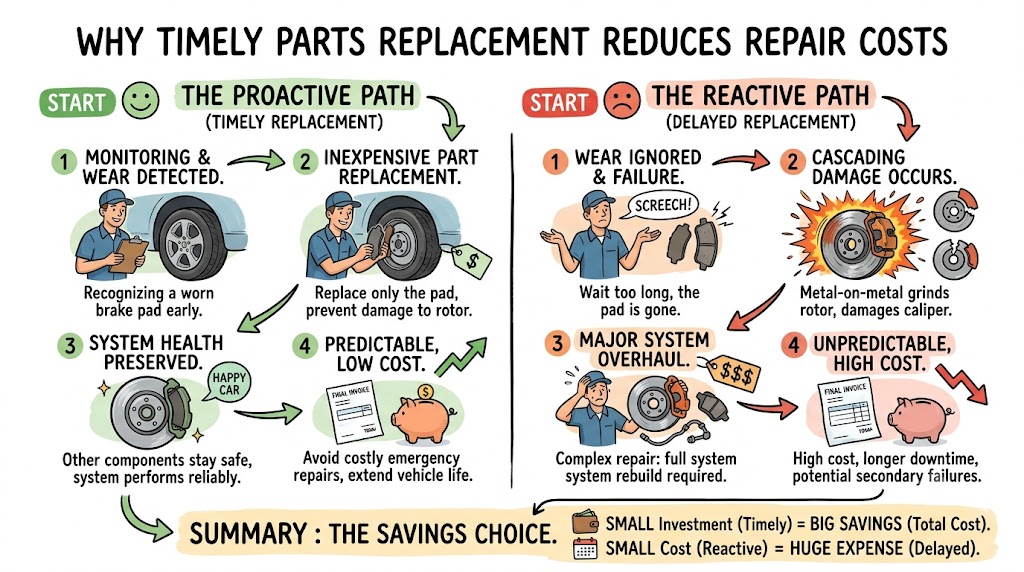
Timely parts replacement is one of the most effective ways to control maintenance costs in aviation. Instead of waiting for a failure, proactive replacement ensures that worn components are replaced before they can damage surrounding systems. This approach not only improves safety but also significantly reduces long-term repair expenses.
This guide explains why timely aircraft parts replacement is essential for cost control and operational efficiency.
Real-world Use Cases
A private aircraft owner replacing filters before engine performance drops avoids costly engine damage and extended maintenance downtime.
A fleet operator uses scheduled replacement programs to reduce unexpected repair costs across multiple aircraft.
An MRO technician identifies early seal wear during inspection and replaces components before a full system failure occurs.
A pilot reports unusual vibration, allowing maintenance teams to replace parts before secondary damage spreads.
A maintenance planner schedules preventive part changes to avoid expensive emergency repair scenarios.
A general aviation operator reduces overall maintenance expenses through structured replacement intervals.
A commercial operator improves fleet reliability and minimizes operational disruption through proactive maintenance planning.
Evaluation Criteria for Cost-Effective Aircraft Parts Replacement
Before replacing parts, operators should evaluate:
- Component wear level and inspection data
- Safety-critical importance of the part
- Manufacturer replacement intervals
- OEM vs aftermarket quality differences
- Risk of secondary system damage
- Downtime and operational impact
- Maintenance history and trends
- Availability of spare parts
- Cost of preventive replacement vs emergency repair
- Aircraft utilization frequency
- Environmental operating conditions
- Regulatory compliance requirements
These criteria help determine the most cost-effective replacement strategy.
Preventing Small Issues from Becoming Major Failures
One of the biggest cost-saving benefits of timely replacement is stopping small issues early.
For example, replacing a slightly worn bearing prevents it from damaging an entire engine assembly.
Reducing Emergency Repair Expenses
Emergency repairs are significantly more expensive than planned maintenance.
For example, a failed hydraulic hose can cause sudden system repairs and operational delays.
Avoiding Aircraft Downtime and Operational Losses
Aircraft grounded for repairs lead to financial losses.
For example, unscheduled engine repair can delay flights and disrupt schedules.
Extending Engine and System Lifespan
Timely replacement reduces stress on connected systems.
For example, fresh filters help engines operate efficiently for longer periods.
Improving Fuel Efficiency Through Healthy Components
Worn parts reduce efficiency and increase fuel consumption.
For example, dirty air filters force engines to work harder, increasing fuel costs.
Reducing Secondary Damage to Connected Parts
One failed component can damage multiple systems.
For example, a worn seal leak can affect hydraulic and electrical systems.
Early Detection of Wear and Tear
Regular replacement programs rely on early detection.
For example, small cracks in components can be fixed before they expand.
Minimizing Labor Costs from Complex Repairs
Complex failures require more labor hours.
For example, replacing a small part early avoids full system disassembly.
Preventing Cascading System Failures
One failure can trigger multiple system breakdowns.
For example, a failed pump can damage fuel distribution systems.
Maintaining OEM Performance Standards
OEM parts ensure systems operate as designed.
For example, using certified components maintains original engine efficiency.
Reducing Inspection Failures and Rework Costs
Failing inspections leads to additional maintenance work.
For example, worn brake pads can cause inspection delays and extra repairs.
Improving Maintenance Planning Efficiency
Scheduled replacement improves planning accuracy.
For example, maintenance teams can order parts in advance and reduce downtime.
Lowering Risk of In-Flight Failures
Preventive replacement enhances safety and reduces risk.
For example, replacing aging sensors avoids mid-flight system errors.
Supporting Predictive Maintenance Strategies
Timely replacement supports data-driven maintenance.
For example, tracking wear patterns helps predict part lifespan.
Spare Parts Planning Efficiency
Advanced planning reduces procurement costs.
For example, bulk ordering scheduled components lowers overall expenses.
Timely vs Delayed Parts Replacement
| Factor | Timely Replacement | Delayed Replacement |
|---|---|---|
| Cost Impact | Lower | Higher |
| Safety | High | Reduced |
| Downtime | Planned | Unexpected |
| Repair Complexity | Simple | Complex |
Preventive Maintenance vs Emergency Repair
| Factor | Preventive Maintenance | Emergency Repair |
| Cost | Controlled | Expensive |
| Scheduling | Planned | Unplanned |
| Risk | Low | High |
| Efficiency | High | Low |
OEM Parts vs Low-Cost Alternatives
| Factor | OEM Parts | Low-Cost Alternatives |
| Reliability | High | Variable |
| Longevity | Longer | Shorter |
| Safety | Strong | Uncertain |
| Compliance | Fully Approved | Risky |
Planned Downtime vs Unplanned Downtime
| Factor | Planned Downtime | Unplanned Downtime |
| Cost Control | High | Low |
| Operational Impact | Minimal | Severe |
| Predictability | High | Low |
| Efficiency | High | Low |
Benefits of Timely Parts Replacement
Timely replacement helps:
- Reduce maintenance costs
- Prevent major failures
- Improve aircraft safety
- Increase operational efficiency
- Extend component lifespan
- Reduce emergency repairs
- Improve fuel efficiency
- Enhance maintenance planning
- Improve fleet reliability
- Support predictive maintenance systems
Practical Tips for Operators
- Follow manufacturer replacement schedules
- Inspect components regularly
- Track wear trends over time
- Replace parts before failure occurs
- Use OEM-certified components
- Plan maintenance budgets in advance
- Avoid delaying minor repairs
Common Mistakes to Avoid
- Ignoring early signs of wear
- Delaying scheduled replacements
- Choosing parts based only on cost
- Skipping maintenance inspections
- Not tracking part lifecycle data
- Overusing worn components
FAQs
1. Why does timely replacement reduce repair costs?
Because it prevents small issues from turning into expensive system failures.
2. How often should aircraft parts be replaced?
It depends on manufacturer guidelines, usage, and inspection results.
3. What happens if parts are not replaced on time?
They can fail and damage other connected systems, increasing repair costs.
4. Is preventive replacement cheaper?
Yes, it reduces emergency repair expenses and downtime costs.
5. What is the risk of delaying replacement?
Higher repair costs, safety risks, and potential system failures.
6. Do OEM parts reduce costs long-term?
Yes, they improve reliability and reduce repeat failures.
7. Which parts wear out fastest?
Filters, seals, brakes, and hydraulic components.
8. Can worn parts affect fuel efficiency?
Yes, they increase fuel consumption and reduce engine performance.
9. What is predictive maintenance?
It uses data trends to predict when parts should be replaced.
10. How can operators reduce maintenance costs?
By following scheduled replacement programs and inspections.
Conclusion
Timely aircraft parts replacement is one of the most effective strategies for reducing repair costs and maintaining operational efficiency. By replacing components before they fail, operators can prevent small issues from escalating into major system failures. This proactive approach reduces downtime, improves safety, and ensures better financial control over maintenance operations. In the long run, timely replacement not only saves money but also enhances aircraft reliability and performance across all aviation operations.

