
Introduction
Aircraft ownership comes with the responsibility of maintaining every system that contributes to safe and reliable operation. Among all aircraft systems, the engine requires some of the highest levels of attention because it directly affects performance, efficiency, and operational reliability.
Aircraft engines operate under extremely demanding conditions. Components inside the engine experience continuous movement, high temperatures, pressure changes, and mechanical stress during every flight. Over time, these conditions naturally lead to engine component wear.
Engine component wear is a normal part of aircraft operation, but ignoring it can create serious challenges. Small signs of wear can gradually develop into performance issues, increased maintenance requirements, and expensive repairs.
For aircraft owners, understanding how engine components wear, what warning signs to monitor, and how preventive maintenance helps protect engine health is essential.
Understanding Aircraft Engine Component Wear
Engine component wear refers to the gradual deterioration of engine parts caused by repeated operation and environmental conditions.
Unlike a sudden failure, wear usually develops over time. Components slowly lose efficiency as materials experience stress from normal operation.
Common factors contributing to engine component wear include:
- Mechanical friction
- High temperatures
- Pressure changes
- Continuous vibration
- Improper maintenance
- Operating conditions
Understanding wear patterns helps aircraft owners identify problems early and take appropriate maintenance actions.
Why Aircraft Engine Components Wear Over Time
Friction Between Moving Parts
Aircraft engines contain many moving components that operate at high speeds.
Parts such as pistons, bearings, shafts, and other internal components continuously interact during engine operation.
Even with proper lubrication, repeated movement creates gradual wear.
Proper lubrication helps reduce friction and supports smoother engine operation.
Regular inspections help identify whether components are operating within expected conditions.
High Operating Temperatures
Heat is one of the biggest challenges affecting aircraft engine components.
Engines operate under extreme temperatures, and repeated heating and cooling cycles can affect component materials.
High temperatures may contribute to:
- Material stress
- Component fatigue
- Reduced durability
- Performance changes
Maintaining proper engine temperature levels is an important part of protecting engine health.
Improper Maintenance Practices
Maintenance quality directly affects engine component lifespan.
Wear can accelerate when owners or operators ignore recommended maintenance schedules.
Common maintenance-related causes include:
- Delayed inspections
- Incorrect servicing
- Poor lubrication practices
- Using unsuitable replacement parts
- Ignoring early warning signs
A proactive maintenance approach helps prevent minor issues from becoming major problems.
Operating Conditions
Aircraft usage patterns also influence engine wear.
Factors that can affect component life include:
- Flight frequency
- Operating environment
- Storage conditions
- Flight duration
- Engine workload
Aircraft used frequently may experience different wear patterns compared to aircraft used occasionally.
Common Aircraft Engine Components Affected by Wear
Understanding which components commonly experience wear helps owners monitor engine health more effectively.
Engine Bearings
Engine bearings play an important role in supporting rotating engine components and reducing friction.
Over time, bearings may experience wear due to:
- Continuous movement
- Lubrication issues
- Operating stress
Possible indicators of bearing-related concerns may include unusual engine behavior, increased vibration, or abnormal operating conditions.
Regular inspections help identify potential bearing issues before they affect other engine systems.
Pistons and Cylinders
Pistons and cylinders are essential engine components responsible for converting combustion energy into mechanical movement.
Normal operation can gradually affect these components through:
- Friction
- Heat exposure
- Pressure cycles
Wear in piston and cylinder areas may influence:
- Engine efficiency
- Compression performance
- Overall power output
Proper monitoring helps determine when inspection or replacement may be necessary.
Valves and Valve Components
Engine valves control airflow and combustion processes.
Over time, valve components can experience wear due to repeated operation and heat exposure.
Potential issues may affect:
- Engine efficiency
- Combustion quality
- Performance consistency
Regular engine inspections help ensure valve systems continue operating properly.
Fuel System Components
Fuel delivery components are essential for proper engine operation.
Wear or contamination in fuel-related components can affect:
- Fuel flow
- Engine performance
- Operating efficiency
Aircraft owners should ensure fuel system components are inspected and maintained regularly.
Ignition Components
Ignition systems are responsible for starting combustion inside the engine.
Wear in ignition components may contribute to:
- Starting difficulties
- Reduced performance
- Engine operating issues
Regular inspection and replacement of worn ignition components help maintain reliable engine operation.
Seals and Gaskets
Seals and gaskets help prevent leaks and maintain proper pressure within engine systems.
Over time, these components can deteriorate because of:
- Heat exposure
- Aging materials
- Operating conditions
Proper inspection helps identify leakage risks before they create larger maintenance problems.
Warning Signs of Engine Component Wear
Aircraft owners should pay attention to changes in engine behavior.
Early detection of wear can prevent more serious issues.
Common warning signs include:
Reduced Engine Performance
A noticeable decrease in engine performance may indicate internal component concerns.
Increased Fuel Consumption
Changes in fuel efficiency may suggest that engine components are no longer operating optimally.
Unusual Engine Sounds
Unexpected sounds should always be evaluated because they may indicate mechanical concerns.
Excessive Vibration
Increased vibration can indicate imbalance, component wear, or mounting-related issues.
Changes in Oil Consumption
Unusual oil usage patterns may indicate internal engine concerns.
Difficulty Starting the Engine
Starting problems can sometimes be linked to worn or aging components.
Aircraft owners should address these signs early rather than waiting for major problems to develop.
How Engine Component Wear Affects Aircraft Performance
Engine wear can influence several areas of aircraft operation.
Reduced Efficiency
Worn components may reduce the engine’s ability to operate efficiently.
This can affect:
- Fuel usage
- Performance consistency
- Operating costs
Increased Maintenance Requirements
Ignoring wear may result in additional inspections, repairs, or component replacements.
Higher Ownership Costs
Delayed maintenance often leads to more expensive repair requirements.
Reduced Reliability
Aircraft owners depend on reliable engines for safe and predictable operations.
Maintaining engine health helps improve operational confidence.
Importance of Preventive Aircraft Maintenance
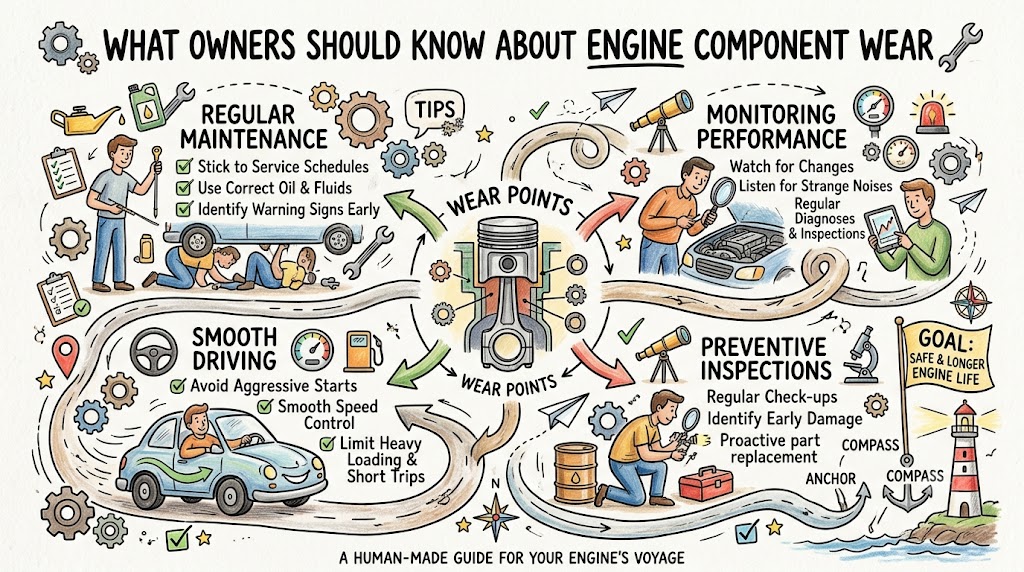
Preventive maintenance is one of the most effective ways to manage engine component wear.
Instead of waiting for problems to occur, preventive maintenance focuses on identifying and addressing concerns early.
Benefits include:
- Improved engine reliability
- Better performance monitoring
- Reduced unexpected repairs
- Longer component lifespan
- Better maintenance planning
Regular inspections allow maintenance professionals to evaluate engine condition and recommend appropriate actions.
How Aircraft Owners Can Reduce Engine Component Wear
Follow Maintenance Schedules
Regular maintenance helps identify developing issues before they become serious.
Owners should follow recommended inspection intervals and servicing requirements.
Use Quality Aircraft Parts
The quality of replacement components directly affects engine reliability.
Using suitable aircraft engine parts helps maintain:
- Proper compatibility
- Reliable performance
- Long-term durability
Monitor Engine Performance
Owners should pay attention to changes in:
- Engine behavior
- Temperature patterns
- Oil usage
- Fuel efficiency
- Performance characteristics
Early identification of changes allows faster maintenance decisions.
Maintain Accurate Records
Detailed maintenance records help owners understand aircraft history.
Important records include:
- Component replacements
- Inspection results
- Maintenance activities
- Service information
Good documentation supports better planning and aircraft value management.
Address Small Problems Early
Minor concerns should not be ignored.
Early maintenance action often prevents larger and more expensive repairs.
Choosing the Right Aircraft Engine Components
Selecting replacement components requires careful consideration.
Aircraft owners should evaluate:
Compatibility
Parts should match aircraft and engine specifications.
Quality Standards
Reliable components support better performance and durability.
Documentation
Proper part information helps ensure correct application and maintenance tracking.
Long-Term Reliability
Choosing dependable components helps reduce future maintenance challenges.
The Importance of Quality Aircraft Parts
Aircraft engines depend on thousands of individual components working together.
The quality of these components affects:
- Engine performance
- Reliability
- Maintenance requirements
- Aircraft operational confidence
Using appropriate aircraft parts supports safer and more efficient aircraft ownership.
For aircraft owners and aviation professionals, having access to reliable aviation components is an important part of responsible maintenance planning.
How planespart.com Supports Aircraft Owners
Maintaining aircraft requires access to suitable parts and reliable aviation resources.
planespart.com supports aircraft owners and aviation enthusiasts by helping them understand aircraft components and maintenance requirements.
By providing information related to aviation parts and engine components, planespart.com helps owners make more informed decisions about aircraft maintenance and component replacement.
A well-maintained aircraft depends on proper knowledge, quality parts, and responsible maintenance practices.
Common Mistakes Aircraft Owners Should Avoid
Ignoring Early Warning Signs
Small performance changes should always be evaluated.
Delaying Inspections
Regular inspections help identify wear before it becomes a major issue.
Choosing Parts Only Based on Price
The lowest-cost option may not always provide the reliability required for aviation applications.
Poor Maintenance Documentation
Incomplete records make future maintenance planning more difficult.
Neglecting Regular Engine Monitoring
Continuous awareness of engine condition helps prevent unexpected problems.
Future of Aircraft Engine Maintenance
Aircraft maintenance continues to improve through better monitoring methods, improved materials, and more advanced aviation components.
Modern maintenance practices focus on:
- Early problem detection
- Improved reliability
- Better component tracking
- More efficient maintenance planning
As aircraft technology continues to develop, understanding engine health and component wear will remain essential for responsible aircraft ownership.
FAQs
1. What causes aircraft engine component wear?
Aircraft engine component wear occurs due to friction, heat, pressure, vibration, operating conditions, and normal usage over time.
2. Why is monitoring engine wear important?
Monitoring engine wear helps identify problems early, reduce repair costs, and maintain aircraft reliability.
3. What are common signs of engine component problems?
Common signs include reduced performance, unusual sounds, increased vibration, fuel efficiency changes, and starting difficulties.
4. How can aircraft owners reduce engine wear?
Owners can reduce engine wear by following maintenance schedules, using quality parts, monitoring performance, and addressing issues early.
5. Which aircraft engine components wear out most often?
Commonly affected components include bearings, pistons, cylinders, valves, fuel system components, ignition parts, and seals.
6. Why are quality aircraft parts important?
Quality aircraft parts help maintain compatibility, reliability, durability, and proper engine performance.
7. How does preventive maintenance help aircraft engines?
Preventive maintenance helps detect issues early and reduces the possibility of unexpected engine problems.
8. When should engine components be replaced?
Component replacement depends on inspection results, operating conditions, manufacturer guidance, and component condition.
9. How does component wear affect aircraft performance?
Engine component wear can reduce efficiency, increase maintenance needs, and affect overall aircraft reliability.
10. Why are maintenance records important for aircraft owners?
Maintenance records help track aircraft history, component changes, inspections, and future maintenance requirements.
Conclusion
Understanding engine component wear is an essential part of responsible aircraft ownership. Aircraft engines operate under demanding conditions, and gradual wear is a natural part of their lifecycle. However, regular inspections, preventive maintenance, accurate records, and the use of quality aircraft engine components can help owners maintain reliable performance and avoid unnecessary repair challenges. By recognizing warning signs early and making informed maintenance decisions, aircraft owners can protect their investment while improving safety, efficiency, and long-term aircraft value.

