
Introduction
Aircraft maintenance is a critical component of aviation safety and operational efficiency. Whether managing a commercial fleet, a private aircraft, or a homebuilt project, the reliability of plane parts directly impacts flight safety, aircraft performance, and long-term maintenance costs. From engines and control surfaces to landing gear, avionics, and fasteners, every component plays a role in ensuring that aircraft operate safely and efficiently.
Using unreliable or substandard components can lead to mechanical failures, operational delays, expensive repairs, and, in the worst case, accidents. For aviation operators, maintenance teams, and aircraft owners, choosing certified, durable, and properly tested components is essential for maintaining airworthiness and protecting both passengers and assets. Reliable plane parts simplify inspections, reduce unexpected downtime, and support compliance with FAA regulations or other aviation authority standards.
Real-World Use Cases
Reliable aircraft components are essential across a range of practical scenarios:
- Commercial airlines avoiding unplanned maintenance delays and grounding.
- Private jet operators ensuring uninterrupted, safe travel for executives.
- Flight schools maintaining aircraft efficiency and minimizing downtime.
- Maintenance crews reducing unexpected repair costs and improving scheduling.
- Fleet managers extending aircraft lifespan and preserving resale value.
- Aviation hobbyists operating personal aircraft safely.
- Operators maintaining regulatory compliance during inspections.
Evaluation Criteria for Aircraft Parts
When selecting aircraft components, operators should evaluate:
- Manufacturer reputation and quality certifications
- FAA or aviation authority compliance
- Material strength and durability under operational stress
- Compatibility with the specific aircraft type
- Resistance to wear, fatigue, and corrosion
- Availability of replacement parts
- Technical documentation and installation instructions
- Cost versus long-term value
- Maintenance and inspection requirements
- Support and guidance from suppliers
Best for
This guide is best for aircraft owners, fleet operators, maintenance technicians, and aviation professionals seeking to ensure safe, efficient, and compliant aircraft operations.
Not Ideal for
This guide is not suitable for individuals ignoring regulatory compliance, bypassing proper maintenance procedures, or relying on uncertified or counterfeit components.
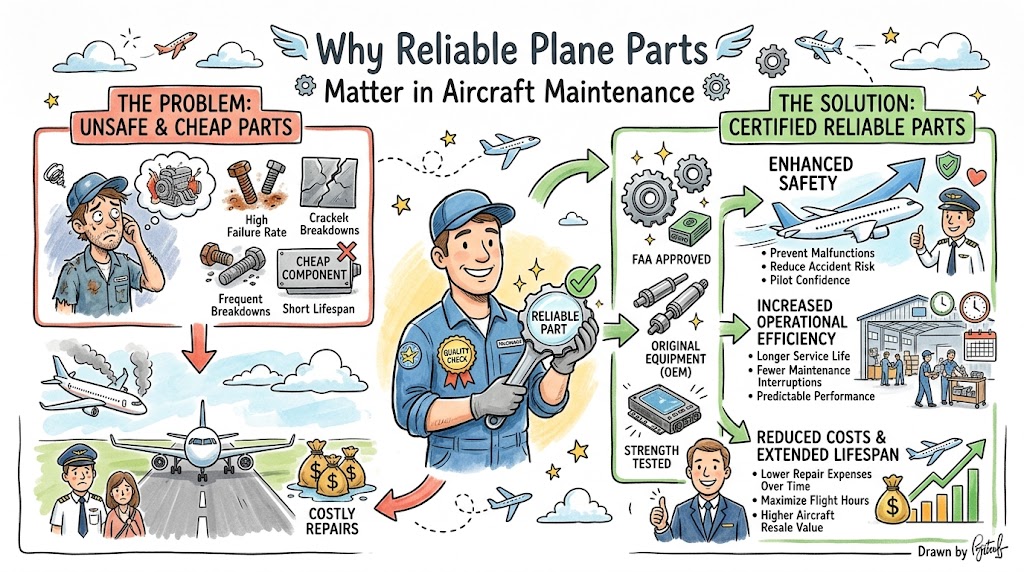
Why Reliable Plane Parts Are Critical
1- Flight Safety
Reliable components prevent in-flight mechanical failures, ensuring predictable performance and reducing the risk of accidents. Every part, from engines to avionics, contributes to operational safety.
2- Operational Efficiency
Durable, certified parts minimize downtime, unexpected failures, and unscheduled maintenance, keeping aircraft operational and reducing operational disruption.
3- Airworthiness Compliance
High-quality components are necessary to meet FAA or other regulatory inspections, ensuring the aircraft remains legally certified for flight.
4- Cost vs Value
Investing in reliable components reduces long-term maintenance costs, prevents emergency repairs, and extends the aircraft’s operational lifespan, offering better return on investment.
5- Maintenance Simplification
Using dependable parts streamlines inspections, simplifies repairs, and improves overall maintenance efficiency, reducing operational stress on technicians and owners.
Key Components That Require Reliability
- Engines and Propellers: Ensure balanced performance and prevent mechanical failures.
- Control Surfaces and Linkages: Maintain smooth and responsive aircraft handling.
- Landing Gear and Brakes: Support safe takeoffs and landings under heavy stress.
- Avionics and Electrical Systems: Provide accurate navigation, communication, and monitoring.
- Airframe and Structural Parts: Maintain structural integrity and prevent fatigue or corrosion.
- Fasteners and Hardware: Secure joints and assemblies, preventing potential failures.
Comparison Table: Reliable vs Substandard Aircraft Parts
| Component | Reliable Parts | Substandard Parts | Impact on Safety & Performance |
|---|---|---|---|
| Engines | Certified, balanced, and tested | Low-quality, unbalanced | Engine failure, reduced efficiency |
| Control Surfaces | Smooth, tested linkages | Loose, untested | Poor handling, potential accidents |
| Landing Gear | Certified struts, brakes | Inferior or worn parts | Hard landings, collapse risk |
| Avionics | Calibrated, FAA-approved | Faulty, outdated | Navigation and communication failures |
| Airframe | High-strength, corrosion-resistant | Weak or untested | Structural fatigue, compromised integrity |
| Fasteners | Load-rated, corrosion-resistant | Weak or improper | Joint failure, assembly instability |
Tips for Choosing Reliable Plane Parts
- Purchase from reputable, certified suppliers.
- Verify FAA or aviation authority compliance.
- Ensure material quality, durability, and compatibility.
- Maintain documentation for inspections and replacements.
- Prioritize critical components, such as engines, control systems, and landing gear.
- Avoid untested or counterfeit substitutes.
- Plan for long-term maintenance and part replacement.
Common Mistakes to Avoid
- Using low-cost, uncertified parts.
- Ignoring supplier documentation and certifications.
- Skipping pre-installation inspections.
- Delaying replacement of worn or damaged components.
- Mixing incompatible materials or hardware.
- Neglecting corrosion prevention.
- Assembling without proper torque or installation instructions.
- Overlooking regulatory compliance and airworthiness requirements.
Frequently Asked Questions
- Why are reliable parts essential in aircraft maintenance?
They ensure flight safety, operational efficiency, and airworthiness, reducing the risk of mechanical failures. - Can low-cost parts be used safely?
Substandard components may compromise safety and lead to costly repairs or accidents. - Which aircraft components are most critical?
Engines, propellers, landing gear, control surfaces, avionics, and fasteners are all critical for safe flight. - How can I verify component reliability?
Check manufacturer certifications, testing reports, FAA compliance, and supplier reputation. - Do reliable parts reduce long-term costs?
Yes. High-quality parts prevent emergency repairs and extend aircraft life, saving money over time. - How does part reliability affect maintenance?
Reliable parts simplify inspections, reduce failures, and streamline maintenance processes. - Can unreliable parts cause in-flight issues?
Yes. Poor-quality components can lead to engine failure, control problems, or landing accidents. - Are there standards for aircraft parts?
Components should meet FAA, regulatory, or manufacturer standards to ensure safety and compliance. - How should I maintain reliable parts?
Follow manufacturer recommendations, inspect regularly, and replace parts proactively. - Where can I source reliable aircraft parts?
Purchase from certified suppliers, authorized manufacturers, or reputable aviation vendors.
Conclusion
Reliable plane parts are the foundation of safe, efficient, and effective aircraft maintenance. Using certified, high-quality, and durable components ensures predictable performance, regulatory compliance, and long-term operational efficiency. For aircraft owners, maintenance teams, and fleet operators, investing in dependable parts reduces costs, downtime, and safety risks, while enhancing aircraft longevity and reliability. Prioritizing reliability is not just a maintenance choice—it is a critical decision for aviation safety and operational excellence.

