
Introduction
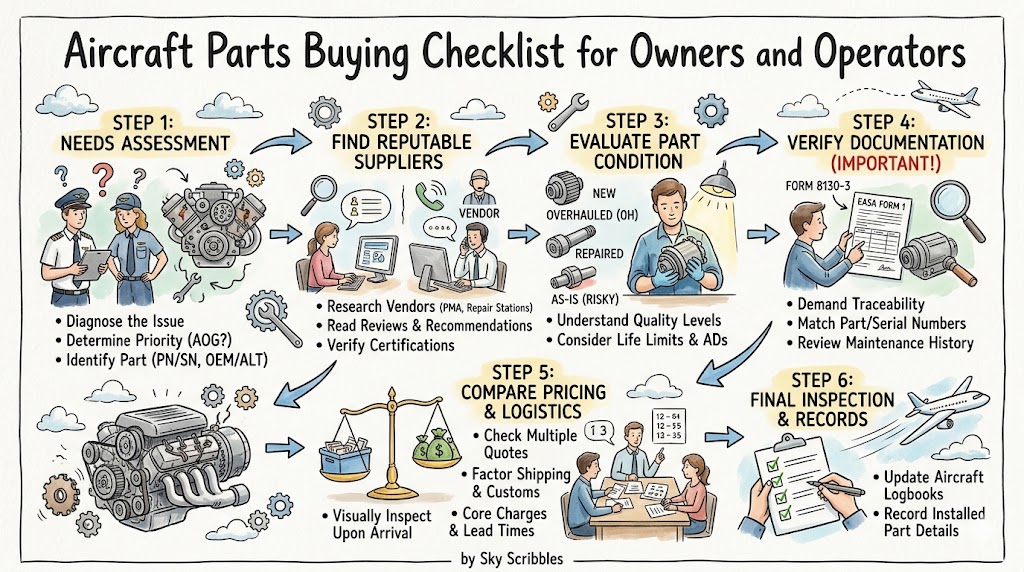
For private aircraft owners, corporate flight departments, and charter operators, sourcing the right aircraft parts is critical for safe, reliable, and compliant operations. Using the wrong components or missing essential items can lead to operational delays, increased costs, and safety hazards. A structured aircraft parts buying checklist ensures that owners and operators have all necessary components for maintenance, repairs, and upgrades while staying aligned with FAA regulations.
Whether you manage a single aircraft or a small fleet, understanding which parts are safety-critical, compatible, and certified is essential for smooth operations and long-term value. This guide provides a detailed checklist and practical advice to help aviation professionals make informed decisions when purchasing aircraft components.
Real-World Use Cases
A parts checklist is invaluable in multiple scenarios:
- Private jet owners sourcing replacement parts for maintenance
- Corporate flight departments maintaining a fleet of aircraft
- Charter operators managing inventory for on-demand repairs
- Maintenance teams preparing for routine inspections
- Operators ensuring FAA compliance and documentation
- Owners planning preventive maintenance
- Pilots verifying critical components prior to flight
- Fleet managers tracking parts compatibility and warranties
- Aviation enthusiasts restoring or upgrading aircraft
- Operators budgeting for spare parts and operational costs
Evaluation Criteria for Aircraft Parts
Before purchasing, evaluate parts based on:
- FAA certification and regulatory compliance
- Compatibility with the aircraft make and model
- Manufacturer reliability and reputation
- Material quality and durability
- Maintenance and service history
- Warranty and return policies
- Lead times and availability
- Safety-critical component verification
- Cost versus long-term value
- Documentation and traceability for inspections
Best for
This guide is best for private aircraft owners, fleet operators, charter services, and corporate aviation managers who need a structured approach to aircraft parts procurement.
Not Ideal for
This guide is not intended for commercial airline fleets or military operations, as it focuses on general aviation, corporate, and small aircraft operations.
Essential Aircraft Parts Buying Checklist
1- Engine and Propulsion
- Engine assembly and mount
- Propeller and spinner
- Fuel system components (tanks, pumps, valves)
- Cooling and exhaust systems
- Filters and consumables
2- Airframe Components
- Fuselage, wings, and control surfaces
- Landing gear assemblies and tires
- Fasteners, rivets, and brackets
- Structural repair materials
3- Avionics and Electrical Systems
- Flight instruments and displays
- Communication and navigation radios
- Wiring harnesses and connectors
- Batteries and power distribution units
- Lighting systems
4- Control Systems
- Control cables, rods, and linkages
- Yokes or control sticks
- Rudder pedals
- Trim systems
5- Hydraulic and Brake Systems
- Brake lines and master cylinders
- Hydraulic actuators
- Landing gear actuators and shock absorbers
6- Safety Equipment
- Fire extinguishers
- Seat belts and harnesses
- Emergency locator transmitters (ELTs)
- First aid kits
7- Cabin and Interior
- Seats and upholstery
- Instrument panels and avionics mounting
- Storage compartments
- Interior panels and cabin finishes
8- Exterior Finishing
- Paint and protective coatings
- Decals and markings
- Fairings and wing tips
Comparison Table: Critical vs Optional Parts
| Part Category | Critical for Safety | Optional | Notes |
|---|---|---|---|
| Engine | Yes | N/A | Essential for operational reliability |
| Airframe | Yes | Fairings, tips | Structural integrity required |
| Avionics | Yes | Advanced GPS | Basic instruments mandatory |
| Controls | Yes | Upgraded trim | Safety critical |
| Brakes/Hydraulic | Yes | Cooling enhancements | Must be inspected |
| Cabin | No | Luxury finishes | Comfort vs necessity |
| Exterior | No | Paint, decals | Aesthetic customization |
| Safety | Yes | None | FAA compliance essential |
Tips for Aircraft Parts Buyers
- Verify FAA-approved or certified parts
- Confirm compatibility with aircraft model and manufacturer
- Check manufacturer reputation and warranty
- Maintain inventory for critical components
- Document serial numbers and maintenance history
- Plan for routine inspections and preventive maintenance
- Source reliable suppliers with fast lead times
- Avoid used parts unless certified
- Review operating costs and component lifecycle
- Keep maintenance logs for FAA inspections
Common Mistakes to Avoid
- Purchasing parts without FAA certification
- Using incompatible or substandard components
- Failing to track serial numbers and documentation
- Ignoring safety-critical items
- Skipping inventory and procurement planning
- Neglecting warranty or return policies
- Not consulting maintenance manuals or manufacturer guidance
- Using unverified suppliers
- Delaying replacement of worn components
- Underestimating long-term operational costs
Frequently Asked Questions
- Why is a parts checklist important for aircraft owners?
It ensures all critical and compatible components are accounted for, reducing operational risks. - Which parts are most safety-critical?
Engine, flight controls, landing gear, brakes, and avionics are essential for safe operation. - Can I buy parts from multiple suppliers?
Yes, but ensure they are certified, compatible, and traceable. - Should I track part serial numbers?
Absolutely, for FAA inspections, maintenance history, and compliance. - Are used parts acceptable?
Only if properly certified and inspected. - How do I verify FAA compliance?
Check certification labels, manuals, and supplier documentation. - Is it important to stock spare parts?
Yes, critical spares reduce downtime and ensure safety. - Do avionics require special consideration?
Yes, verify compatibility, certification, and installation. - How often should parts be replaced or serviced?
Follow manufacturer recommendations and FAA directives. - Can I customize my aircraft with optional parts?
Yes, but safety-critical components must always meet standards.
Conclusion
A comprehensive aircraft parts buying checklist is essential for all owners and operators to ensure safe, reliable, and compliant operations. By carefully evaluating engine, airframe, avionics, controls, hydraulic, cabin, and safety components, owners can maintain airworthiness, FAA compliance, and operational readiness. Proper planning, sourcing from trusted suppliers, and maintaining documentation ensures smooth operations, reduced downtime, and a safer aviation experience.

